Mam or Ma’am: Meaning, Difference, and Examples
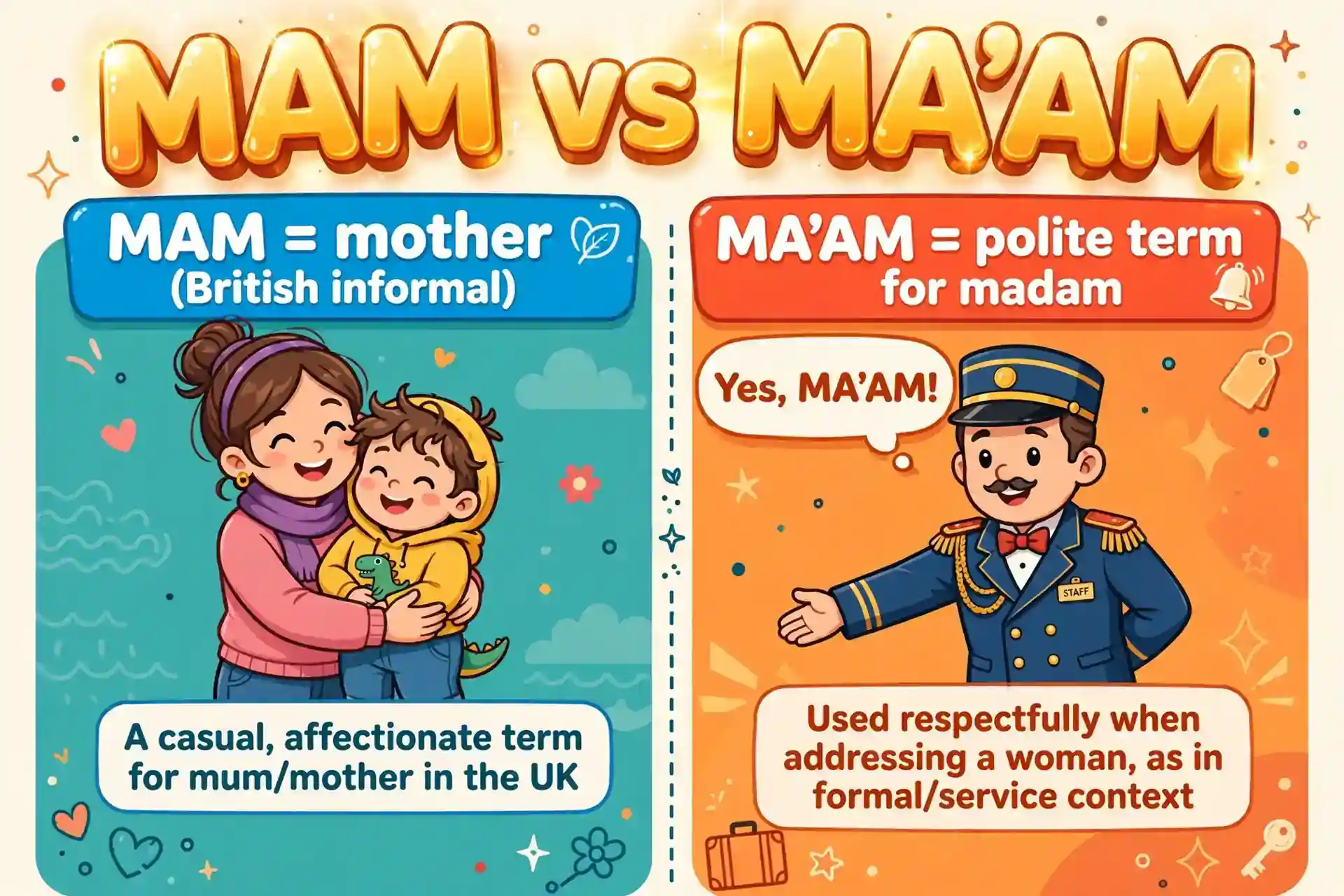
Mam and ma’am look almost identical and can sound identical too, but they address two different women. Mam is an informal word for “mother,” common in Northern England, Wales, and Ireland. Ma’am is a contraction of “madam” — a respectful way to address any woman.
For example, “Mam, what’s for dinner?” is a child talking to their mother. “Yes, ma’am, right away” is a polite reply to a woman you respect. One is family; the other is formality.
Quick Answer
| Word | Part of Speech | Main Meaning | Example |
|---|---|---|---|
| Mam | Noun | Mother (informal, regional) | Mam made pancakes this morning. |
| Ma’am | Noun | Madam; respectful address to a woman | Yes, ma’am, I’ll bring it over. |
Simple rule: Talking to your mother in Northern England or Ireland? Mam. Addressing a woman politely? Ma’am (short for madam).
What Does Mam Mean?
Mam is an informal, affectionate word for “mother.” It is the everyday choice in Northern England, Wales, Ireland, and parts of Scotland, where many children grow up saying mam instead of mum (the Southern English form) or mom (the American form).
Examples:
- Mam, can I go out to play?
- Our mam makes the best Sunday roast.
- He rang his mam every evening.
- The baby reached for her mam.
- Mam always knows where everything is.
Mam is warm and regional — you would use it with family, never with strangers. Like other regional English words, it marks where the speaker is from.
See mam on Merriam-Webster for the full dictionary entry.
What Does Ma’am Mean?
Ma’am is a contraction of madam. It is a polite, respectful way to address a woman, especially one in authority or one you do not know well. In the US it is standard courtesy (“Yes, ma’am”); in the UK it is used for royalty and senior officers.
Examples:
- Yes, ma’am, your table is ready.
- Excuse me, ma’am, you dropped your keys.
- The officer replied, “Understood, ma’am.”
- “Ma’am” is how you address the Queen after the first “Your Majesty.”
- Thank you, ma’am, for your help.
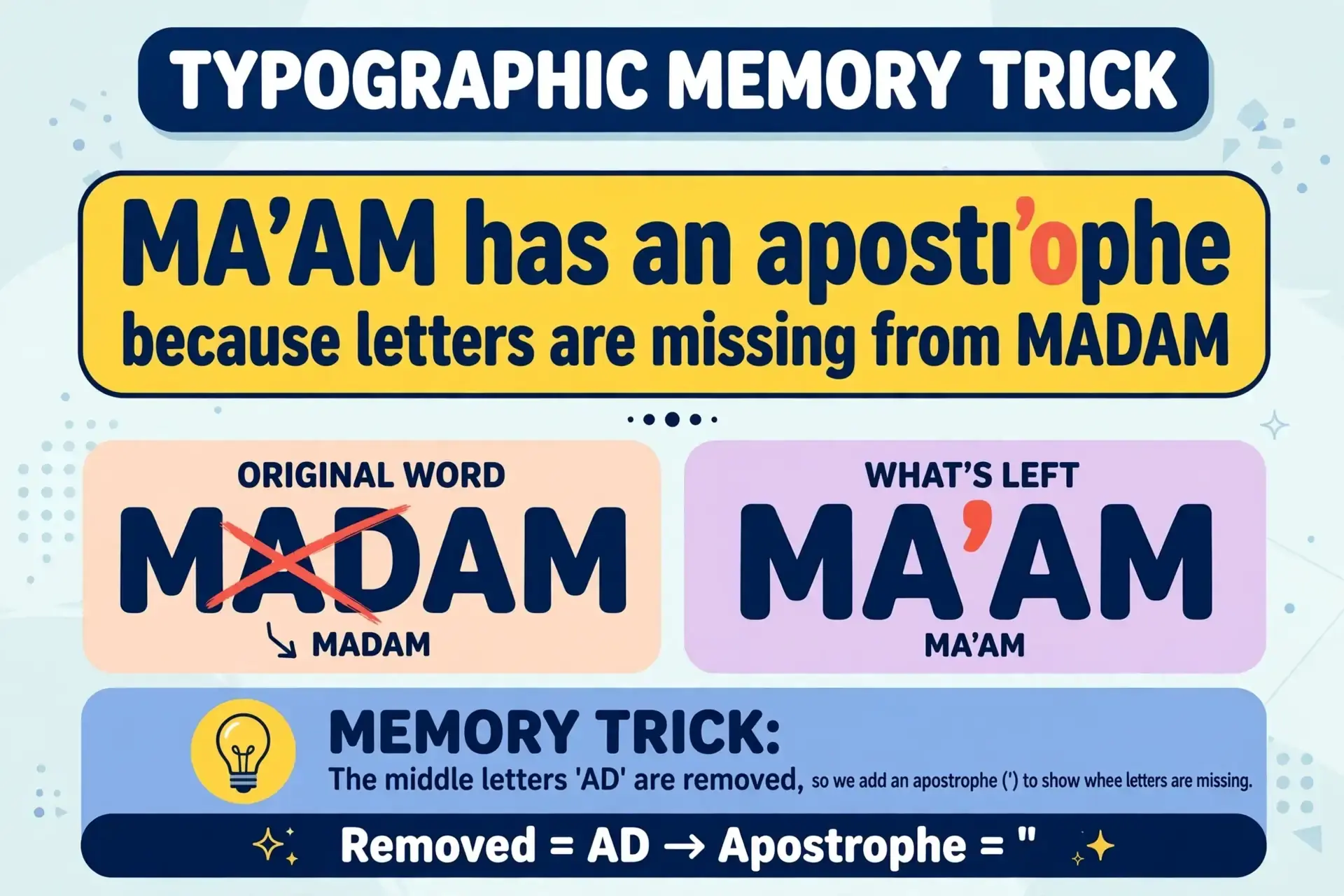
The apostrophe is doing real work: it marks the missing letters from madam (ma[d]am). Without it, you have a different word entirely.

Mam vs. Ma’am: Key Differences
| Feature | Mam | Ma’am |
|---|---|---|
| Meaning | Mother | Madam (respectful address) |
| Comes from | Mama / mother | Madam (letters removed) |
| Apostrophe | Never | Always |
| Where used | Northern England, Wales, Ireland | Worldwide, formal settings |
| Pronunciation | “Mam” (/mæm/) | “Mahm” (US) / “mam” (UK) |
| Example | Mam’s calling us in. | Yes, ma’am. |
In British English, ma’am is pronounced “mam” — exactly like mam. That shared sound is why the apostrophe matters so much in writing: it is the only thing telling these two apart on the page.
Examples of Mam and Ma’am in Real Sentences
At Home
Mam: “Mam said tea’s ready in five minutes.”
Ma’am: “The nanny greeted the lady of the house with ‘Good morning, ma’am.'”
One is a child calling their mother; the other is formal household politeness.
In a Shop
Mam: “I bought these flowers for my mam.”
Ma’am: “Can I help you, ma’am?” asked the assistant.
The shopper buys for mam; the assistant addresses a customer as ma’am.
At Work
Mam: “He left early because his mam was ill.”
Ma’am: “Yes, ma’am, I’ll have the report by noon.”
Family news uses mam; speaking to a senior woman uses ma’am.
Common Mistakes With Mam and Ma’am
The apostrophe is small but load-bearing here — dropping it changes the meaning completely, a trap shared with other small-difference word pairs.
Mistake 1: Writing “Mam” for Madam
❌ Yes, mam, right away.
✅ Yes, ma’am, right away.
Why: Addressing a woman respectfully needs the contraction ma’am (from madam). Mam means mother.
Mistake 2: Writing “Ma’am” for Mother
❌ Ma’am, what’s for dinner?
✅ Mam, what’s for dinner?
Why: A child calling their mother in Northern England or Ireland writes mam — no apostrophe, no formality.
Mistake 3: Forgetting the Apostrophe
❌ Excuse me, mam, you dropped this.
✅ Excuse me, ma’am, you dropped this.
Why: The apostrophe marks the missing “ad” from madam. Without it, you have accidentally called a stranger “mother.”
Pronunciation: Mam vs. Ma’am
Mam is pronounced “mam” (/mæm/), rhyming with ham and jam. Ma’am is pronounced “mahm” (/mɑːm/) in American English, rhyming with calm — but in British English it is pronounced “mam,” identical to mam.
So in the UK, only the spelling (and the apostrophe) separates them. In the US, the longer “ah” sound in ma’am helps.
How to Remember the Difference
Memory trick: Ma’am has an apostrophe because letters are missing — ma[d]am. No missing letters in mam, so no apostrophe.
- Ma’am = madam with the ad knocked out (apostrophe marks the gap).
- Mam = mother, short and affectionate, no apostrophe needed.
- Polite stranger? Use the apostrophe: ma’am.
Frequently Asked Questions
Is it mam or ma’am for mother?
Mam — no apostrophe. It is the informal word for mother used in Northern England, Wales, and Ireland.
What does ma’am stand for?
Ma’am is a contraction of madam. The apostrophe replaces the missing “ad”: ma[d]am.
Do mam and ma’am sound the same?
In British English, yes — both sound like “mam.” In American English, ma’am is usually “mahm” (rhyming with “calm”), which sounds different.
Is it rude to call someone ma’am?
Generally no — it is respectful in the US and in formal British settings. Some younger women dislike it because it can sound aging; when in doubt, follow local custom.
Where is “mam” used for mother?
Mainly Northern England, Wales, Ireland, and parts of Scotland. Southern England prefers mum; America prefers mom.
Conclusion
Mam is the warm regional word for mother; ma’am is the polite contraction of madam for addressing a woman respectfully. Watch the apostrophe — it marks missing letters, and it marks the difference.