Heros or Heroes: Which Spelling Is Correct?
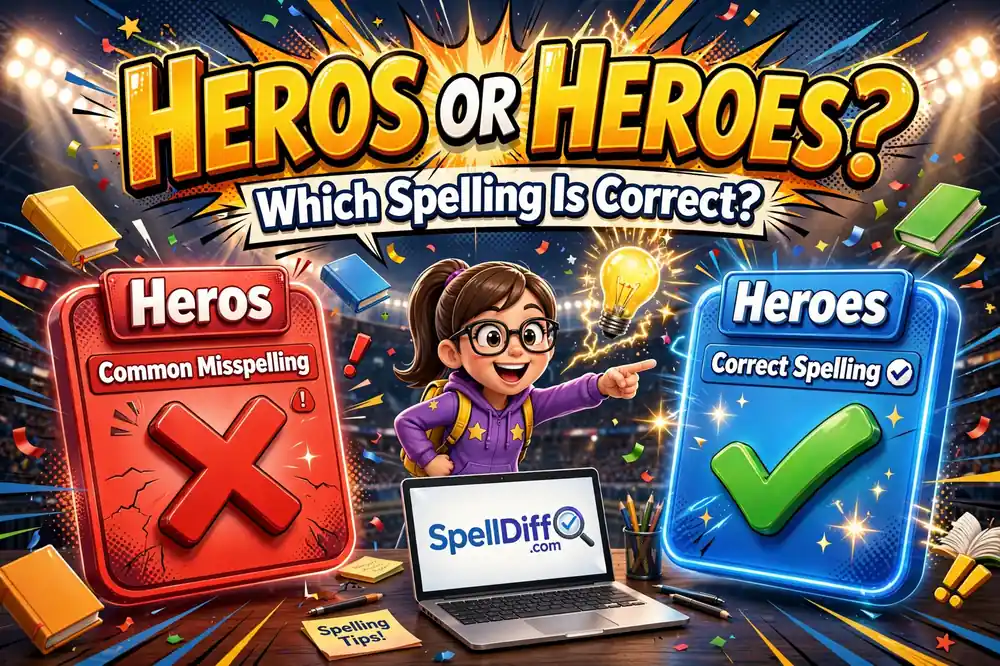
Heroes is the correct plural spelling of hero. The word heros is a common spelling mistake. When you mean more than one brave person, admired figure, or fictional champion, write heroes. The spelling changes because hero ends in -o, and its standard plural takes -es.
Quick Answer
| Form | Correct use | Example |
| Hero | One admired or brave person; one main character | She is a hero. |
| Heroes | More than one hero | The firefighters are heroes. |
| Heros | Not the standard plural of hero | Avoid it in ordinary writing. |
The key spelling is -es: hero becomes heroes, not heros.
What Does Hero Mean?
Hero is a singular noun. It can describe someone admired for courage, achievement, or an important act. It can also refer to the main character in a story.
Hero as a Brave or Admired Person
A hero may be someone who helps others, faces danger, or makes a meaningful contribution.
Examples:
- The firefighter became a hero after rescuing the family.
- Her grandmother has always been her hero.
- The community honored the soldier as a hero.
- The young athlete became a hero to children in the town.
Hero as a Main Character
In books, films, and other stories, a hero is a central character. The character often faces challenges or works toward an important goal.
Examples:
- The hero of the novel must choose between loyalty and honesty.
- Every fairy tale has a hero who faces a challenge.
- The film introduces a hero with unusual abilities.
When there is more than one, use heroes.
Why Is the Plural Heroes Instead of Heros?
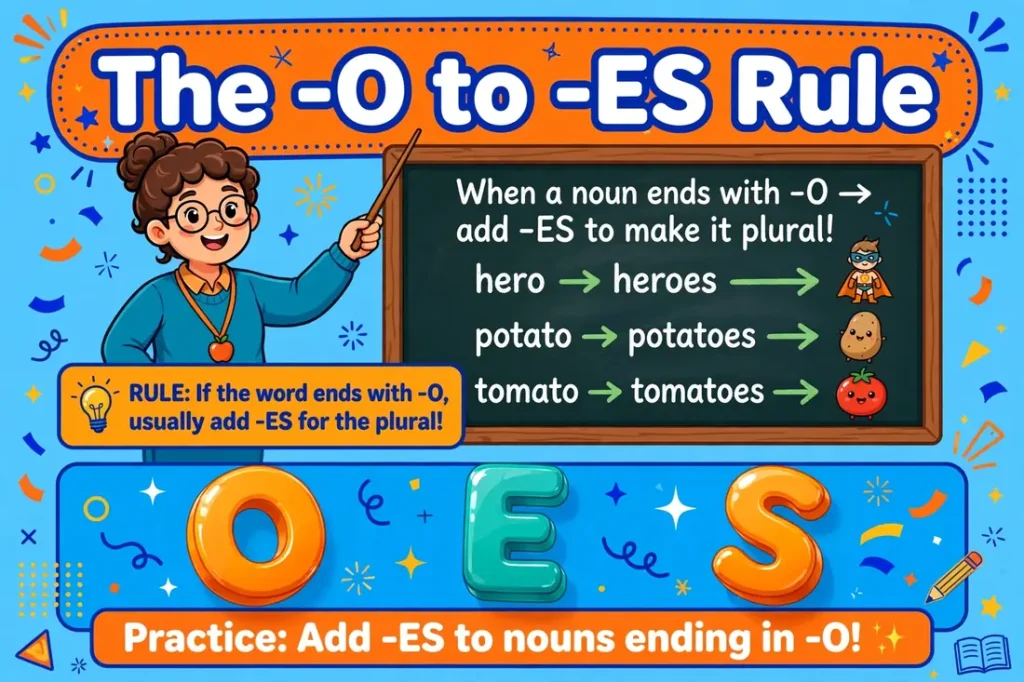
The standard plural of hero is formed by adding -es.
- hero → heroes
- potato → potatoes
- tomato → tomatoes
- echo → echoes
However, English nouns ending in -o do not all follow the same pattern. Some take only -s.
- photo → photos
- piano → pianos
- radio → radios
- video → videos
This variation makes the plural spelling easy to mix up. For hero, the accepted standard form is heroes.
There is no dependable rule that predicts every plural of an -o noun. Learning the established form of each word is often the safest approach.
Heros vs. Heroes: Key Differences
The difference is not a change in meaning for ordinary writing about brave people or fictional characters. It is a difference in standard spelling.
| Feature | Heros | Heroes |
| Standard plural of hero | No | Yes |
| Refers to multiple brave people | Not standard | Yes |
| Refers to multiple story characters | Not standard | Yes |
| Spelling pattern | Adds only -s | Adds -es |
| Recommended in formal writing | No | Yes |
Use heroes in schoolwork, professional writing, website content, and everyday communication.
Examples of Heroes in Sentences
Use heroes whenever you mean two or more admired people or central characters.
Everyday Examples
- The rescue workers became heroes after the flood.
- Many teachers are everyday heroes in their communities.
- The children see their parents as heroes.
- The town celebrated its local heroes during the ceremony.
- The doctors and nurses were praised as heroes.
- The volunteers became heroes by helping families after the storm.
Fictional and Historical Examples
- The story follows two heroes on a dangerous journey.
- The heroes worked together to protect their kingdom.
- The museum tells the stories of national heroes.
- The movie features several heroes with different abilities.
- The book explores how ordinary people become heroes.
Superheroes and Antiheroes
The same plural pattern applies to words that contain hero.
- superhero → superheroes
- antihero → antiheroes
Examples:
- The children dressed as superheroes for the party.
- The series follows two antiheroes with conflicting goals.
- These superheroes have different strengths and weaknesses.
Hero, Heroes, Hero’s, and Heroes’: What Is the Difference?
These forms look similar, but they have different grammatical uses. The apostrophe is especially important because it marks possession, not an ordinary plural.
| Form | Meaning | Example |
| Hero | One person or character | The hero saved the village. |
| Heroes | More than one | The heroes saved the village. |
| Hero’s | Belonging to one hero | The hero’s decision changed the story. |
| Heroes’ | Belonging to multiple heroes | The heroes’ names appeared on the monument. |
When to Use Hero’s
Use hero’s when something belongs to one hero.
Example: The hero’s courage inspired the entire team.
When to Use Heroes’
Use heroes’ when something belongs to more than one hero.
Example: The heroes’ actions changed the course of history.
Do Not Use an Apostrophe to Make a Plural
An apostrophe does not normally form a plural noun.
Incorrect: The hero’s returned home.
Correct: The heroes returned home.
The correct plural is heroes, without an apostrophe.

Is Heros Ever Correct?
For the ordinary meaning of multiple brave people or story characters, heros is not the standard plural. Write heroes.
There is one specialized point worth knowing. In some American English usage, hero also means a large sandwich. Some references list heros as a plural for that sandwich meaning.
For example, a deli menu might use heros for multiple sandwiches. However, heroes is also widely used for this meaning.
This exception does not change the normal spelling rule. If you are writing about admired people, fictional characters, or superheroes, use heroes.
Common Mistakes to Avoid
1. Writing Heros Instead of Heroes
Incorrect: The firefighters became local heros.
Correct: The firefighters became local heroes.
Remember the extra e before the final s.
2. Writing Superheros
Incorrect: The movie features three superheros.
Correct: The movie features three superheroes.
The plural form keeps the spelling pattern found in hero.
3. Using a Singular Verb with Heroes
Incorrect: The heroes is ready.
Correct: The heroes are ready.
Heroes is plural, so it normally takes a plural verb.
4. Confusing Heroes and Hero’s
Incorrect: The hero’s arrived at the station.
Correct: The heroes arrived at the station.
Use heroes for more than one person. Use hero’s to show that something belongs to one hero.
5. Assuming Every Word Ending in O Takes -S
Some nouns ending in -o take -es, while others take only -s.
For example, hero becomes heroes, but photo becomes photos. Check the standard plural instead of applying one rule to every word.
How to Remember the Correct Spelling
Connect heroes with familiar words that take -es:
- hero → heroes
- potato → potatoes
- tomato → tomatoes
A simple memory tip is:
One hero, many heroes.
Remember the extra e when writing about multiple brave people or fictional characters.
Frequently Asked Questions
Is Heros or Heroes Correct?
Heroes is the correct standard plural of hero. Use it when referring to more than one brave person, admired figure, or fictional character. Heros is not the standard spelling for these meanings.
Why Does Hero Become Heroes?
The established plural form of hero adds -es rather than only -s. English has several plural patterns for nouns ending in -o, so not every word follows the same rule.
Is Heroes Singular or Plural?
Heroes is plural. The singular form is hero. For example, “He is a hero” refers to one person, while “They are heroes” refers to multiple people.
What Is the Plural of Superhero?
The plural of superhero is superheroes. It follows the same spelling pattern as hero → heroes.
Is Hero’s the Same as Heroes?
No. Hero’s is the possessive form of the singular noun hero. Heroes is the plural form. For example, “the hero’s story” shows possession, while “the heroes’ stories” refers to stories belonging to several heroes.
Can Heros Be Used for Sandwiches?
Some American English references list heros as a plural for the sandwich called a hero. However, when writing about brave people or fictional characters, use heroes.
Conclusion
Heroes is the standard plural spelling of hero. Use it for multiple brave people, admired figures, and story characters. The spelling heros is not standard for these meanings.
Remember the simple pattern: one hero, two heroes. The extra e makes the plural correct.