Peace of Mind or Piece of Mind: What’s the Difference?
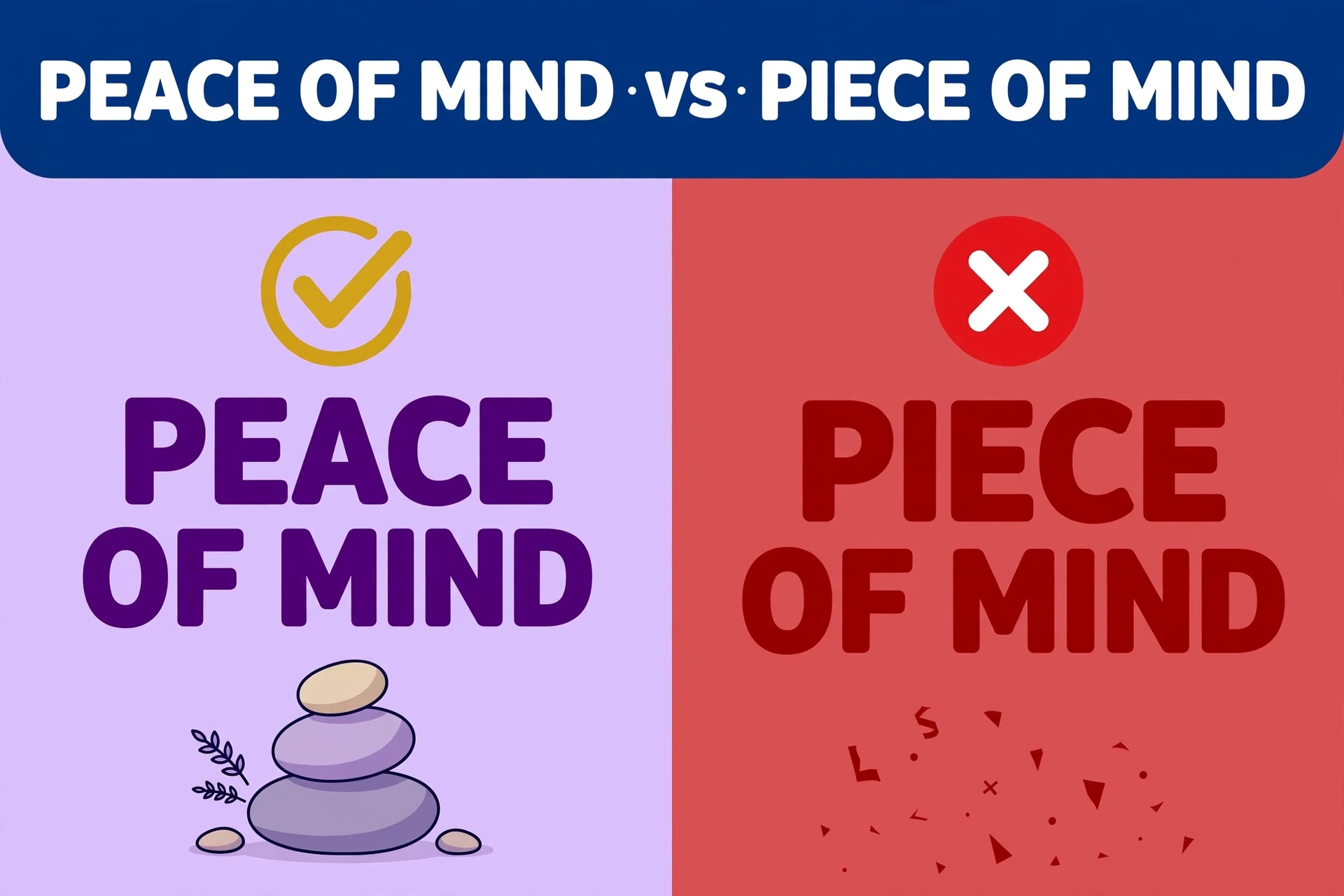
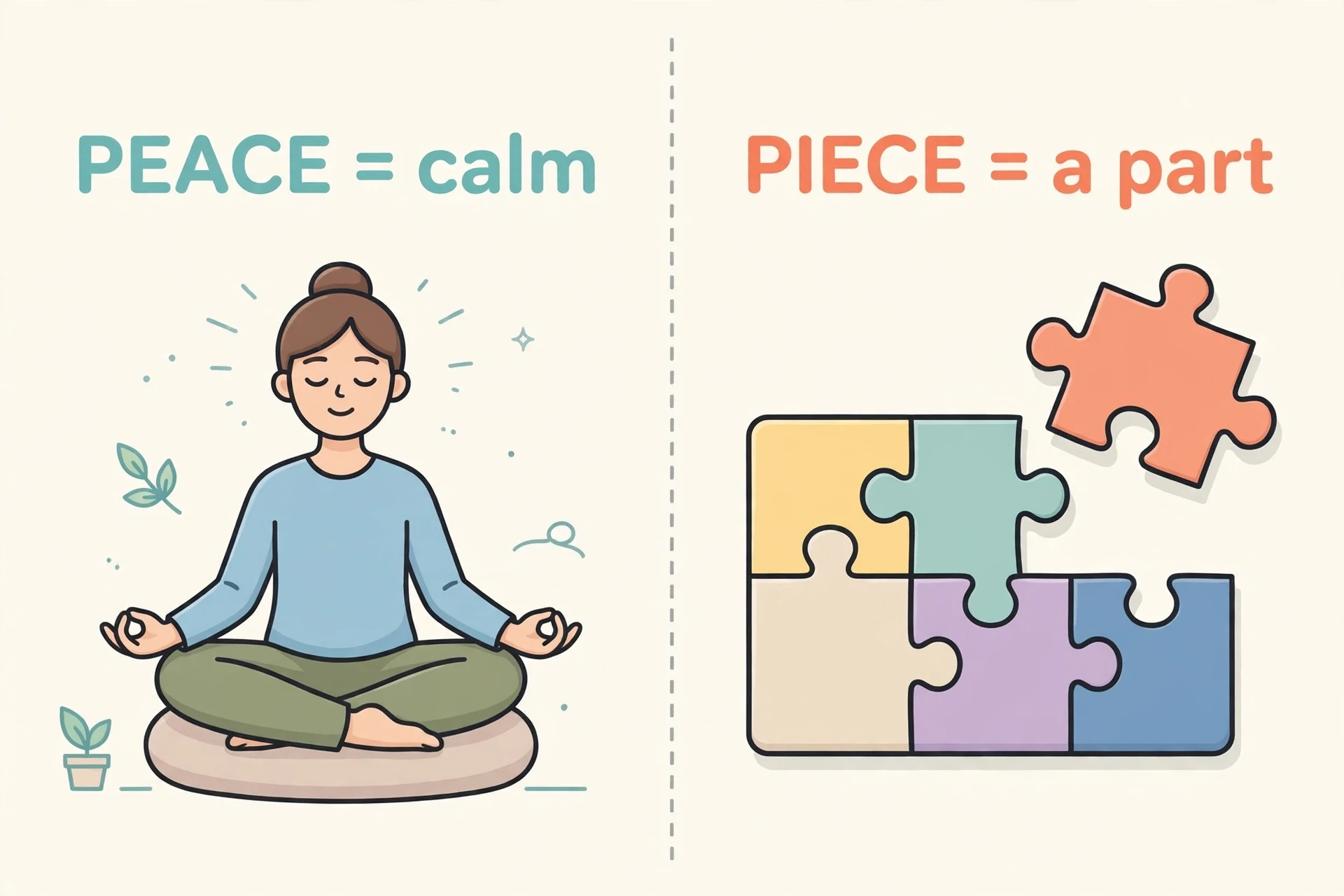
Peace of mind is correct — piece of mind is always wrong. “Peace” means calm and freedom from worry; “piece” means a part of something, like a piece of pie. The idiom promises tranquility, not a slice of your brain. “The warranty gives me peace of mind” is right; “piece of mind” suggests the warranty is handing out brain portions.
Quick Answer
| Word | Part of Speech | Main Meaning | Example |
|---|---|---|---|
| peace of mind | Idiom (noun phrase) | Calm; freedom from worry | ✅ “It gives me peace of mind.” |
| piece of mind | — (error) | Not a standard idiom | ❌ “It gives me piece of mind.” |
Simple rule: Peace = calm (like the sea at dawn). Piece = a part (like a piece of pie). The idiom is about calm, not portions.
What Does Peace of Mind Mean?
Peace of mind means a state of mental calm — the absence of worry or anxiety about something. Insurance, warranties, savings, and locked doors all “give peace of mind” because they remove a reason to fret. Merriam-Webster’s entry for “peace” includes the phrase directly: “peace of mind” — “a feeling of being safe or protected.”
Examples:
- “The home security system gives us peace of mind.”
- “For peace of mind, back up your files.”
- “She traveled with peace of mind knowing the kids were safe.”
- “A second opinion brought him peace of mind.”
- “Nothing beats the peace of mind of an emergency fund.”
The phrase always points inward — it describes how you feel, not anything about the world outside.
What Does Piece of Mind Mean?
As an idiom, nothing — piece of mind is an error. “Piece” is a real word meaning a portion (“a piece of cake,” “a piece of the puzzle”), but “a piece of mind” would literally mean a slice of your brain — gruesome, not calming. Writers produce it because “piece” is the far more common word in everyday life (we talk about pieces of things constantly), while “peace” appears mostly in this and a few other set phrases.
Examples of the error (all incorrect):
- ❌ “Buy the warranty for piece of mind.”
- ❌ “It gave her great piece of mind.”
- ❌ “Travel insurance is worth the piece of mind.”
- ❌ “I need piece of mind about the test results.”
The mistake is pure homophone confusion — identical sound, opposite meanings, and the wrong one wins by familiarity.
Peace of Mind vs. Piece of Mind: Key Differences
| Feature | Peace of mind | Piece of mind |
|---|---|---|
| Status | Correct, standard idiom | Common error |
| Key word | Peace — calm, tranquility | Piece — a portion |
| Literal image | A calm mind, free of worry | A slice of brain (nonsense) |
| Related phrases | rest in peace, peace treaty | piece of cake, puzzle piece |
| Example | ✅ “Peace of mind” | ❌ “Piece of mind” |
Ask what the phrase promises: peace promises calm, which is the whole point — a piece promises portions, which nobody asked for.
Peace of Mind and Piece of Mind in Real Sentences
At Home
✅ “Locking up gives me peace of mind at night.”
❌ “Locking up gives me piece of mind at night.”
Nighttime security is the idiom’s natural habitat — calm, not cutlery.
At Work
✅ “The backup system is pure peace of mind.”
❌ “The backup system is pure piece of mind.”
IT policies and insurance brochures live on this phrase — spelled with EA, always.
In Conversation
✅ “Just call her — you’ll have peace of mind.”
❌ “Just call her — you’ll have piece of mind.”
Reassuring a friend calls for calm, and the spelling should match the sentiment.
Common Mistakes
Homophone traps are everywhere — the “principal” vs “principle” homophone pair shows identical sounds with separate lives, and the “peek” vs “peak” homophone confusion shows one vowel changing everything. The peace/piece family:
Mistake 1: Writing “piece of mind”
❌ “For piece of mind, get the warranty.”
✅ “For peace of mind, get the warranty.”
Why: The idiom is about tranquility — “peace.” “Piece” would make it about portions, which is nonsense here.
Mistake 2: Writing “give me a peace of cake”
❌ “Can I have a peace of cake?”
✅ “Can I have a piece of cake?”
Why: The error runs both directions — cake comes in pieces, not peaces. Match the word to the meaning.
Mistake 3: “Peace” vs “piece” in “rest in peace”
❌ “Rest in piece.”
✅ “Rest in peace.”
Why: The funeral phrase wishes tranquility, not dismemberment. Same homophone, same fix.
Mistake 4: Assuming the common word wins
❌ “‘Piece’ is more common, so ‘piece of mind’ must be right.”
✅ “Idioms freeze the older or rarer word — check the meaning, not the frequency.”
Why: “Piece” appears everywhere, which makes it the default guess — but the idiom’s meaning demands “peace.”
Pronunciation
Peace of mind is pronounced peess uv mind — “peace” rhyming with “piece,” “lease,” and “geese,” all identical in sound. The homophone is perfect, which is why the error is invisible in speech and only a writing problem.
How to Remember the Difference
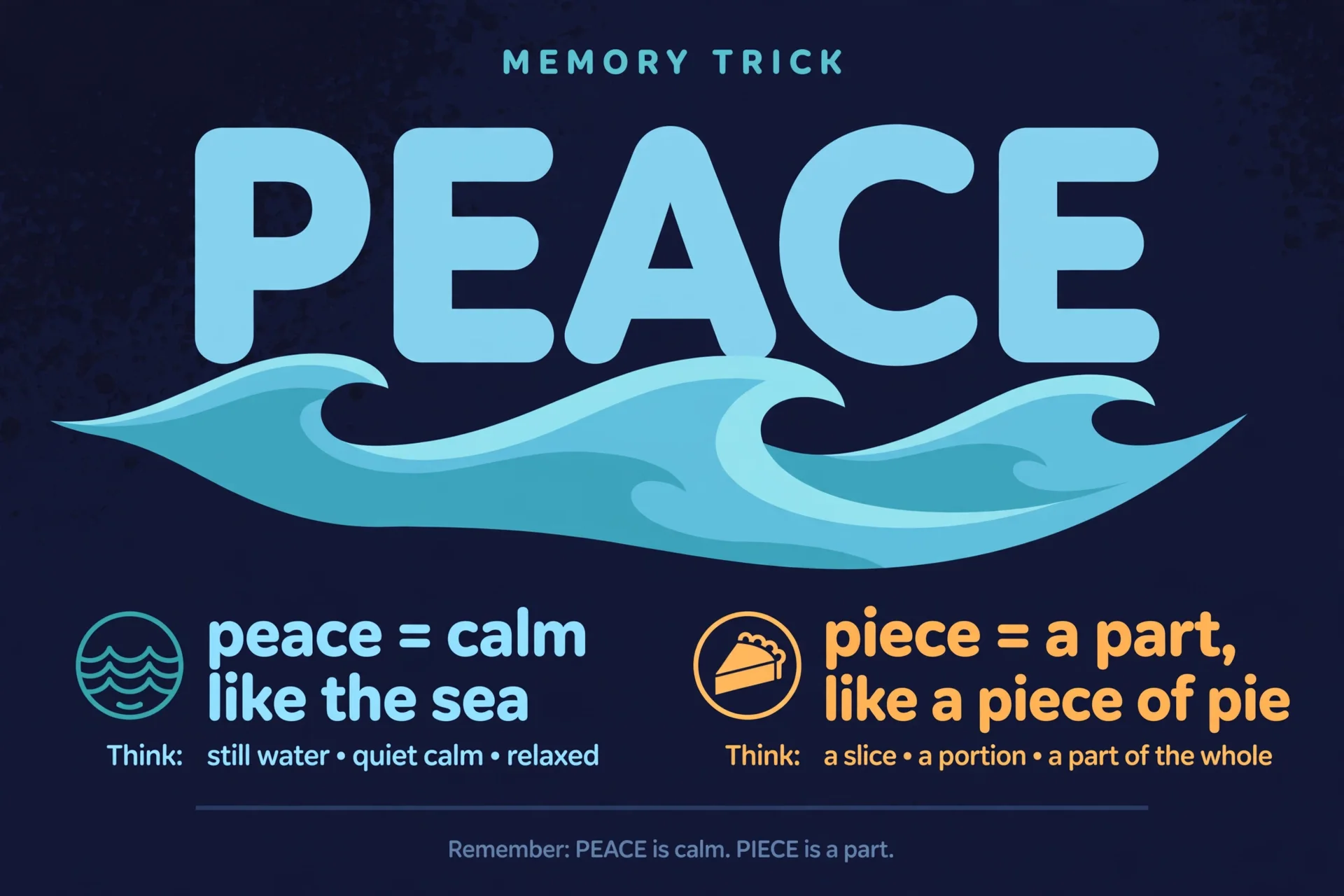
Peace is calm like the sea — both spelled with EA, both soothing. Piece is a part, like a piece of pie — both spelled with IE, both sliceable. The idiom wants calm, so it wants the sea-spelling.
- Sea test: peace rhymes with “sea” and shares its EA — calm water, calm mind.
- Pie test: piece rhymes with “pie” — you cut pie into pieces, not peaces.
- Meaning check: does the sentence promise calm? Then it’s peace. Portions? Piece.
Frequently Asked Questions
Is it “peace of mind” or “piece of mind”?
“Peace of mind.” “Piece of mind” is a common error — the idiom is about calm, not portions.
What does “peace of mind” mean exactly?
A feeling of safety or calm — freedom from worry about something specific, like your health, home, or finances.
Why do people write “piece of mind”?
“Piece” is far more common in daily life (pieces of cake, puzzle pieces), so the ear’s familiarity wins over the idiom’s meaning.
Is “give me a piece of your mind” related?
It uses “piece” correctly — but it means something totally different: to scold someone frankly (“she gave him a piece of her mind”). Don’t confuse the two idioms.
How do you remember which is which?
Peace = calm like the sea (EA). Piece = a part like pie (IE). The idiom wants calm.
Can “peace” be a verb?
Rarely — “to peace” isn’t standard. Stick with the noun: peace of mind, rest in peace, peace treaty.
Conclusion
Peace of mind is calm you can feel — the sea-spelling for a sea-calm state. Piece of mind is a slice of brain nobody ordered. Remember the sea, keep the EA, and the idiom stays peaceful.