Cloths or Clothes: What’s the Difference? (With Examples)
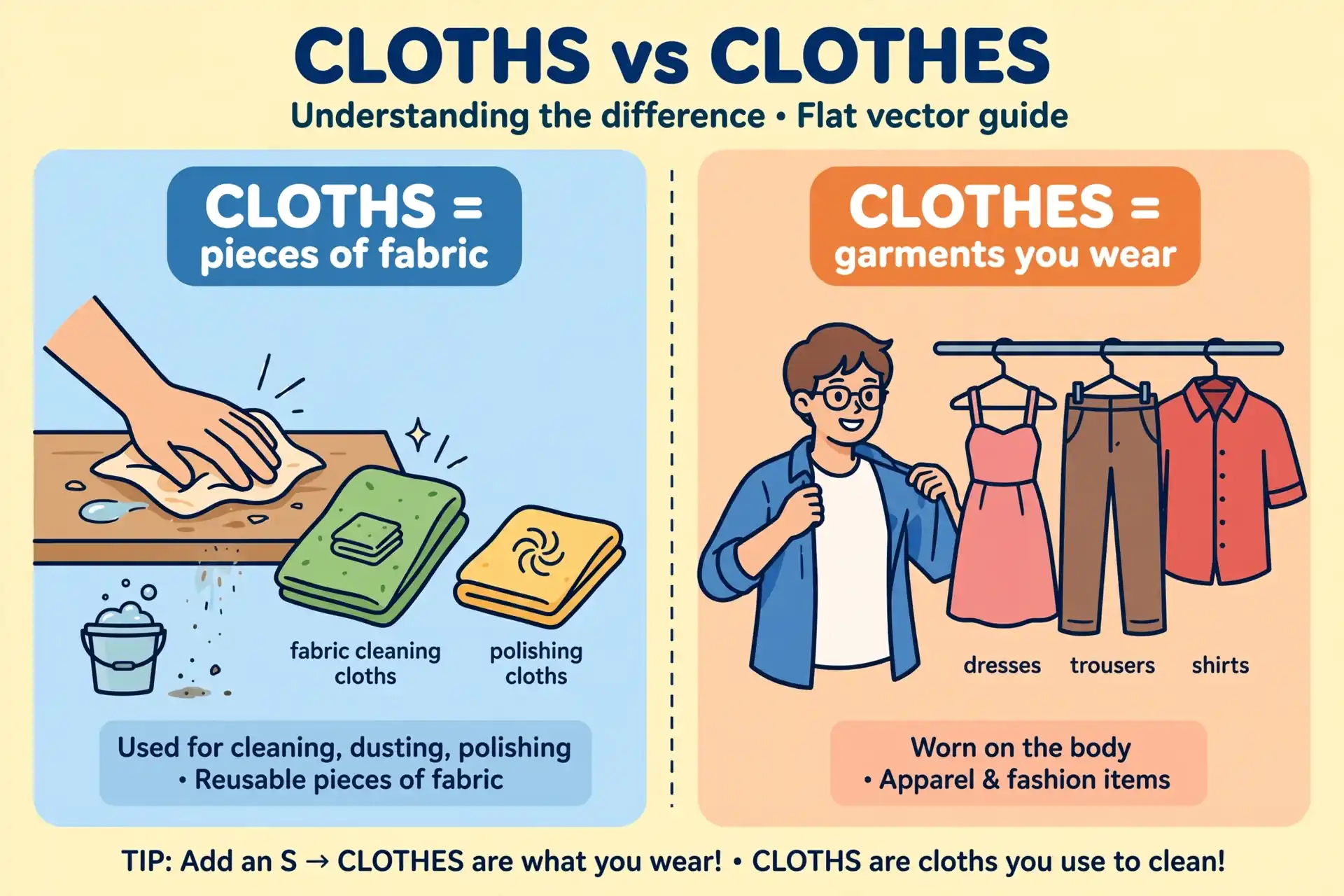
Cloths and clothes are both correct English words, but they mean very different things. Cloths are individual pieces of fabric, while clothes are the garments you wear on your body.
Use cloths for things like cleaning cloths or dust cloths: “She wiped the counter with a damp cloth, then laid out fresh cloths for drying.” Use clothes for shirts, trousers, dresses, and anything else you put on in the morning: “He packed warm clothes for the mountain trip.”
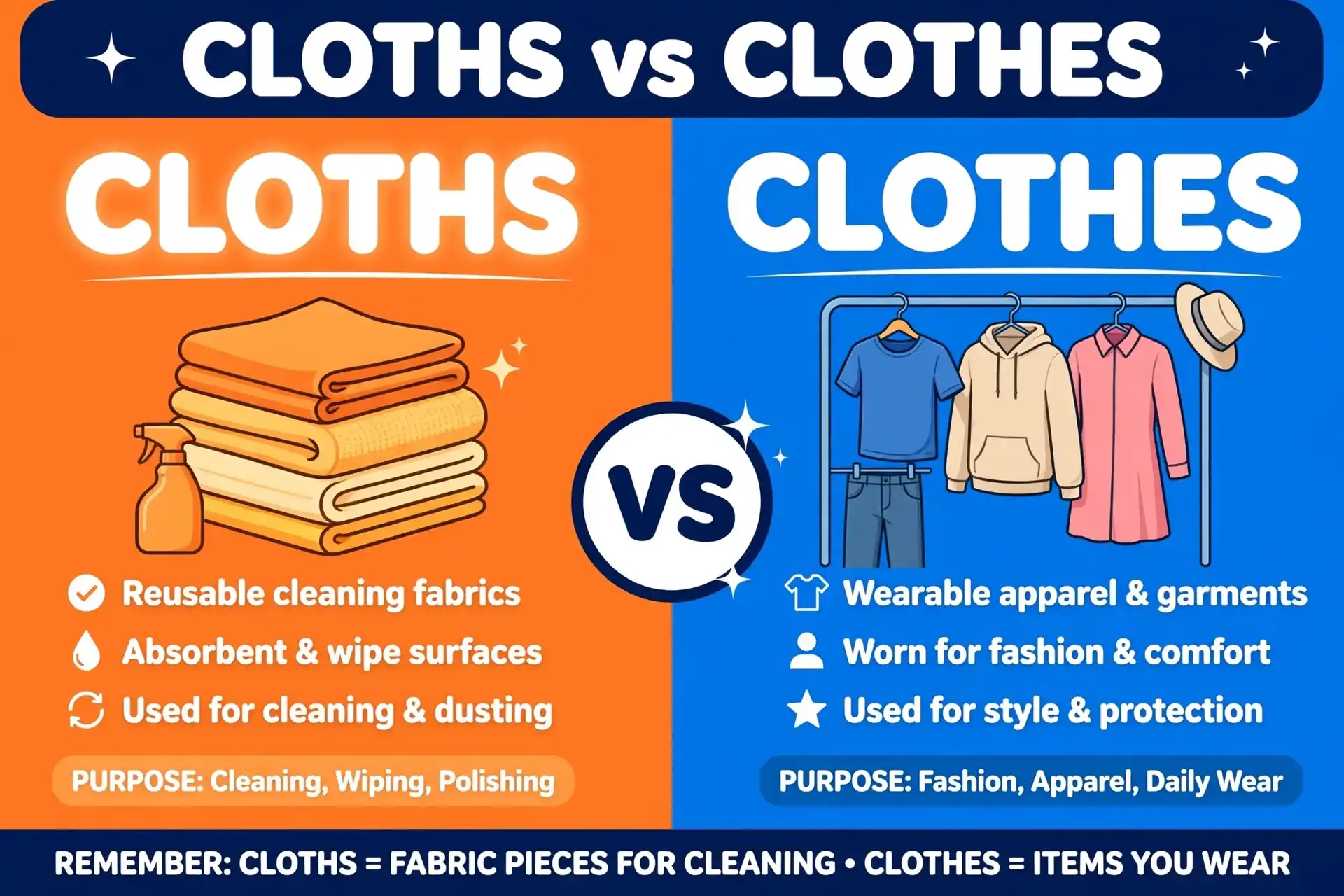
Table of Contents
Quick Answer
| Word | Part of Speech | Main Meaning | Example |
|---|---|---|---|
| cloths | noun (plural) | separate pieces of fabric used for cleaning, polishing, etc. | “Keep a few soft cloths in the kitchen drawer.” |
| clothes | noun (plural only) | garments worn on the body | “Her clothes were soaked after the rain.” |
Simple rule: cloths = pieces of fabric; clothes = things you wear.
What Does “Cloths” Mean?
Cloths is the plural of cloth — a piece of woven or knitted fabric, usually with a practical job to do. Cleaning cloths, polishing cloths, dish cloths, and dust cloths all fall into this group.
Examples:
- “The waiter polished the glasses with a lint-free cloth before stacking the cloths neatly.”
- “I bought a pack of microfiber cloths for dusting the shelves.”
- “Dip the cloths in warm soapy water and wring them out.”
- “She wrapped the antique vase in soft cloths before placing it in the box.”
- “The workshop keeps separate cloths for oil and paint.”
What Does “Clothes” Mean?
Clothes means garments — the shirts, trousers, dresses, coats, and socks that you wear. It is always plural and always takes a plural verb (“my clothes are in the dryer”), and it is pronounced differently from cloths, with a voiced “th” sound like in “bathe”.
Examples:
- “He laid out his clothes for the interview the night before.”
- “We donated a bag of old clothes to the charity shop.”
- “Her clothes smelled of woodsmoke after the bonfire.”
- “Pack light clothes for the beach and a jacket for the evening.”
- “The baby’s clothes were folded into tiny, neat piles.”
Cloths vs. Clothes: Key Differences
| Feature | Cloths | Clothes |
|---|---|---|
| Meaning | pieces of fabric | garments worn on the body |
| Singular form | cloth (one piece) | no singular; one garment = a piece of clothing |
| Pronunciation | /klɒθs/ — rhymes with “moths” | /kloʊðz/ — rhymes with “doze” |
| Typical use | cleaning, polishing, wrapping | getting dressed, laundry, shopping |
| Verb agreement | “these cloths are soft” | “these clothes are clean” |
| Countability | countable pieces | plural-only noun |
If the fabric is doing a job on a surface, it is a cloth; if it is on a person, it is clothes.
Usage Examples in Real Sentences
At Home
“I reached for a dry cloth to wipe the spill, then threw the dirty cloths in the wash.” / “I folded the laundry and put the children’s clothes in their drawers.” — Cleaning uses cloths; the family’s garments are clothes.
At the Store
“The hardware aisle sells packs of ten polishing cloths.” / “The clothing store has a sale on winter clothes.” — Note how clothes is the one connected to apparel shopping.
In Conversation
“Do we have any clean cloths for the silverware?” / “Do I look okay, or should I change my clothes?” — The first asks about fabric pieces; the second asks about an outfit.
Common Mistakes
English is full of pairs that look alike but are not, much like confusing dessert with desert or misspelling their as thier. These slip-ups are the usual ones:
Mistake 1: “My cloths are dirty”
❌ “I need to wash my cloths before the trip.”
✅ “I need to wash my clothes before the trip.”
Why: you wear them, so they are clothes — unless you are packing fabric rags for cleaning the car.
Mistake 2: “Wipe it with clothes”
❌ “Wipe the table with one of those clothes.”
✅ “Wipe the table with one of those cloths.”
Why: pieces of fabric used for cleaning are cloths, the plural of cloth.
Mistake 3: “A clothes”
❌ “She bought a new clothes yesterday.”
✅ “She bought some new clothes yesterday.” / “She bought a new dress yesterday.”
Why: clothes has no singular form; use “a piece of clothing” or name the garment.
Mistake 4: Pronouncing them the same
❌ Saying both like “klothz”.
✅ Cloths = /klɒθs/ (rhymes with “moths”); clothes = /kloʊðz/ (rhymes with “doze”).
Why: the “th” in clothes is voiced, the way it is in “clothing”.
Pronunciation
Cloths is pronounced /klɒθs/ — one syllable, rhyming with “moths” and “froths”, with an unvoiced “th” like in “bath”. Clothes is pronounced /kloʊðz/ — one syllable rhyming with “doze” and “rose”, with a voiced “th” like in “bathe” and a final “z” sound. You can confirm the pronunciation in Merriam-Webster’s entry for clothes, which gives the audio for both senses.
How to Remember the Difference
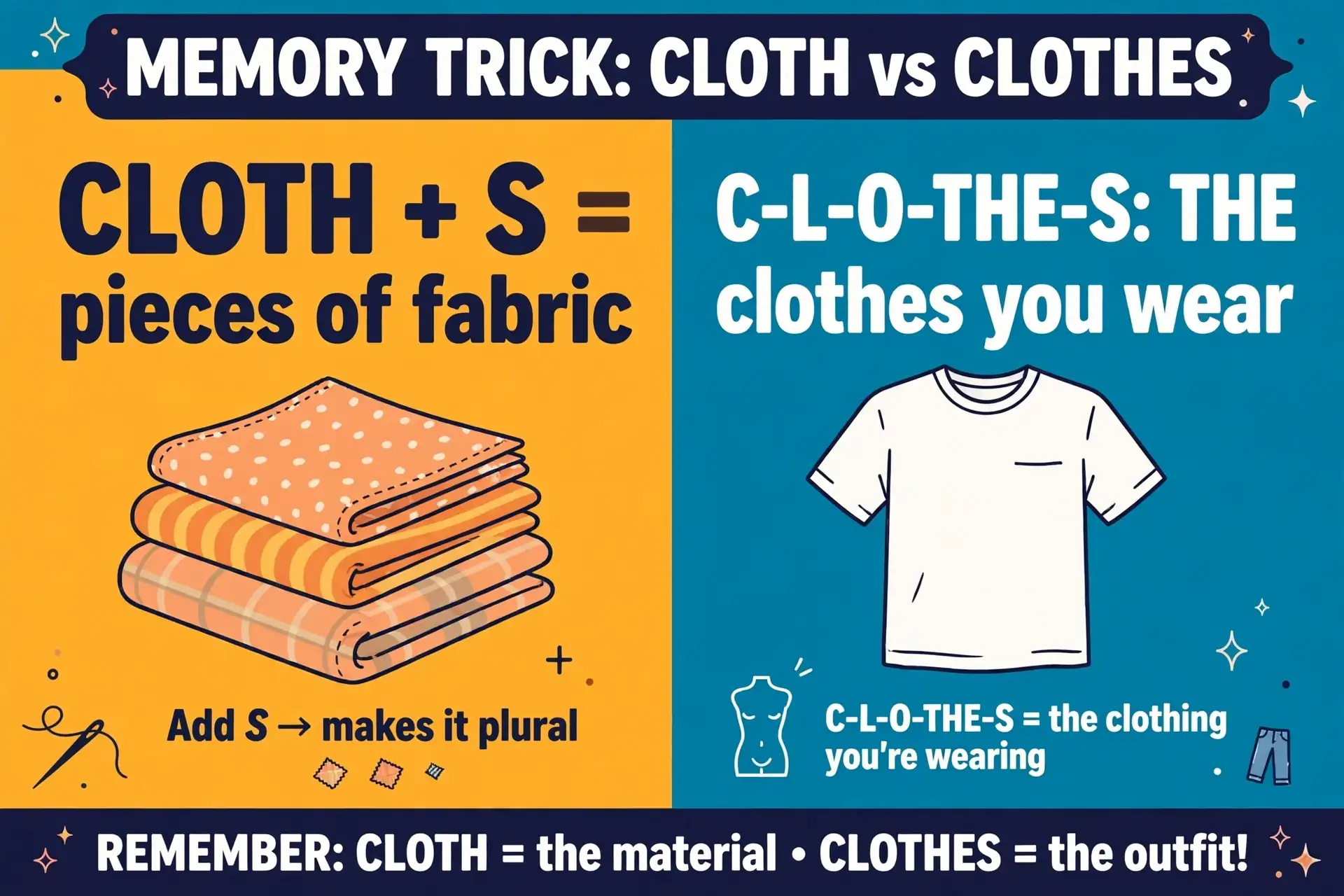
Cloths is just cloth + s — more pieces of the same fabric. Clothes hides the word “the” inside it: c-l-o-THE-s… the clothes you wear. Or keep it simpler: the longer word, clothes, covers the whole body, while a cloth is just one small piece.
- Cloths = fabric pieces (cleaning, polishing, wrapping).
- Clothes = garments (shirts, trousers, dresses, coats).
- Cloths rhymes with “moths”; clothes rhymes with “doze”.
- No singular for clothes — say “a piece of clothing”.
Frequently Asked Questions
Is it cloths or clothes when talking about laundry?
Clothes. Laundry means garments you wear — shirts, trousers, socks. “I did the laundry; my clothes are drying” is correct.
What is the difference between cloth and clothes?
A cloth is one piece of fabric (its plural is cloths), used for tasks like cleaning. Clothes are garments worn on the body and have no singular form.
Can clothes be singular?
No. Clothes is always plural — “my clothes are ready”. To talk about one item, say “a piece of clothing” or name it: “a shirt”, “a coat”.
Is it correct to say “cleaning clothes”?
Not usually. The standard term is “cleaning cloths“, because they are pieces of fabric with a job to do, not garments.
How do you pronounce cloths and clothes?
Cloths = /klɒθs/, rhyming with “moths”. Clothes = /kloʊðz/, rhyming with “doze”. The “th” in clothes is voiced, like in “bathe”.
Conclusion
Cloths are pieces of fabric — the cleaning rags, dish cloths, and polishing squares. Clothes are the garments you wear. Remember “cloth + s” for fabric pieces and the hidden “the” in clothes, and you will never mix them up again.