Synonyms for Desperate: Hopeless, Frantic, Urgent Uses
Desperate is one of English’s hardest-working words: it can describe a person with no hope left, a frantic scramble, or a situation that demands action right now. Because those senses point in different directions, the wrong synonym can say the opposite of what you mean. This guide gathers sixteen synonyms for desperate, grouped by sense, each with a clear meaning and a real example sentence.
Table of Contents
Quick Answer
| Word | Nuance / When to use it |
|---|---|
| hopeless | a situation with no chance of success |
| despairing | a person who has lost all hope |
| forlorn | sad and abandoned, little hope left |
| despondent | deeply discouraged after failure |
| frantic | wild with fear or worry; panicked action |
| frenzied | uncontrolled, heated activity |
| feverish | hurried and intense, as if with a fever |
| dire | extremely serious; warning of disaster |
| critical | at a crisis point; outcome undecided |
| urgent | needing immediate action |
| pressing | demanding attention right now |
| last-ditch | the final attempt when all else failed |
Simple rule: first ask whether you mean no hope, wild panic, or a ticking clock — then choose the synonym built for that exact sense.
Without Hope
Hopeless — describes a situation with no chance of a good outcome. Example: The rescue team faced a hopeless task as the floodwater kept rising.
Despairing — describes a person who has lost all hope. Example: The despairing parents searched the beach until long after dark.
Forlorn — sad, lonely, and nearly without hope, often with a sense of abandonment. Example: The forlorn puppy waited by the gate for an owner who never came.
Despondent — deeply discouraged, usually after failure or repeated disappointment. It suggests spirits that have sunk and stayed down. Example: Investors grew despondent as the market kept falling month after month.
Wretched — miserable and unhappy, often from suffering or harsh conditions. It emphasizes the misery of the state itself. Example: The wretched refugees huddled together through the freezing night.
Frantic
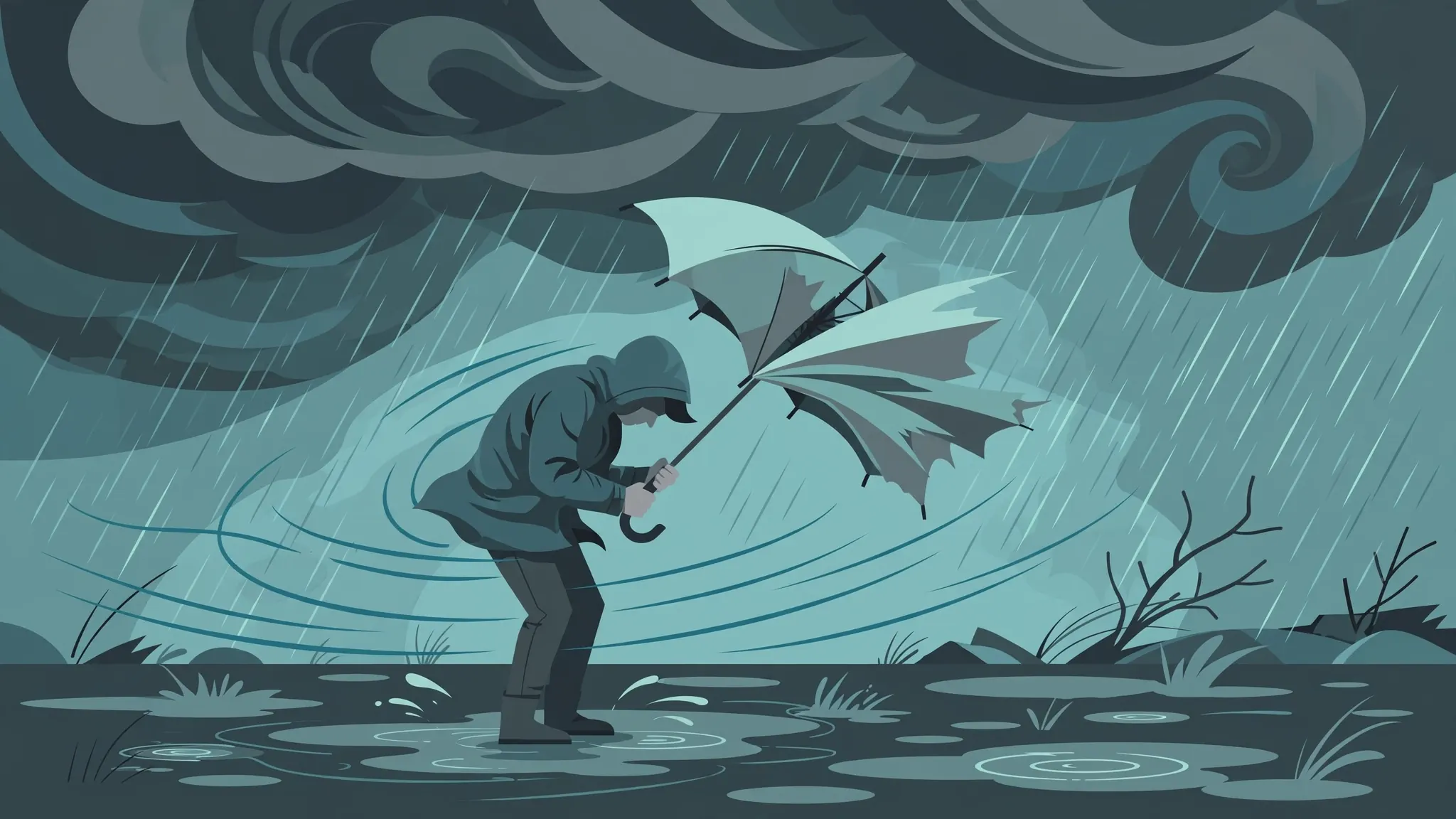
Frantic — wild and uncontrolled because of fear, worry, or panic. Example: She made a frantic call to the airline when she realized her passport was gone.
Frenzied — marked by uncontrolled, heated activity, often involving a crowd. It describes the energy of the scene more than one person’s fear. Example: A frenzied crowd rushed toward the stage doors.
Wild — uncontrolled and unrestrained, without direction or plan. In the desperate sense, it means acting beyond reason. Example: In his wild panic, he tried every key on the ring.
Feverish — hurried and intense, as if driven by a fever. It suits fast, burning effort rather than blind panic. Example: The engineers worked at a feverish pace to restore power before dawn.
Madcap — recklessly impulsive and playful, often in a comic way. It shares desperation’s recklessness but not its darkness. Example: The madcap chase through the market drew a laughing crowd.
Urgent and Dire
Dire — extremely serious, with disaster looming. It warns rather than panics. Example: The stranded hikers faced dire conditions as the temperature dropped.
Critical — at the crisis point where the outcome still hangs in the balance. It is measured and precise, not emotional. Example: The patient remained in critical condition through the night.
Urgent — needing immediate action or attention. It speaks to timing, not to hope or fear. Example: The urgent message demanded a reply before the end of the day.
Pressing — demanding attention right now, crowding out everything else. It suits obligations and deadlines. Example: A pressing deadline forced the whole team to work through the weekend.
Last-ditch — the final attempt, made only when everything else has failed. It always implies a history of failed tries. Example: The lawyer filed a last-ditch appeal the day before the sentence.
Eleventh-hour — happening at the latest possible moment, just before it is too late. It is about timing at the edge. Example: An eleventh-hour deal saved the company from bankruptcy.
Common Mistakes
Word-pair mix-ups add to the confusion — guides like unphased vs unfazed and whether vs weather sort out two classic traps — and desperate has traps of its own:
Mistake 1: Mixing the “no hope” sense with the “urgent” sense
❌ We face a desperate deadline, so nobody panic.
✅ We face an urgent deadline, so nobody panic.
Why: “desperate” covers two senses — hopeless and urgent — so an unguarded use leaves readers guessing. Signal which sense you mean: urgent for the ticking clock, hopeless or dire for the lost cause.
Mistake 2: Swapping “hopeless” and “despairing”
❌ The despairing situation grew worse every hour.
✅ The hopeless situation grew worse every hour.
Why: hopeless describes the situation — the odds are gone. Despairing describes the person — their hope is gone. A situation can’t despair; a person can’t be an odds calculation.
Mistake 3: Using “last-ditch” for any desperate effort
❌ He made a last-ditch effort on the first day of training.
✅ He made a frantic effort on the first day of training.
Why: last-ditch means the final attempt after everything else failed. On day one there have been no other attempts — save it for the genuine end of the line.
Mistake 4: Treating “madcap” as truly desperate
❌ The madcap rescue mission saved three climbers.
✅ The frantic rescue mission saved three climbers.
Why: madcap is reckless but playful — it belongs in comedies, not crises. Real desperation is never funny; frantic or feverish keeps the gravity intact.
How to Choose the Right Synonym
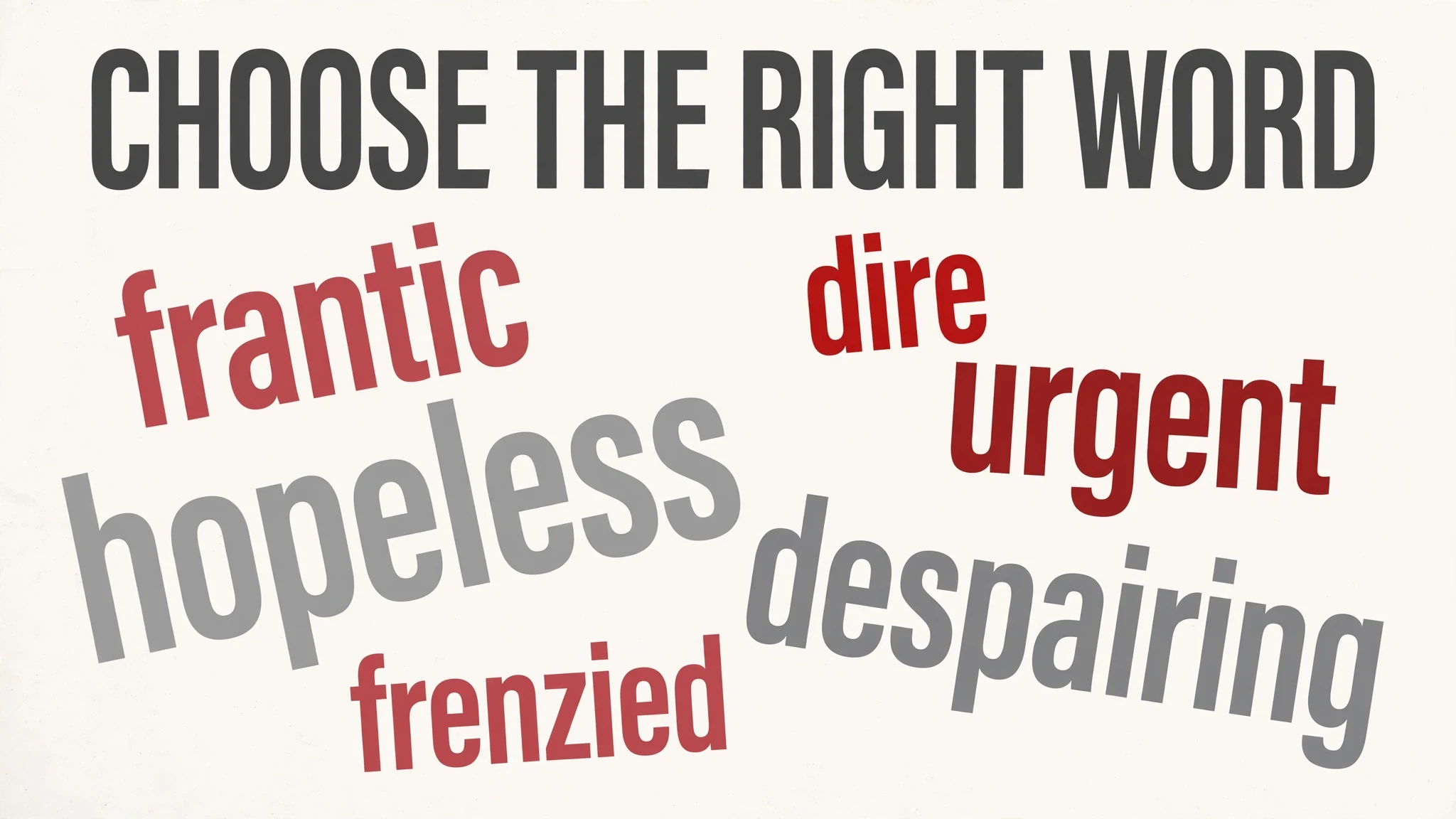
- Name the sense first. No hope (hopeless, despairing), wild panic (frantic, frenzied), or ticking clock (urgent, dire) — three different jobs, three different word families.
- Person or situation? Despairing, despondent, and frantic describe people; hopeless, dire, and critical describe situations. Put the right word on the right subject.
- Match the intensity. Feverish effort is heated but controlled; frenzied energy is barely controlled at all. Escalate only when the scene truly escalates.
- Reserve “last-ditch” and “eleventh-hour” for the genuine edge. Both imply finality. Using them for ordinary pressure drains them of meaning.
- Mind the tone. Dire and critical suit formal and news writing; madcap suits comic or casual contexts; wretched and forlorn suit literary ones.
- Test the swap. Replace the synonym in your sentence and read it back: if the reader could now mean “hopeless” when you meant “urgent,” you picked the wrong one.
Frequently Asked Questions
What is a synonym for desperate?
It depends on the sense: hopeless or despairing for the no-hope sense, frantic or frenzied for panicked action, urgent or dire for a situation that needs action now.
What is the difference between hopeless and despairing?
Hopeless describes the situation — the odds are gone. Despairing describes the person — their hope is gone. Keep the word on the right subject.
Is “desperate” always negative?
Mostly, but not entirely. “Desperate to win” or “desperate for a break” describes strong, urgent desire rather than doom — the word’s urgent sense is neutral about outcomes.
What does “last-ditch” mean?
It means the final attempt, made only after every other option has failed. The phrase comes from the image of soldiers fighting from their last ditch of defense.
Can “desperate” describe wanting something badly?
Yes. “Desperate for sleep” or “desperate to leave” uses the urgent sense — a pressing need, not hopelessness. Context tells the reader which sense you mean.
Conclusion
Desperate asks you to choose a lane: the lost hope of despairing, the wild energy of frantic, or the ticking clock of urgent. Pick the sense first, then the word, and your sentence will land exactly where you aimed it. For the complete list of senses, related words, and antonyms, see the full entry in the Merriam-Webster thesaurus.