Cilantro or Coriander: US vs UK Spelling Explained
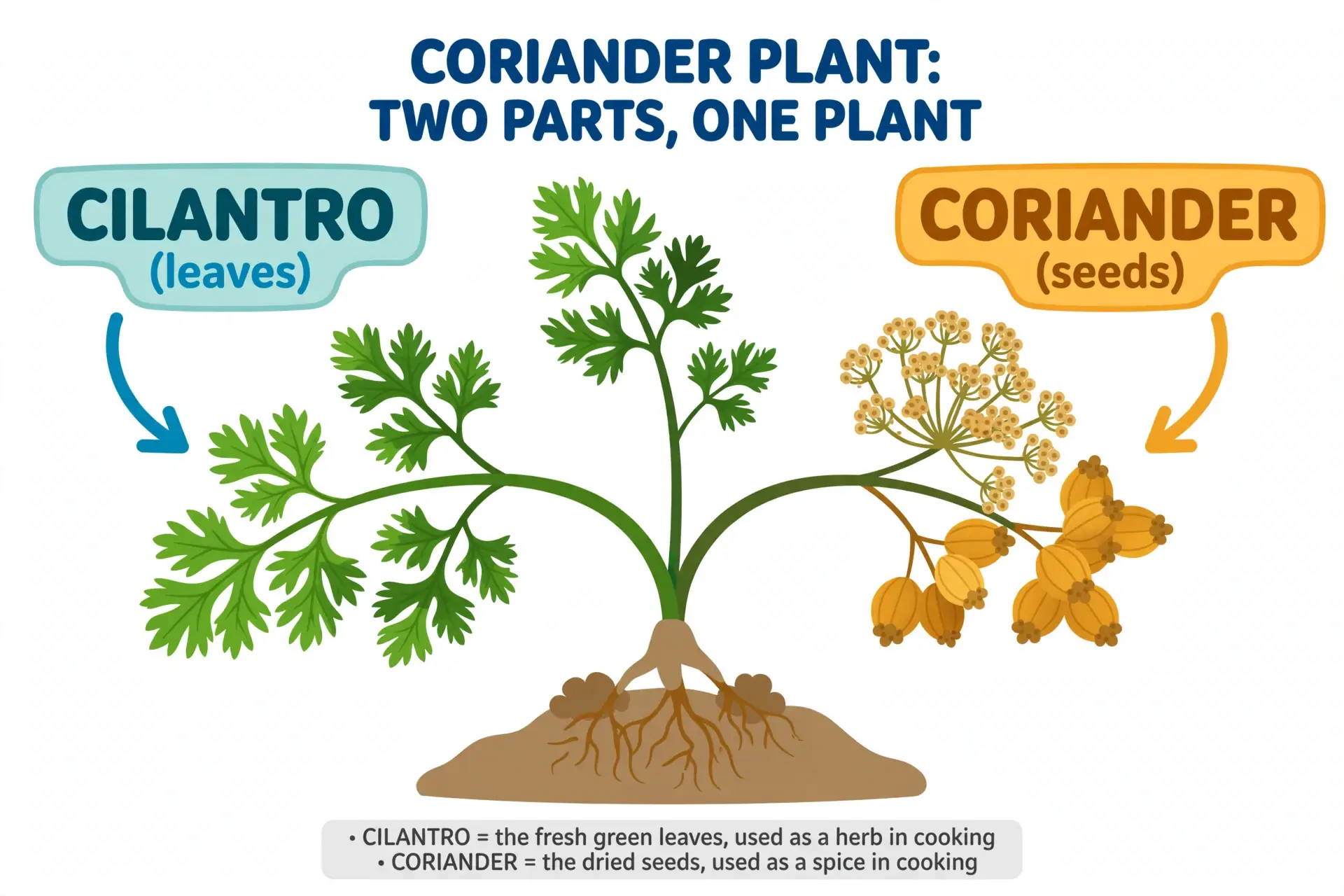
Cilantro and coriander name the same plant — but Americans split them in two: cilantro means the fresh green leaves, while coriander means the dried seeds. Brits keep it simpler: coriander covers both the leaves and the seeds. An American recipe lists “cilantro and coriander” as two ingredients; a British one just says “coriander” twice, meaning leaves once and seeds once.
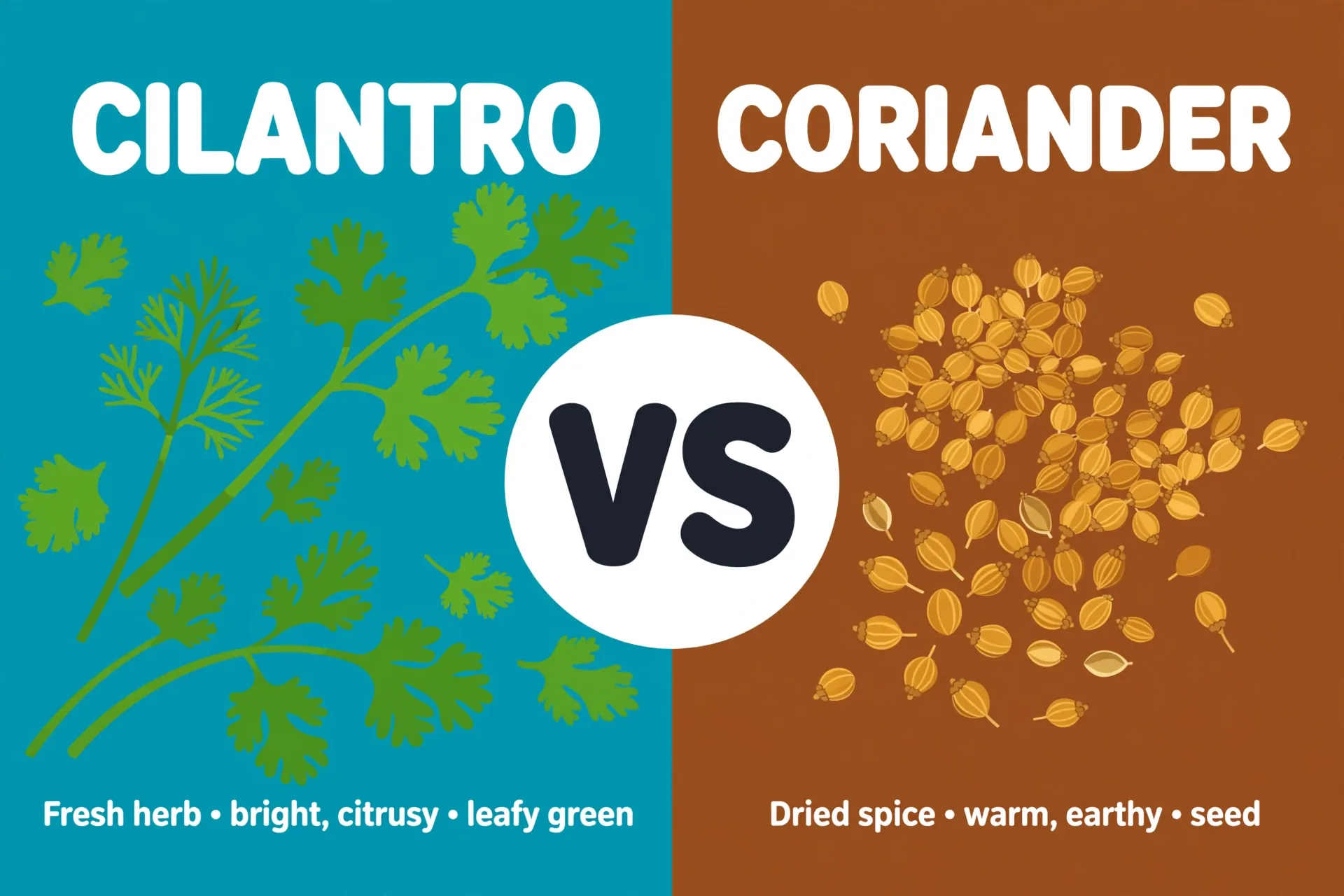
Table of Contents
Quick Answer
| Word | Spelling | Main Meaning | Example |
|---|---|---|---|
| Cilantro | American name | The fresh green leaves of the plant | “Chop fresh cilantro over the tacos.” |
| Coriander | Shared word | US: the dried seeds · UK: leaves and seeds | “Toast coriander seeds, then grind them.” (US) / “Stir fresh coriander through the curry.” (UK) |
Simple rule: in the US, leaves = cilantro and seeds = coriander; in the UK, everything from this plant is coriander.
What Does Cilantro Mean?
Cilantro is the American English word for the fresh leaves (and tender stems) of the Coriandrum sativum plant. It entered American English from Spanish — cilantro is simply the Spanish word for coriander leaf — riding north with Mexican cuisine, where the herb is essential in salsas, tacos, and guacamole. Merriam-Webster defines cilantro as the leaves of the coriander plant used as a seasoning. In the US, no cook would call the fresh leaves “coriander”; the Spanish-derived word owns that job completely. Cilantro has a bright, citrusy bite — and famously tastes like soap to some people, thanks to a genetic quirk.
Examples:
- Scatter chopped cilantro over the finished tacos just before serving.
- Fresh cilantro wilts fast, so buy it the day you cook.
- She blends cilantro, lime, and jalapeño into her salsa verde.
- A handful of cilantro transforms plain rice into something special.
- He picks the cilantro leaves off the stems for a cleaner chop.
What Does Coriander Mean?
Coriander is the older English word for the whole plant, from Latin coriandrum and Greek koriandron — and Greeks linked it to koris, “bug,” because crushed unripe plants smell buggy. In British English, coriander does double duty: “fresh coriander” means the leaves, “coriander seeds” or “ground coriander” means the warm, nutty spice. Americans narrowed it: in the US, coriander almost always means the dried seeds or the ground spice, never the fresh leaves.
Examples:
- US: “Add a teaspoon of ground coriander to the spice rub.”
- UK: “Add a teaspoon of ground coriander to the spice rub.” (identical — seeds in both)
- UK: “Tear fresh coriander over the curry at the end.”
- US: “Toast the coriander seeds until they smell nutty.”
- Whole coriander seeds keep their flavor far longer than the ground spice.
Why Two Spellings?
America, meanwhile, met the fresh herb through Mexican cooking, where it is cilantro. Spanish-speaking cooks used the leaves constantly, and American English absorbed their word for the leaves while keeping the old English word for the seeds — practical, since leaves and seeds taste nothing alike. The result is a transatlantic trap: a British recipe’s “coriander” might mean leaves, and an American cook reaching for the seed jar will ruin the dish.
Cilantro vs. Coriander: Key Differences
| Feature | Cilantro | Coriander |
|---|---|---|
| US meaning | Fresh leaves only | Dried seeds / ground spice only |
| UK meaning | Rarely used; understood as the American word for the leaves | Both leaves (“fresh coriander”) and seeds |
| Language source | Spanish, via Mexican cuisine | Latin coriandrum, via Greek |
| Flavor | Bright, citrusy, soapy to some | Warm, nutty, lemony |
| When added | Fresh, at the end of cooking | Seeds toasted and ground; cooked into dishes |
| Substitutes | Flat-leaf parsley (milder) | Cumin or caraway (different, but in the family) |
The plant is one, but the kitchen treats it as two ingredients — America gave each a name, while Britain kept one word and lets context do the work.
Related US vs UK Word Pairs
| Pair | US | UK |
|---|---|---|
| Donut or Doughnut | donut | doughnut |
| Theater or Theatre | theater | theatre |
| Color or Colour | color | colour |
| Defense or Defence | defense | defence |
| Spicy or Spicey | spicy | spicy |
Cilantro and Coriander in Real Sentences
At Home
US: “I put cilantro on the tacos and coriander in the chili.” UK: “I put fresh coriander on the tacos and ground coriander in the chilli.” The American names leaf and seed separately; the Brit qualifies one shared word.
At the Market
US: “Grab a bunch of cilantro — and check if we’re out of coriander.” UK: “Grab a bunch of fresh coriander — and check if we’re out of coriander seeds.” One of these shopping lists is genuinely ambiguous without the extra words.
In Conversation
US: “I love cilantro, but I can’t stand coriander.” UK: “I love fresh coriander, but ground coriander does nothing for me.” They’re describing the same two flavors with different vocabularies.
Common Mistakes
Kitchen vocabulary confuses cooks the way spicy vs spicey and donut vs doughnut confuse spellers — small differences, instant judgment. Watch for these.
Mistake 1: Using coriander seeds where a US recipe says cilantro
❌ Recipe says “cilantro”; the cook adds a spoonful of ground coriander.
✅ Buy the fresh green bunch labeled cilantro.
Why: in American recipes cilantro always means the fresh leaves — seeds will wreck the dish.
Mistake 2: Reading a British recipe’s “coriander” as seeds
❌ UK recipe says “a handful of coriander”; the American cook reaches for the seed jar.
✅ Read it as fresh leaves — “a handful” signals the fresh herb.
Why: quantity words like “handful” or “bunch” point to leaves; “teaspoon” points to seeds.
Mistake 3: Calling the fresh herb “coriander” in the US
❌ An American menu lists “coriander garnish.”
✅ “Cilantro garnish.”
Why: American diners read coriander as the seed spice and will picture the wrong thing.
Mistake 4: Pronouncing cilantro “sih-LAN-tro”
❌ “sih-LAN-tro with a flat A”
✅ “sih-LAHN-tro, with the Spanish ah“
Why: the Spanish vowel keeps it authentic — and restaurant staff notice.
Pronunciation
Cilantro is pronounced sih-LAHN-tro, stress on the middle syllable, with a Spanish-style ah — it rhymes with “a mantra.” The c is a soft s sound. Coriander is kor-ee-AN-der, stress on the third syllable, rhyming with “salamander.” Brits and Americans pronounce coriander the same way; the difference is purely what the word is allowed to mean.
How to Remember the Difference
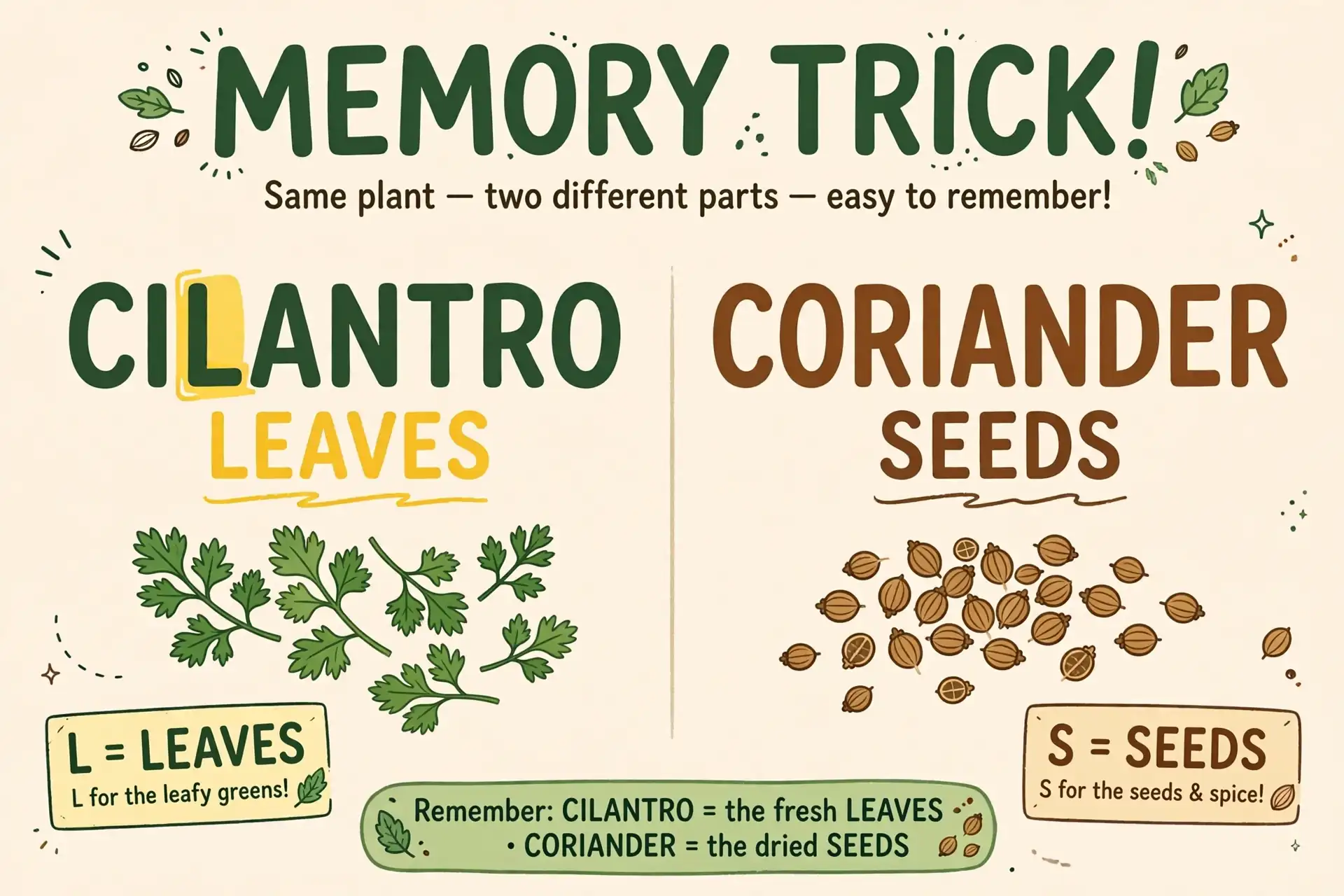
Cilantro has an L for Leaves — the fresh green leaves you chop at the last minute. Coriander has no L: the seeds aren’t leafy. And for the British usage, one word covers the whole plant — just add “fresh” or “seeds.”
- Cilantro — US word for the fresh leaves (Spanish origin).
- Coriander — US: seeds only · UK: leaves and seeds.
- Same plant, split personality — label by what your reader expects.
Frequently Asked Questions
Is it cilantro or coriander?
In the US, they’re different things: cilantro is the fresh leaves, coriander is the seeds. In the UK, coriander means both — “fresh coriander” for leaves, “coriander seeds” for seeds.
Can I substitute coriander seeds for cilantro leaves?
No — they taste completely different. Leaves are bright and citrusy; seeds are warm and nutty. Swapping them changes the dish entirely.
Why does cilantro taste like soap to some people?
A variation in the OR6A2 smell-receptor gene makes some people hypersensitive to the aldehydes in cilantro leaves, which are also found in soap. It’s genetic, not pickiness.
Do British recipes ever say cilantro?
Rarely — and usually only in recipes copied from American sources. A British cook writing naturally always says coriander, adding “fresh” when the leaves are meant.
How should I store fresh cilantro?
Like flowers: trim the stems, stand the bunch in a glass of water, cover loosely, and refrigerate. It stays fresh up to two weeks; coriander seeds, meanwhile, keep for a year in a sealed jar.
Conclusion
Cilantro and coriander come from one plant, but American English split the job — fresh leaves versus dried seeds — while British English kept a single word for both. Know which side of the Atlantic your reader cooks on, and you’ll never garnish a curry with a spice jar again.