Recognize or Recognise: US vs UK Spelling Explained
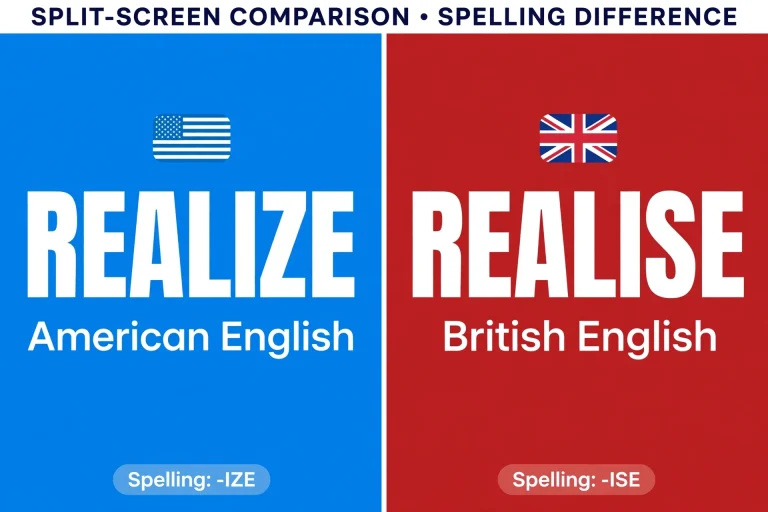
Recognize is the American spelling and recognise is the British spelling of the same verb — meaning to identify something from before, or to formally acknowledge it. One-line distinction: write recognize with a Z for a US audience, recognise with an S for a UK audience. “I recognize that song” is American; “I recognise that song” is British.
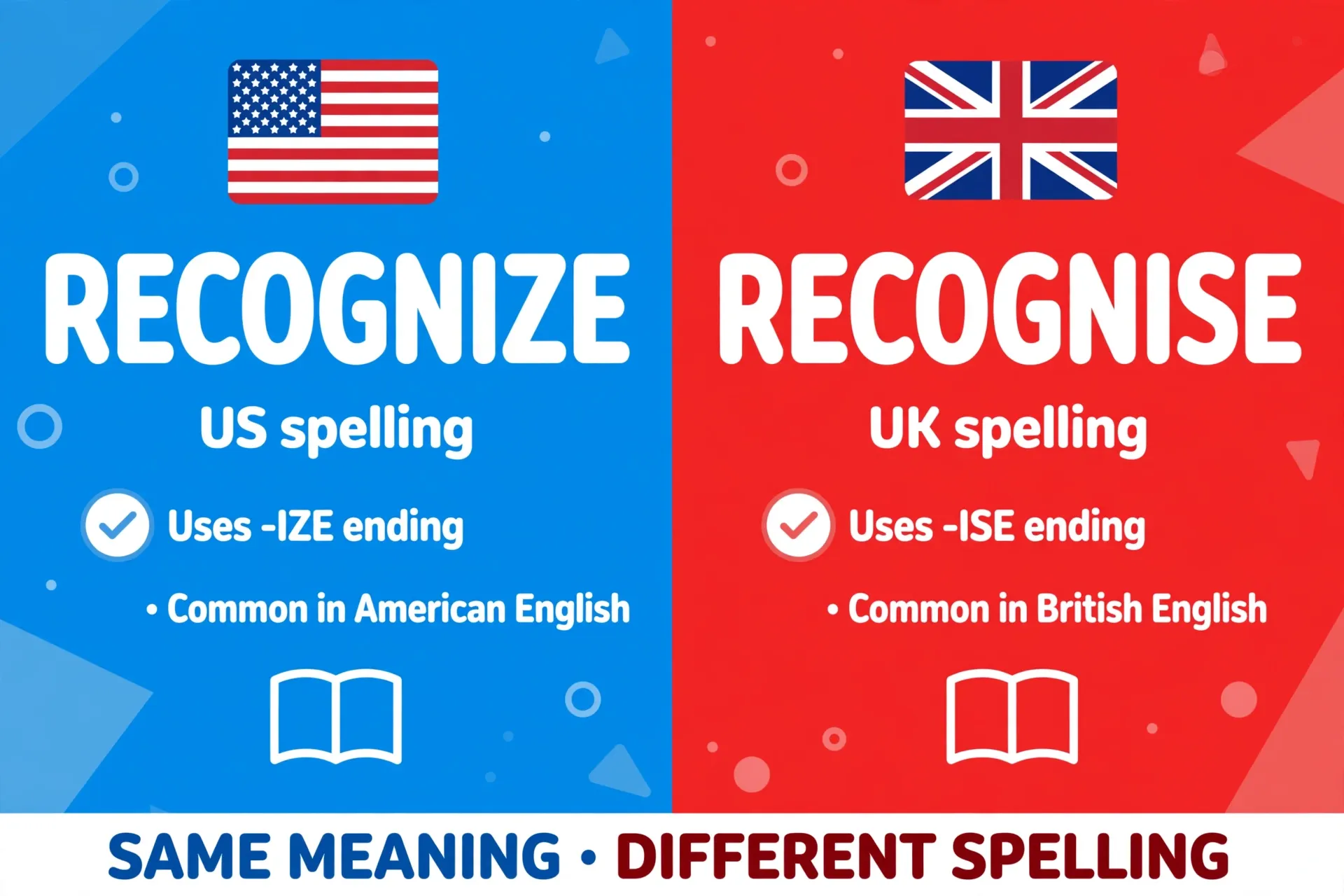
Table of Contents
- Quick Answer
- What Does Recognize Mean?
- What Does Recognise Mean?
- Why Two Spellings?
- Recognize vs. Recognise: Key Differences
- Related US vs UK Word Pairs
- Recognize in American and British Writing
- Usage Examples in Real Sentences
- Common Mistakes
- Pronunciation
- How to Remember the Difference
- Frequently Asked Questions
- Conclusion
Quick Answer
| Word | Region | Main Meaning | Example |
|---|---|---|---|
| Recognize | United States | To identify from before; to acknowledge | I recognize that actor. |
| Recognise | UK, Canada, Australia | To identify from before; to acknowledge | I recognise that actor. |
Simple rule: same verb, same meaning — recognize with a Z for American readers, recognise with an S for British readers.
What Does Recognize Mean?
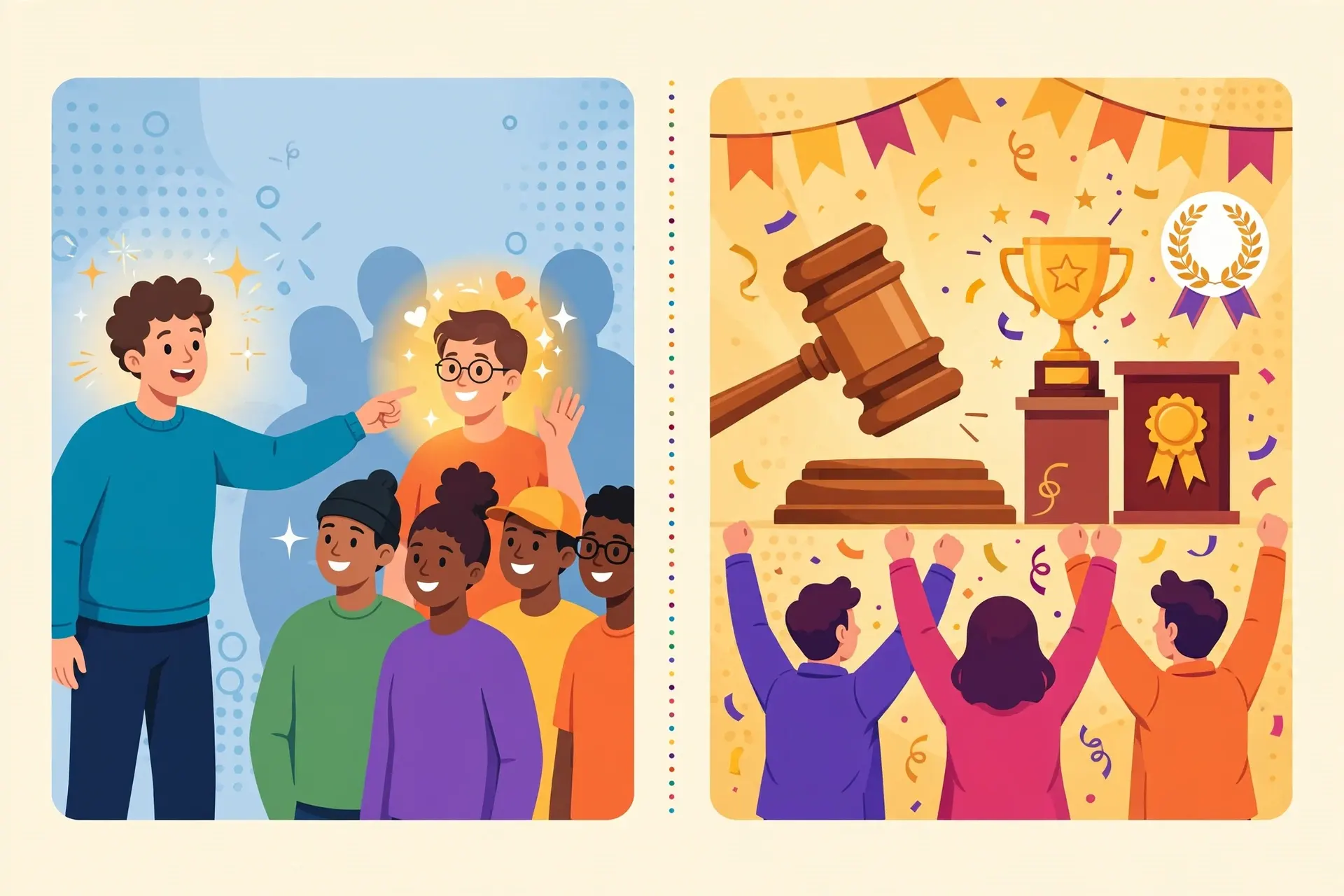
Recognize is the standard American spelling of a verb with three everyday senses: to identify someone or something you’ve seen before (“I recognize her voice”), to acknowledge something as valid or real (“the court recognized the claim”), and to show appreciation (“the school recognized his service”). Merriam-Webster lists recognize as its headword spelling.
Examples:
- I recognize that song from the radio.
- The committee recognized her years of volunteer work.
- Do you recognize the man in this photo?
- The software can recognize faces in a crowd.
- He was recognized as the top salesperson of the year.
What Does Recognise Mean?
Recognise is the standard British spelling — identical in meaning, grammar, and pronunciation to the American form. In the UK, Ireland, Australia, and most of the Commonwealth, this is the only accepted spelling in schools, courts, and newspapers. British style guides treat recognize as the American variant.
Examples:
- I recognise that song from the radio.
- The committee recognised her years of volunteer work.
- Do you recognise the man in this photo?
- The software can recognise faces in a crowd.
Why Two Spellings?
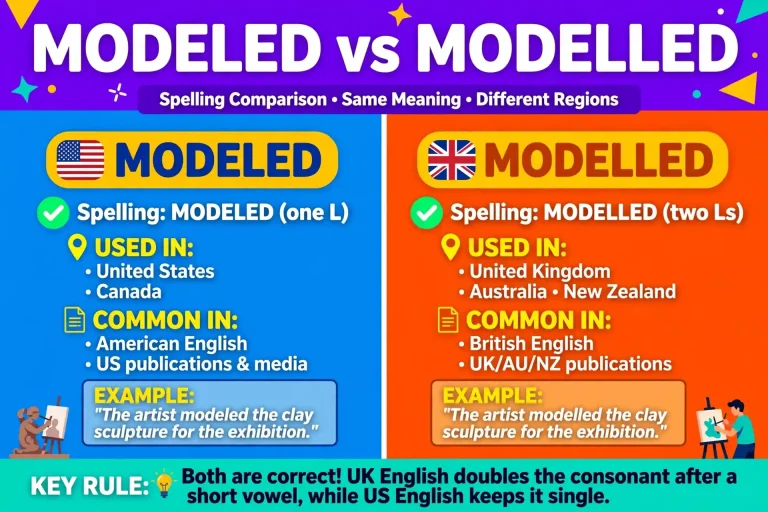
The -ize ending traces back to the Greek suffix -izein, and for centuries English spelled this whole verb family with a Z on both sides of the Atlantic. Noah Webster’s 1828 American dictionary standardized recognize with a Z for the US. In Britain, 19th-century printers drifted toward the French-flavored recognise with an S, and that became the UK convention — part of the same simplification push as Webster’s spelling reforms, which also gave us modeled instead of modelled. Oxford University Press still prefers -ize (“Oxford spelling”), so recognize isn’t wrong in Britain either — but in everyday UK writing, recognise with an S is what readers expect.
Recognize vs. Recognise: Key Differences
| Feature | Recognize | Recognise |
|---|---|---|
| Region | United States | UK, Ireland, Australia, Canada |
| Spelling | -ize (with Z) | -ise (with S) |
| Meaning | Identify; acknowledge; appreciate | Exactly the same |
| Pronunciation | “REK-ug-nyze” | “REK-ug-nyze” (same) |
| Part of speech | Verb (regular) | Verb (regular) |
| Noun form | recognition | recognition (same) |
One letter changes — Z for America, S for Britain — and interestingly, the noun recognition is spelled identically in both varieties.
Related US vs UK Word Pairs
| American (US) | British (UK) |
|---|---|
| recognize | recognise |
| realize | realise |
| organize | organise |
| apologize | apologise |
| criticize | criticise |
| characterize | characterise |
| maximize | maximise |
| specialize | specialise |
The -ize/-ise split runs through hundreds of verbs, including American streamlined forms like modeling instead of modelling — same simplification philosophy, different letter pattern.
Recognize in American and British Writing
The split is visible in everyday prose. American legal documents, tech manuals, and schoolbooks use recognize — “the system will recognize your fingerprint.” British equivalents write recognise — “the system will recognise your fingerprint.” Academic journals are strict: a US journal copyedits recognise to recognize, and a UK journal does the reverse. For job applications and CVs, match the spelling to the employer’s country — a hiring manager notices the foreign form, even subconsciously.
Usage Examples in Real Sentences
At Home
US: “I recognize that voice — it’s Grandma!” — UK: “I recognise that voice — it’s Granny!” Same moment of recognition, different letter.
At Work
An American boss says “We recognize your hard work,” while a British boss says “We recognise your hard work.” The praise lands the same way.
In Conversation
“I didn’t recognize you with the new haircut” and “I didn’t recognise you with the new haircut” are the same sentence — the Z/S swap never reaches the ear.
Common Mistakes
With this verb pair the errors are about regional consistency — pick the American set or the British set and don’t blend them.
Mistake 1: Mixing -ize and -ise in one document
❌ “Please recognize the new policy and organise your team accordingly.”
✅ “Please recognize the new policy and organize your team accordingly.”
Why: one document, one regional system — never mix Z-forms with S-forms.
Mistake 2: Writing “recogize” (missing the N)
❌ “I recogize that logo.”
✅ “I recognize that logo.” (US) / “I recognise that logo.” (UK)
Why: recogize is a misspelling in every variety of English — the N is always there.
Mistake 3: Writing “reconize” (missing the G)
❌ “Did you reconize him?”
✅ “Did you recognize him?”
Why: the G-N cluster is the tricky part; say “rec-og-nize” slowly to lock in the letters.
Mistake 4: Using “recognization” as the noun
❌ “The recognization of talent matters.”
✅ “The recognition of talent matters.”
Why: the noun is recognition in both US and UK English — recognization is not a standard word.
Pronunciation
Both are pronounced “REK-ug-nyze” — three syllables, stress on the first, ending with a Z sound in every accent. The word rhymes roughly with agonize and patronize. Like its cousin realise, British speakers write it with an S but still pronounce a Z, so the spelling split is purely visual.
How to Remember the Difference
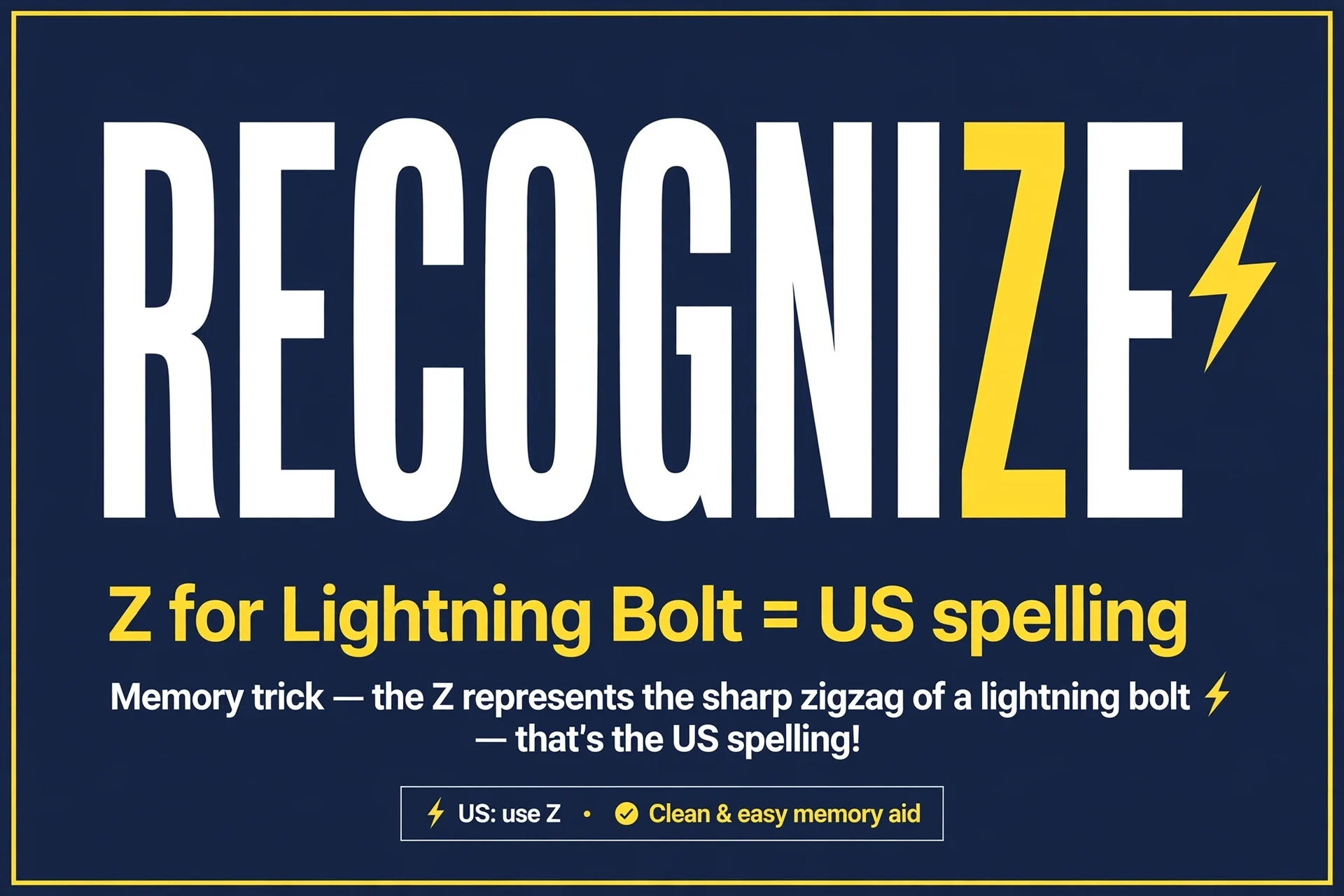
American spelling keeps the Z — picture the bold Z as a lightning bolt on the American flag and you’ll land on recoGniZe. British spelling softens it to S — think “S for Sherlock,” England’s most famous detective, to remember recogniSe. Quick recap:
- Recognize = American spelling (bold Z, “Z for lightning bolt”)
- Recognise = British spelling (bold S, “S for Sherlock”)
- The noun recognition never changes — keep your Z/S verbs consistent in every document
Frequently Asked Questions
Is it recognize or recognise?
Both are correct. Recognize is the American spelling; recognise is the British spelling of the same verb.
Is the noun spelled “recognition” in both?
Yes — recognition is identical in American and British English. Only the verb splits into recognize/recognise.
Which spelling does Canada use?
Canada officially leans British, so recognise is standard in government and education, though recognize is widespread in business and tech.
Is “recognization” a word?
Not in standard English. Use recognition in both varieties — “recognization” will be flagged everywhere.
How do you pronounce recognise?
Exactly like recognize: “REK-ug-nyze,” with a Z sound at the end despite the S spelling.
Is “recogize” ever correct?
Never — recogize (without the N) is a misspelling in all varieties of English.
Conclusion
Recognize and recognise are the same verb in different regional dress — American with a Z, British with an S, while the noun recognition stays the same everywhere. Match the verb to your audience, keep it consistent, and you’ll never go wrong.