Girlie or Girly: What’s the Difference?
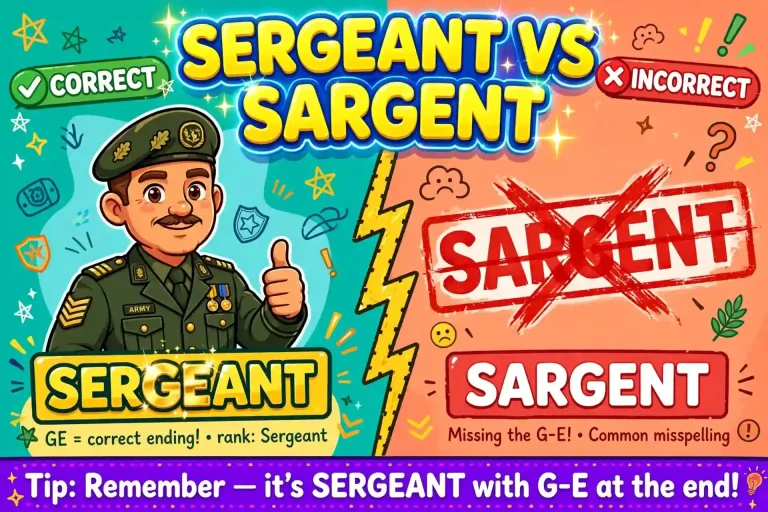
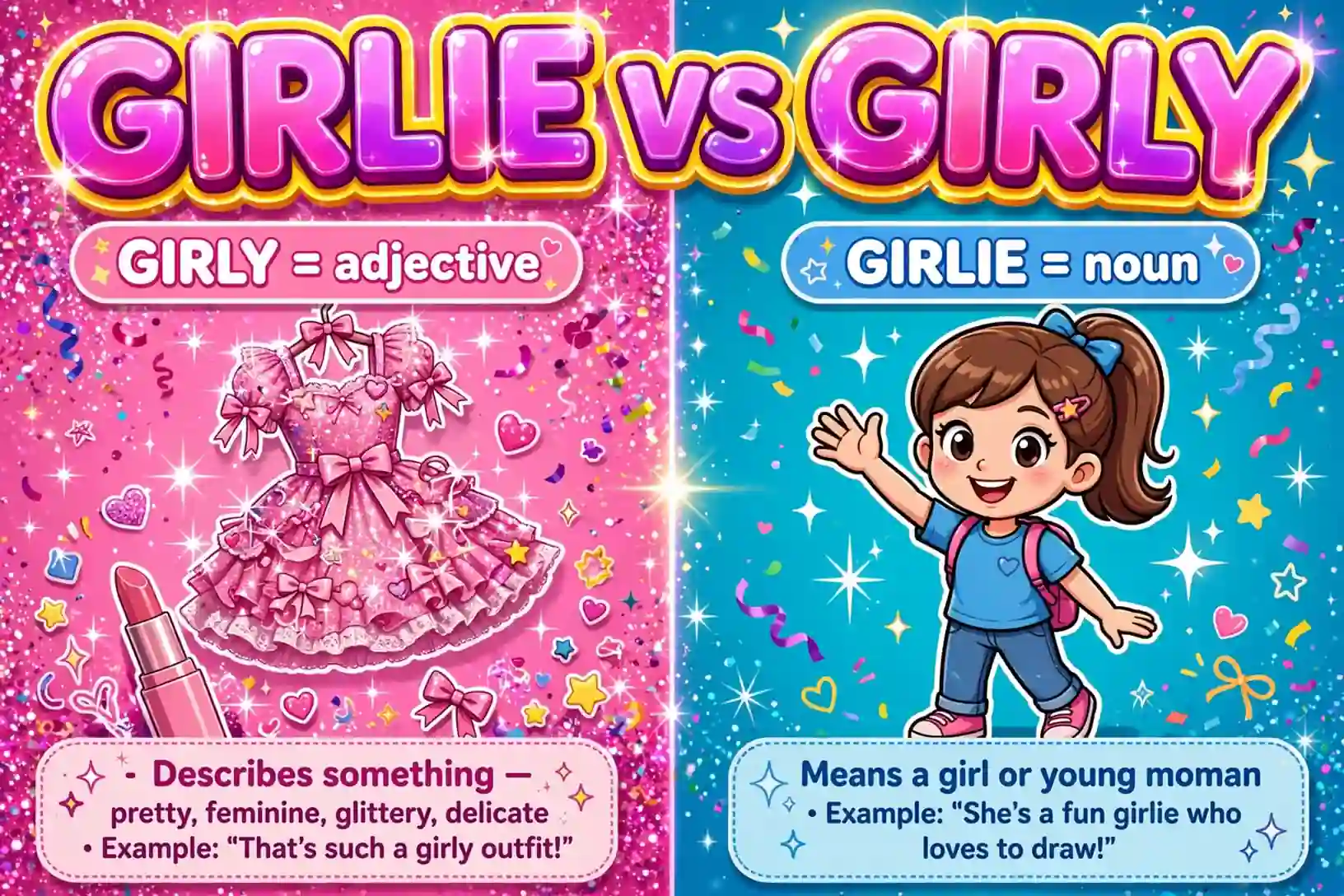
Girly is an adjective meaning feminine or like a girl — think pink dresses, glitter, and princess themes. Girlie is a noun meaning a young woman or girl, most often seen in terms like “girlie magazine.” They sound the same but play different roles in a sentence.
For example, “a girly birthday party” describes a feminine-style party. “The calendar featured a girlie in a swimsuit” uses girlie as a noun for a young woman. Mixing them up changes the meaning entirely.
Quick Answer
| Word | Part of Speech | Main Meaning | Example |
|---|---|---|---|
| Girly | Adjective | Feminine; like or suitable for a girl | She loves girly movies. |
| Girlie | Noun | A young woman or girl | The magazine is full of girlies. |
Simple rule: Describing something feminine? Write girly. Naming a young woman? Write girlie.
What Does Girly Mean?
Girly is an adjective that describes things associated with girls or femininity — pink colors, frills, dolls, romance, and delicate styles. It can be affectionate or teasing depending on tone.
Examples:
- Her room is decorated in a girly style with pink walls.
- He ordered a girly cocktail with an umbrella in it.
- They watched a girly romantic comedy on Friday night.
- She has a girly laugh that everyone recognizes.
- Don’t be so girly about the spider — just catch it!
Girly is always a describing word. If you can swap in “feminine,” then girly is the spelling you want. See girly on Merriam-Webster for the full dictionary entry.
What Does Girlie Mean?
Girlie is a noun meaning a young woman or girl. It appears most often in compounds like “girlie magazine” (a magazine featuring photos of scantily clad women) or “girlie show.” Used on its own for a person, it can sound dated or disrespectful.
Examples:
- The old magazine was known as a girlie magazine.
- The calendar showed a different girlie each month.
- He called the waitress a “girlie,” which offended her.
- That word “girlie” feels outdated in modern writing.
Girlie as an Adjective Variant
You will sometimes see girlie used as an adjective, as in “a girlie drink” or “girlie colors.” This is a variant spelling of girly, but the standard adjective form is girly. In careful writing, stick with girly for the adjective.
Girlie vs. Girly: Key Differences
| Feature | Girlie | Girly |
|---|---|---|
| Part of speech | Noun | Adjective |
| Meaning | A young woman or girl | Feminine; girl-like |
| Tone | Can sound dated or rude | Neutral to playful |
| Common in | “Girlie magazine” | “Girly party,” “girly style” |
| Example | Don’t call her a girlie. | She likes girly things. |
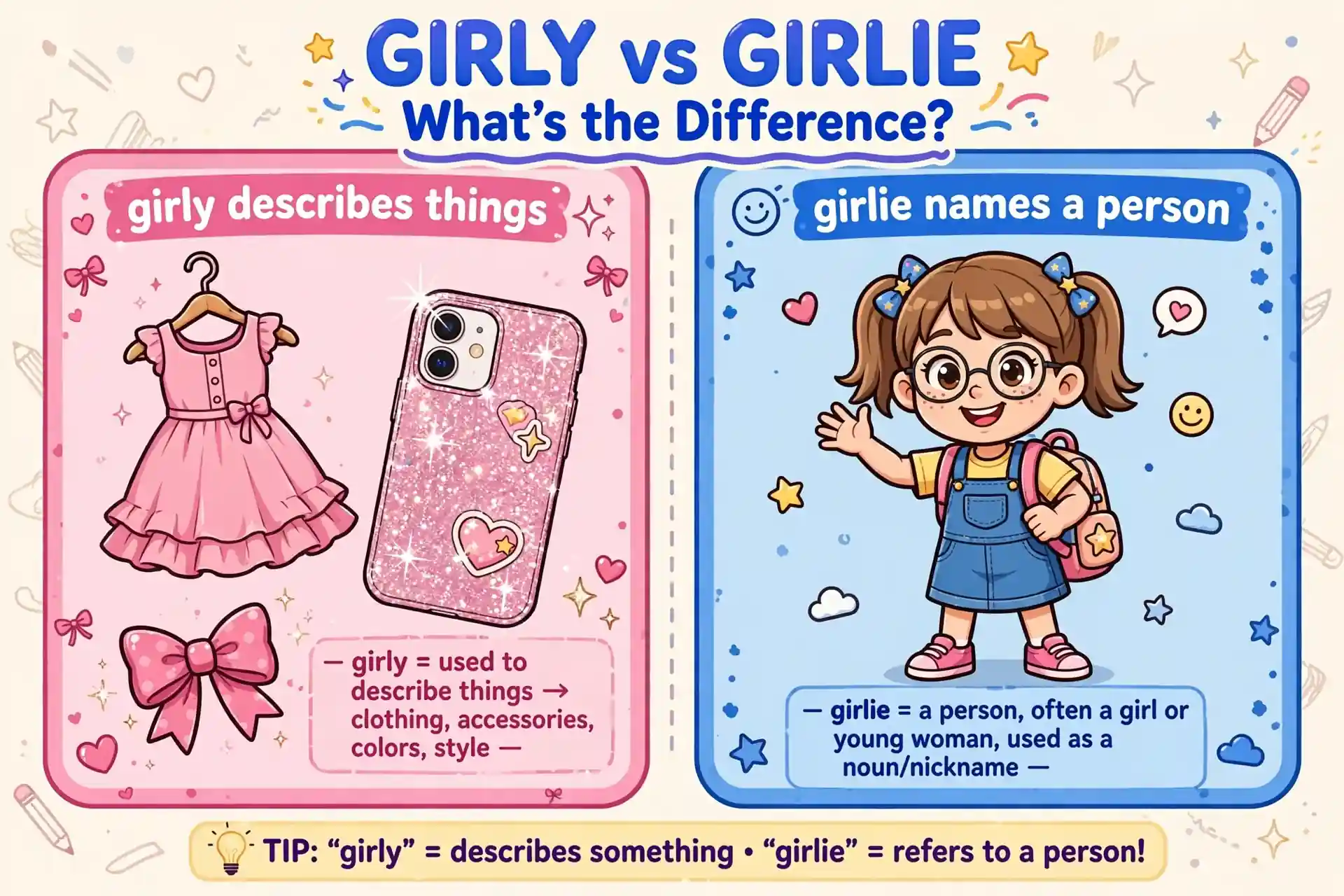
The one-letter difference flips the word’s job: girlie names a person, girly describes a quality. This kind of small spelling shift changing the meaning is common with tricky homophone pairs, much like dyeing vs dying.
Examples of Girlie and Girly in Real Sentences
At a Party
Girly: “The decorations were very girly — pink balloons everywhere.”
Girlie: “The magazine on the table was an old girlie magazine.”
The first describes a style; the second names a type of publication.
In Conversation
Girly: “I’m in the mood for a girly movie night.”
Girlie: “Referring to women as girlies is pretty outdated.”
One is a harmless adjective, the other a noun many find dismissive.
While Shopping
Girly: “She picked the girliest dress in the store.”
The adjective girly even takes comparative forms like “girlier” and “girliest.”
Common Mistakes With Girlie and Girly
Mistake 1: Writing “Girlie” for the Adjective
❌ She wore a girlie pink dress.
✅ She wore a girly pink dress.
Why: The word describes the dress, so the adjective girly is correct.
Mistake 2: Writing “Girly” as a Noun
❌ The magazine featured a girly on the cover.
✅ The magazine featured a girlie on the cover.
Why: The sentence names a person, so the noun girlie is correct.
Mistake 3: Using “Girlie” for a Person Casually
❌ Hey girlie, bring me a coffee!
✅ Avoid this entirely in polite speech.
Why: Calling someone a “girlie” can sound patronizing. Use their name instead.
Pronunciation: Girlie vs. Girly
Both are pronounced /ˈɡɜːrli/, rhyming with early and curly.
Since they sound identical, only the spelling — and the sentence around it — reveals which meaning is intended.
How to Remember the Difference
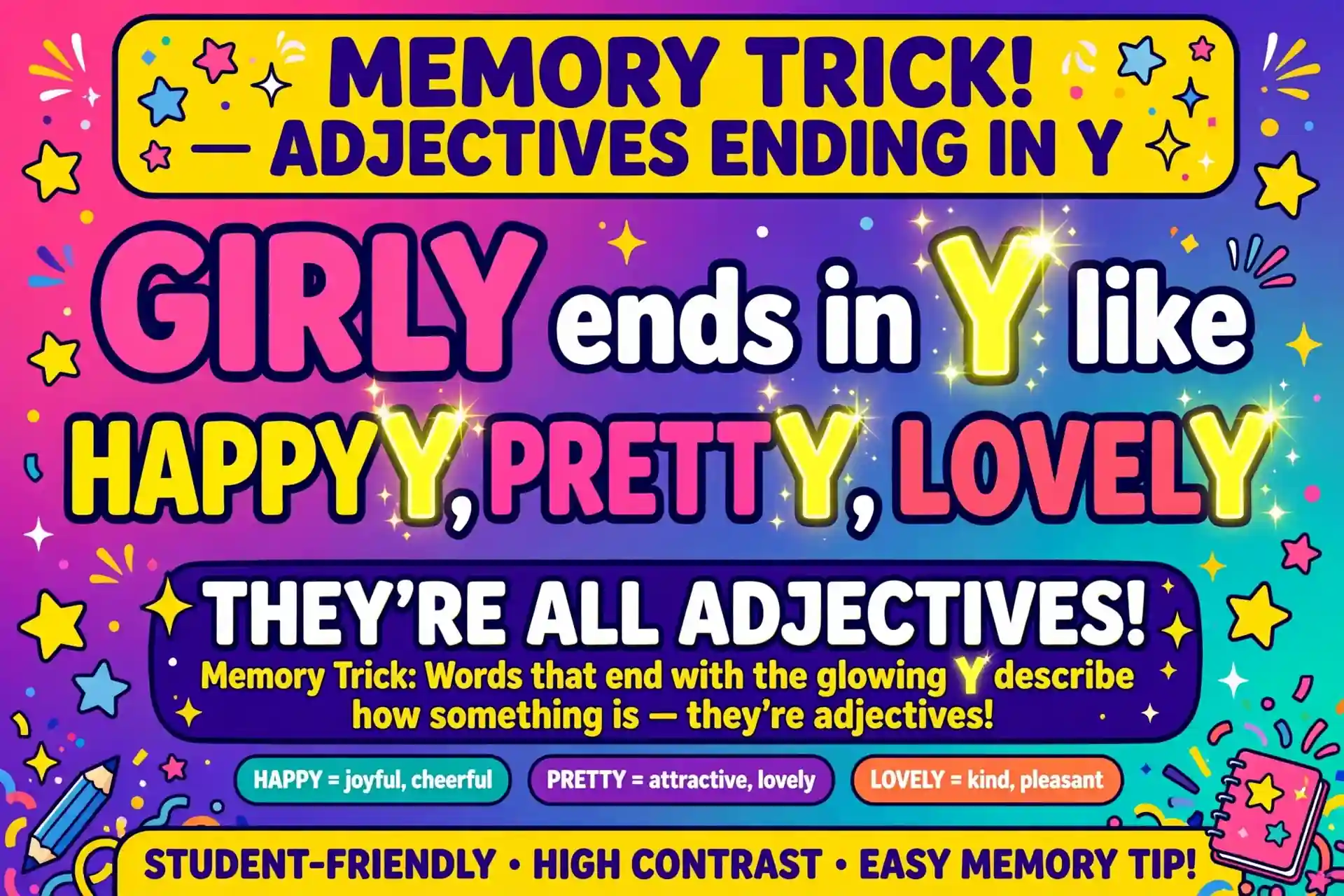
Memory trick: Girly ends in Y, like other describing words — happy, pretty, lovely. Adjectives love the letter Y.
- Girly = adjective (feminine style) — ends in Y like happy.
- Girlie = noun (a young woman) — ends in IE like lassie, a word for a girl.
Ask yourself: “Am I describing something?” If yes, write girly.
Frequently Asked Questions
Is it girlie or girly?
Both are real words. Use girly as the adjective (feminine style) and girlie as the noun (a young woman).
Is “girlie” offensive?
It can be. Calling a woman a “girlie” often sounds patronizing or dated, so it is best avoided when referring to people directly.
Can “girlie” be an adjective?
Sometimes, as in “girlie drink,” but girly is the standard adjective spelling. Use girly in careful writing.
What does “girlie magazine” mean?
It means a magazine featuring photographs of scantily clad young women. The term is considered old-fashioned today.
Do girlie and girly sound the same?
Yes. Both are pronounced /ˈɡɜːrli/. Only spelling and context distinguish them.
Conclusion
Girly describes feminine things; girlie names a young woman. Use the adjective girly for styles and tastes, reserve the noun girlie for its limited (and often dated) contexts, and you will never mix them up.