Synonyms for Kindness: Words With Examples
Writers reach for “kindness” constantly — in thank-you notes, character descriptions, and essays — but one word can’t cover every shade of warmth. This guide collects 24 synonyms for kindness, grouped by whether they describe warmth, generosity, or gentle nature. Each word comes with its nuance and an example sentence so you can choose exactly the right one.

Quick Answer
| Word | Nuance / When to use it |
|---|---|
| compassion | Deep sympathy for someone’s suffering; the strongest emotional synonym. |
| tenderness | Soft, gentle affection; intimate and warm. |
| warmth | Friendly, welcoming feeling; works for people and atmospheres. |
| affection | Fond, caring feeling toward someone you know well. |
| generosity | Giving freely of time, money, or attention. |
| charity | Love expressed through giving, especially to those in need. |
| benevolence | A general disposition to do good; slightly formal. |
| goodwill | Friendly, cooperative intent toward others. |
| gentleness | A mild, careful manner that never harms. |
| consideration | Thinking of others’ needs before acting. |
| humanity | Compassionate treatment worthy of human beings. |
| mercy | Kindness shown to someone in your power, especially by sparing them. |
Simple rule: use “warmth” words for feelings, “generosity” words for giving, and “gentle nature” words for character.
Warmth and Care
These words describe the emotional heart of kindness — the tenderness and concern you feel for another person.
- compassion — deep sympathy for another’s suffering, joined with the urge to help. “Her compassion for the homeless families moved the whole town.”
- tenderness — soft, gentle affection; intimate rather than public. “He spoke of his grandmother with real tenderness.”
- warmth — a friendly, welcoming quality; it can describe a person, a smile, or a whole room. “The warmth of their welcome put every guest at ease.”
- affection — a fond, caring feeling, usually toward someone you know and like. “The old dog looked at its owner with pure affection.”
- fondness — a gentle, settled liking that grows over time. “She had a lifelong fondness for her childhood teacher.”
- empathy — the ability to feel and understand what another person is going through. “A good nurse combines skill with genuine empathy.”
- sympathy — caring about someone’s trouble or misfortune; the everyday word for shared feeling. “He wrote a letter of sympathy after the accident.”
- love — the deepest form of caring; in this sense, a selfless concern for another’s good. “She ran the shelter out of love for animals.”

Generosity
Kindness in action: these words describe giving freely — of money, time, attention, or spirit.
- generosity — the quality of giving freely and abundantly, without expecting return. “The neighbors’ generosity after the fire was overwhelming.”
- charity — love expressed through giving, especially to those in need; also the organized form of such giving. “They donated half their income to charity every year.”
- benevolence — a general, settled disposition to do good; slightly formal in tone. “The foundation was built on one woman’s quiet benevolence.”
- goodwill — friendly, cooperative intent; kindness aimed at keeping relationships smooth. “The company sent gift baskets as a gesture of goodwill.”
- magnanimity — generosity of spirit, especially toward a rival or someone who has wronged you. “In a show of magnanimity, she forgave her competitor publicly.”
- altruism — selfless concern for the well-being of others, without thought of reward. “Donating a kidney to a stranger is pure altruism.”
- philanthropy — large-scale giving for the public good, usually through donations or foundations. “His philanthropy built three schools in the region.”
- beneficence — the formal term for doing good or giving help; common in academic and philosophical writing. “The essay praised beneficence as the highest virtue.”
Gentle Nature
These words describe the character of a kind person — how they treat others day to day.
- gentleness — a mild, careful manner; kindness that never startles or harms. “The vet handled the frightened cat with great gentleness.”
- consideration — thinking of other people’s needs and feelings before acting. “Turning down the music at midnight showed real consideration.”
- thoughtfulness — the habit of doing small, kind things for others unprompted. “Her thoughtfulness showed in every handwritten note she sent.”
- humanity — compassionate, decent treatment worthy of human beings; often used when cruelty would be easy. “Even in war, the medic treated every prisoner with humanity.”
- decency — basic moral goodness; doing the right thing by others as a matter of principle. “He had the decency to admit the mistake was his.”
- graciousness — kindness wrapped in courtesy and good manners, especially from someone in a strong position. “The host’s graciousness made even shy guests feel welcome.”
- mercy — kindness shown to someone in your power, especially by sparing them punishment. “The judge showed mercy to the first-time offender.”
- kindheartedness — a naturally warm and caring disposition; kindness as a personality trait. “Her kindheartedness was obvious to everyone who met her.”
Common Mistakes
Kindness words are easy to mix up — the same kind of mix-up that makes writers reach for grateful when they mean something else, or confuse honey with a term of endearment issue. Watch for these four.
Mistake 1: Using “pity” as a synonym for “compassion”
❌ “She felt pity for the refugees and organized a fundraiser.”
✅ “She felt compassion for the refugees and organized a fundraiser.”
Why: pity often carries condescension — looking down on someone. Compassion meets suffering with respect and the urge to help.
Mistake 2: Calling a kind act “charity” when you mean the attitude
❌ “His charity toward strangers was well known.”
✅ “His generosity toward strangers was well known.”
Why: “charity” most often means organized giving or donations today. For a person’s giving nature, “generosity” or “benevolence” is clearer.
Mistake 3: Confusing “nice” with “kind”
❌ “She is so nice — she volunteers at the shelter every week.”
✅ “She is so kind — she volunteers at the shelter every week.”
Why: “nice” describes surface pleasantness; “kind” describes genuine care in action. Volunteering weekly is kindness, not just niceness.
Mistake 4: Using “sympathy” when you mean “empathy”
❌ “The counselor’s sympathy helped the patient feel understood.”
✅ “The counselor’s empathy helped the patient feel understood.”
Why: sympathy is caring about someone’s trouble; empathy is feeling with them. For deep understanding, empathy is the precise word.
How to Choose the Right Synonym
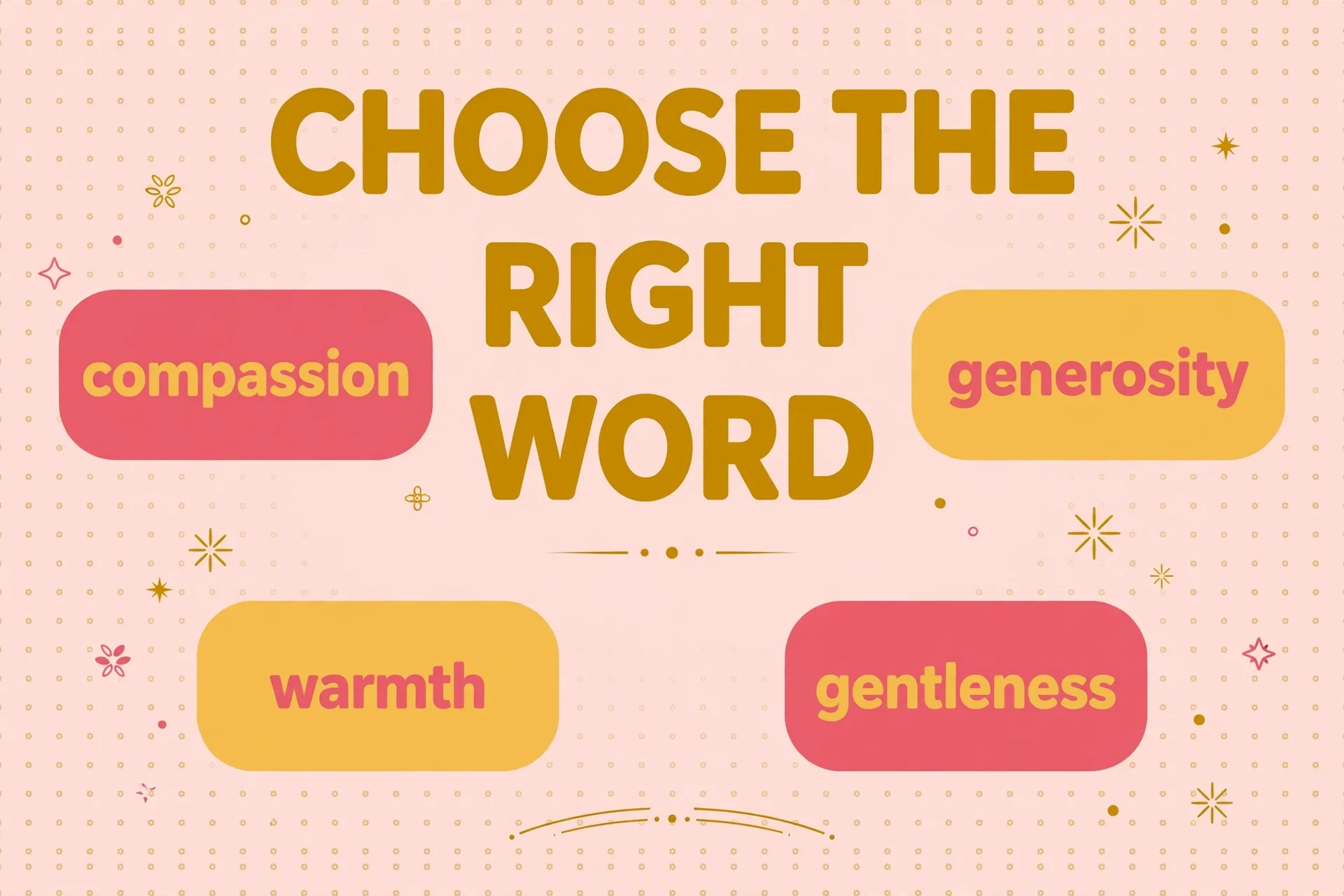
- Feelings vs. actions: warmth and affection describe feelings; generosity and charity describe giving.
- Scale matters: philanthropy suits foundations and fortunes; thoughtfulness suits small, everyday gestures.
- Watch the power dynamic: mercy fits when you hold power over someone; compassion fits equals in suffering.
- Mind the register: beneficence and magnanimity are formal; warmth and kindness suit everyday writing.
- Avoid the condescension trap: pity looks down, compassion stands beside — choose accordingly.
Frequently Asked Questions
What is a synonym for kindness?
“Compassion” is the closest emotional synonym, while “generosity” is the closest synonym for kindness shown through giving.
What is the difference between kindness and compassion?
Kindness is the broad quality of being caring and helpful. Compassion is deeper and more specific: it responds to suffering with a strong urge to relieve it.
Is “generosity” a synonym for kindness?
Yes, when kindness takes the form of giving — money, time, or attention. But kindness also covers gentle manners and warm feelings, where “generosity” wouldn’t fit.
What is a formal synonym for kindness?
“Benevolence” and “beneficence” suit formal and academic writing; “magnanimity” works when describing noble generosity of spirit.
What is the difference between empathy and sympathy?
Empathy means feeling with someone — understanding their emotions from the inside. Sympathy means caring about their trouble from the outside.
Conclusion
From quiet thoughtfulness to grand philanthropy, English gives you a precise word for every expression of a caring heart. Match the word to the feeling, the act, and the tone, and your writing will glow with exactly the warmth you mean. For the full entry, browse the Merriam-Webster thesaurus page for “kindness”.