Synonyms for Confidence: 19+ Words With Examples
Confidence is really two words in one: belief in yourself, and belief placed in someone else — plus the “in confidence” sense of a shared secret. This guide gives you 19 precise alternatives for confidence, grouped by meaning and clearly labeled by sense, each with a one-line definition and a natural example sentence. They reflect the distinct senses that Merriam-Webster’s thesaurus entry for “confidence” separates into self-assurance, certainty, trust, and secret.

Table of Contents
Quick Answer
| Word | Nuance / When to use it |
|---|---|
| self-confidence | The closest swap for belief in yourself and your abilities |
| assurance | Calm certainty in yourself — slightly formal |
| poise | Graceful self-control under pressure — social and public settings |
| aplomb | Cool self-possession in tough situations — polished, formal |
| certainty | Freedom from doubt — about facts and outcomes |
| conviction | Firm belief, often moral or intellectual |
| self-assurance | Quiet trust in your own judgment — no showing off |
| trust | Belief in someone else’s reliability or character |
| faith | Deep trust, often beyond what evidence proves |
| reliance | Depending on someone — practical, everyday trust |
| secret | Information shared “in confidence” — told in trust |
| confidentiality | The formal duty to keep shared information private |
Simple rule: Belief in yourself → self-confidence, poise, aplomb; freedom from doubt → certainty, conviction; belief in someone else → trust, faith, reliance; something told in trust → secret, confidentiality.
Confidence as Self-Assurance
When “confidence” means belief in yourself — your abilities, your presence, your judgment — these five words name it precisely.
Self-confidence — belief in your own abilities and worth; the direct, everyday synonym. Months of practice gave her the self-confidence to perform solo.
Assurance — calm, steady certainty in yourself; slightly formal. He answered the cross-examination with complete assurance.
Poise — graceful composure and self-control, especially in public. She handled the hostile interview with remarkable poise.
Aplomb — manifest self-possession in trying situations; polished and formal. The young diplomat handled the crisis with real aplomb.
Self-possession — cool command of yourself under stress. She answered the rude question with total self-possession.

Confidence as Certainty and Conviction
When “confidence” means being free from doubt — about a fact, a decision, or a belief — these words fit.
Certainty — the state of being sure; no doubt remains. She spoke with absolute certainty about the test results.
Conviction — a firmly held belief, often moral or intellectual. He argued with the conviction of someone who had seen the evidence himself.
Sureness — quiet, steady sureness of manner or judgment. There was a sureness in her voice that settled the whole room.
Self-assurance — trust in your own judgment without arrogance. His self-assurance came from twenty years of getting it right.
Boldness — fearless willingness to act on your belief. The boldness of the startup’s pitch won over the investors.
Confidence as Trust in Others
When “confidence” means belief placed in someone else — their ability, honesty, or reliability — these are the right words.
Trust — firm belief in someone’s reliability or integrity. The team has complete trust in their new coach.
Faith — deep trust, often going beyond what evidence can prove. Her parents had faith she would find her way.
Reliance — practical dependence on someone’s help or judgment. The clinic’s reliance on volunteers keeps it running.
Belief — acceptance that someone is capable or truthful. The teacher’s belief in him changed his whole attitude to school.
Credence — formal term for belief or acceptance as true. The report gave little credence to the rumors.
Confidence as a Shared Secret
“In confidence” is its own sense of the word — information shared with the expectation it stays private. These words belong to that world.
Secret — information kept from others; what “a confidence” usually is. She told me her plans in strict confidence.
Confidentiality — the formal obligation to keep shared information private. The lawyer reminded everyone of their duty of confidentiality.
Discretion — the quality of keeping silent about private matters. The journalist promised complete discretion to her source.
Off the record — shared with the understanding it won’t be repeated or published. Off the record, the manager admitted the deadline was impossible.
Common Mistakes
Confidence’s two senses — self-belief and trust in others — are a constant source of mix-ups. The same precision that settles the purposely-vs-purposefully pair and the greatful-or-grateful mix-up applies here: know which sense you mean before you swap the word.
Mistake 1: “Confidence” for arrogance
❌ She walked in with confidence, bragging about her promotion to everyone.
✅ She walked in with arrogance, bragging about her promotion to everyone.
Why: Confidence is quiet belief in yourself; showing off is arrogance. Calling arrogance “confidence” praises the wrong thing.
Mistake 2: “Confidence” for optimism about the future
❌ I have confidence the stock market will rise next year.
✅ I’m optimistic the stock market will rise next year.
Why: Confidence and trust attach to people and abilities; a hopeful guess about events is optimism, not confidence.
Mistake 3: “In confidence” used backwards
❌ He kept the surprise party in confidence.
✅ He kept the surprise party secret — or: she told him about the party in confidence.
Why: “In confidence” describes how information is shared (told in trust), not the thing itself. The party is a secret; the telling is “in confidence.”
Mistake 4: “Confidence” for “self-esteem”
❌ Therapy gave her the confidence to finally love herself.
✅ Therapy gave her the self-esteem to finally love herself.
Why: Confidence is belief in your abilities (“I can do this”); self-esteem is how much you value yourself (“I matter”). Loving yourself is a self-esteem matter.
How to Choose the Right Synonym
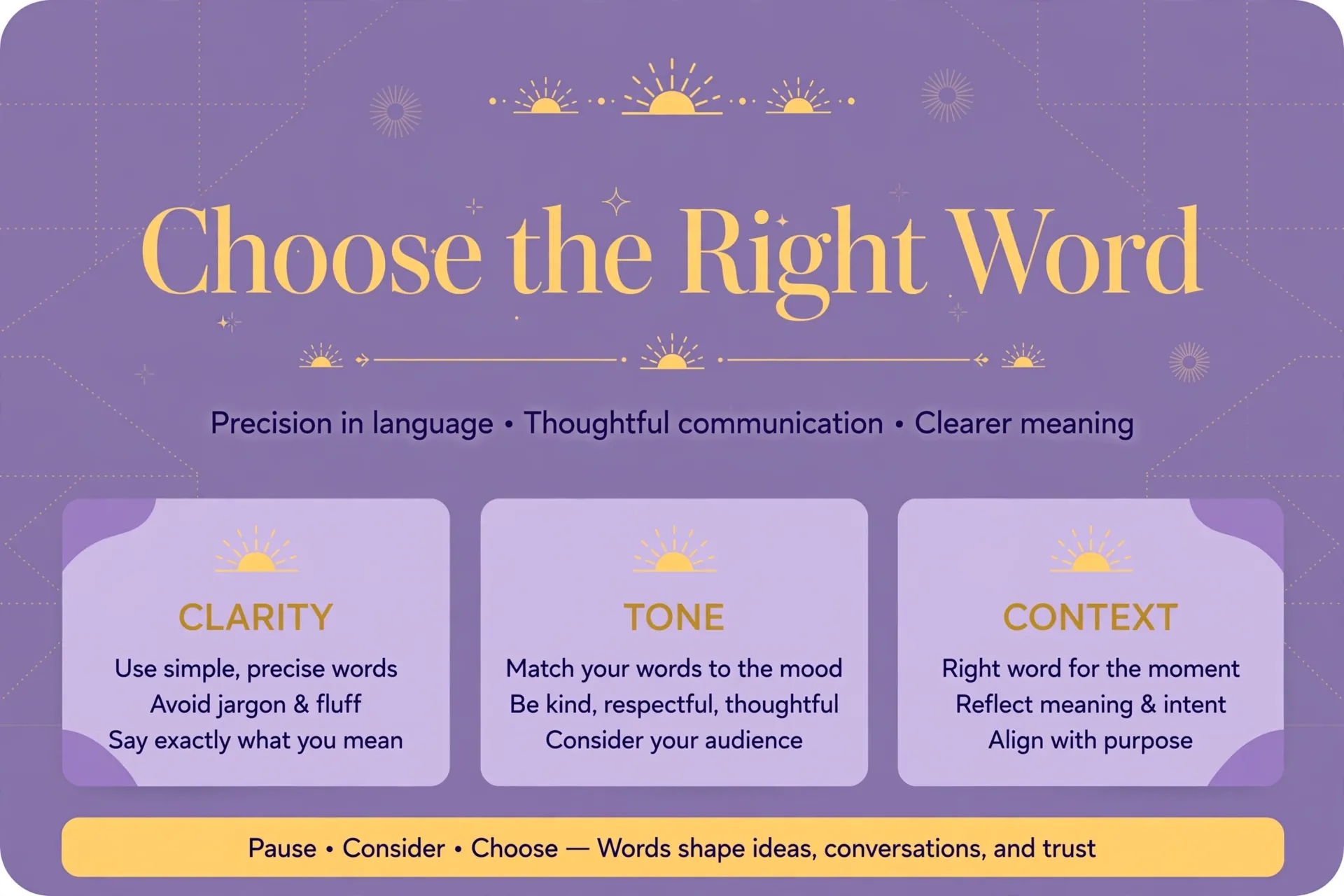
- Ask: confidence in whom? In yourself → self-confidence/poise/aplomb; in a fact → certainty/conviction; in another person → trust/faith/reliance; in shared information → secret/confidentiality.
- Watch the arrogance line. Confidence is self-belief without showing off — if the behavior involves bragging or looking down on others, the word is arrogance, not confidence.
- Check the register. Aplomb, credence, and confidentiality suit formal writing; poise, trust, and faith work everywhere; “off the record” is journalistic and conversational.
- Don’t mix the senses mid-sentence. “He betrayed her confidence” (secret) and “she lost confidence” (self-belief) are different meanings — keep one sense per sentence.
- Prefer the plain word for self-belief. “Self-confidence” is clear and honest; fancier swaps like aplomb earn their place only in formal or literary contexts.
Frequently Asked Questions
What is a synonym for confidence?
It depends on the sense: for belief in yourself, self-confidence; for freedom from doubt, certainty or conviction; for belief in others, trust or faith; for a shared secret, secret or confidentiality.
What is the difference between confidence and self-esteem?
Confidence is belief in your abilities — “I can handle this.” Self-esteem is your sense of your own worth — “I deserve good things.” You can be confident at work while struggling with self-esteem, or vice versa.
What does “in confidence” mean?
It means shared privately, with the expectation it won’t be repeated: “She told me in confidence.” The thing shared is a secret; confidentiality is the duty to keep it.
Is confidence always a good thing?
Healthy confidence is — but it curdles into arrogance when it involves showing off, and into overconfidence when it ignores real risks. The healthy version is quiet: self-assurance and poise, not boasting.
What is a formal synonym for confidence?
For self-belief in formal writing, assurance and aplomb; for trust, credence and reliance; for secrets, confidentiality. Each fits legal, academic, and professional registers.
Conclusion
Confidence asks one question before you use it: confidence in whom? Answer self-confidence for yourself, certainty for facts, trust for other people, and secret for things told in trust — and the word will never blur again.