Synonyms for Vibe: 20+ Words With Examples
Vibe is the casual word everyone reaches for — the mood of a room, the energy of a person, the feeling of a song. But in writing, 20+ sharper synonyms for vibe do the same job with more style. This guide groups them by nuance, each with a clear meaning and a natural example, so you can sound fresh without sounding forced.
Table of Contents
Quick Answer: 12 Synonyms for Vibe
| Word | Nuance / When to use it |
|---|---|
| atmosphere | The overall feeling of a place; the safest swap |
| ambience | Slightly upscale word for atmosphere, especially venues |
| aura | The distinctive energy a person or place gives off |
| mood | The emotional tone of a moment or scene |
| energy | The lively, dynamic quality people sense |
| feeling | The intuitive impression something leaves |
| spirit | The character and attitude of a group or event |
| tone | The attitude conveyed by writing, speech, or music |
| air | A subtle quality that surrounds a person or place |
| essence | The core quality that defines something’s vibe |
| aesthetic | The visual and stylistic mood, especially online |
| impression | The effect something makes on first contact |
Simple rule: describing a place? Use atmosphere or ambience. Describing a person? Use aura or energy. Describing a moment? Use mood or feeling. Merriam-Webster’s thesaurus entry for “vibe” has more options if you want to keep exploring.
Atmosphere: The Feeling of a Place
When the “vibe” belongs to a room, a café, a city street — somewhere you can stand in — these six words describe the surrounding feeling with precision.
-
atmosphere — The general feeling or mood of a place or situation; the classic, register-neutral swap for “vibe.” Example: The little bookshop had a cozy atmosphere of paper, coffee, and quiet chatter.
-
ambience — The character and mood of a place, especially its lighting, sound, and decor. Example: The rooftop restaurant’s ambience — string lights and soft jazz — made the evening feel magical.
-
aura — The distinctive feeling that surrounds a person or place, almost like a halo. Example: The old library carried an aura of scholarship, as if the books were still whispering.
-
mood — The emotional tone of a moment, scene, or place. Example: The rain set a mellow mood over the whole campsite.
-
air — A subtle, hard-to-name quality surrounding a person or place. Example: There was an air of celebration in the office on the last day of the term.
-
essence — The core, defining quality of something’s character. Example: The street market captured the true essence of the city — loud, colorful, and alive.

Energy & Feeling: The Human Side
“Vibe” often describes people — the energy a friend brings, the feeling of a crowd, the tone of a song. These seven words capture that human, emotional dimension.
-
energy — The dynamic, lively quality someone or something radiates. Example: The drummer brought an unstoppable energy that lifted the whole band.
-
feeling — The intuitive sense or impression something gives you. Example: I got a good feeling about the job the moment I walked into the office.
-
spirit — The shared attitude or character of a group, event, or era. Example: The festival kept the spirit of the nineties alive with its lineup.
-
tone — The attitude expressed through words, music, or behavior. Example: The email’s friendly tone made the tough feedback easier to accept.
-
character — The distinctive nature or personality of a place, work, or person. Example: The neighborhood’s character changed completely after the murals went up.
-
personality — The set of qualities that makes someone or something distinct. Example: The old cinema had real personality, with its velvet seats and hand-painted posters.
-
aesthetic — The visual and stylistic mood of something, especially in design and online culture. Example: Her apartment’s minimalist aesthetic — white walls, one green plant — felt instantly calming.
Casual Alternatives: Fresh and Conversational
Sometimes you want the casual energy of “vibe” itself, just with a fresher word. These seven keep the conversation relaxed while avoiding the most overused term in the room.
-
flavor — The distinctive taste or character of an experience. Example: The street-food tour gave the trip a local flavor no guidebook could match.
-
quality — A particular characteristic that defines how something feels. Example: There was a dreamlike quality to the whole evening that nobody wanted to end.
-
impression — The effect something makes on you, especially at first. Example: My first impression of the hostel was all laughter and guitar music.
-
sensation — A strong feeling or perception something produces. Example: The rooftop pool at sunset created a pure-holiday sensation.
-
presence — The impression a person makes simply by being there. Example: The guest speaker had such a calm presence that the nervous room settled down.
-
je ne sais quoi — French for “I don’t know what”; an indefinable appealing quality. Example: The café had a certain je ne sais quoi that kept regulars coming back for years.
-
x-factor — The indefinable quality that makes something special. Example: Every hit song has that x-factor you can feel but never quite explain.
Common Mistakes With Vibe Synonyms
“Vibe” is slang, so its synonyms need the right register — a mismatch sounds like wearing a tuxedo to a food truck, the same kind of tone clash explored in swiftie vs swifty and smash or pass. Four traps:
Mistake 1: Using “ambience” for people
❌ “He has a great ambience.”
✅ “He has a great aura.”
Why: “Ambience” describes places, especially venues. For a person’s energy, use “aura,” “energy,” or “presence.”
Mistake 2: Saying “vibes” in formal writing
❌ “The report had good vibes about the market.”
✅ “The report had a positive tone about the market.”
Why: “Vibe” is casual slang. In essays, reports, or professional writing, use “tone,” “atmosphere,” or “character.”
Mistake 3: Confusing “mood” with “vibe” in writing
❌ “The essay’s vibe was persuasive.”
✅ “The essay’s tone was persuasive.”
Why: For written work, “tone” is the precise word for the attitude the writing conveys. “Mood” describes feelings; “tone” describes expression.
Mistake 4: Overusing “aesthetic”
❌ “The meeting had a great aesthetic.”
✅ “The meeting had a great atmosphere.”
Why: “Aesthetic” refers to visual and stylistic mood. A meeting’s feeling is its “atmosphere” or “energy” — save “aesthetic” for things you can see.
How to Choose the Right Synonym
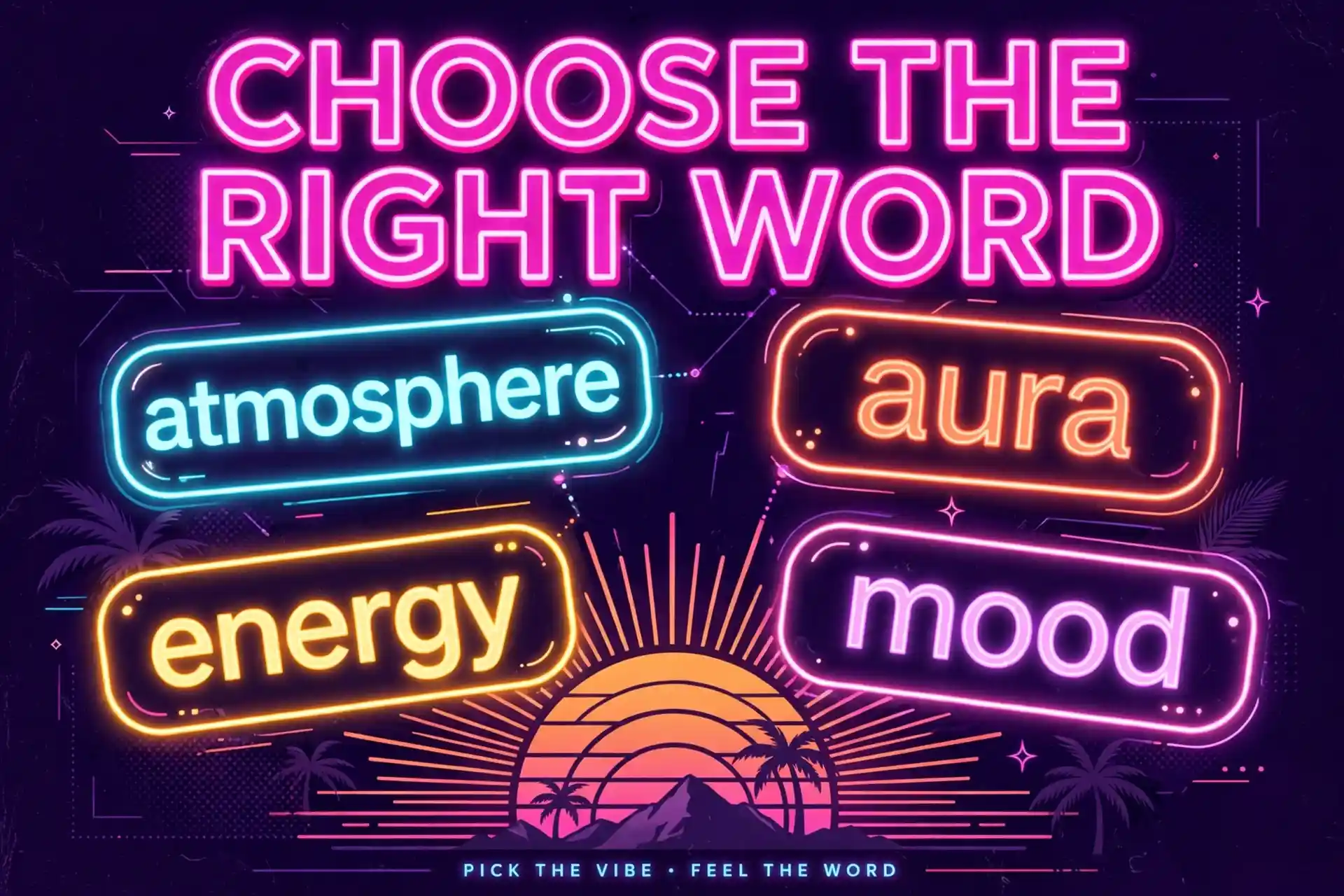
- Ask who or what has the vibe. Places get atmosphere or ambience; people get aura, energy, or presence; moments get mood or feeling; writing and music get tone.
- Match the register. “Vibe,” “x-factor,” and “je ne sais quoi” are casual and playful. “Atmosphere,” “character,” and “essence” work everywhere, including formal writing.
- Prefer concrete words in writing. In essays and reviews, “the film’s tone” beats “the film’s vibe” — precision reads as confidence.
- Watch visual-only words. “Aesthetic” describes what something looks like. Don’t apply it to sounds, feelings, or events you can’t see.
- Keep the plural in check. “Vibes” (plural) is pure slang — “good vibes” works in texts and captions, but switch to “atmosphere” or “energy” anywhere formal.
- Test it aloud. If “the party’s ambience” sounds odd for a backyard barbecue, “the party’s atmosphere” or just “vibe” is the honest choice.
Frequently Asked Questions
What is a synonym for vibe?
The most common synonyms for “vibe” are atmosphere, ambience, aura, mood, and energy. For places use “atmosphere”; for people use “aura” or “energy.”
What is a fancy word for vibe?
“Ambience,” “aura,” and “essence” all sound more refined than “vibe.” “Ambience” suits upscale venues, while “essence” captures the defining quality of anything.
Can I use “vibe” in an essay?
Better not to. “Vibe” is casual slang — in essays and formal writing, use “atmosphere,” “tone,” “mood,” or “character” depending on what you are describing.
What does “good vibes” mean?
“Good vibes” means a positive, pleasant feeling or energy — from a person, place, or situation. In formal contexts, say “a positive atmosphere” or “a welcoming energy” instead.
Is “aesthetic” a synonym for vibe?
Partially. “Aesthetic” covers the visual and stylistic side of a vibe — how something looks. It doesn’t cover feelings, sounds, or energy, so it only replaces “vibe” in visual contexts.
What is the difference between “mood” and “vibe”?
“Vibe” is the casual, all-purpose word for a feeling; “mood” is the standard English word for an emotional tone. In writing, “mood” is almost always the better choice.
Conclusion
“Vibe” gets the point across, but the right synonym says it better. Choose atmosphere for places, aura for people, and tone for writing — and your descriptions will feel fresh instead of recycled.