Synonyms for Which: 12 Words With Examples
“Which” is a pronoun, not an ordinary vocabulary word, so honest synonyms for “which” are scarce — anyone promising you twenty is inventing them. This guide gives you the real options: the direct swap, the choice words, and smart rephrasings that erase “which” entirely, each with a plain meaning and a natural example sentence.
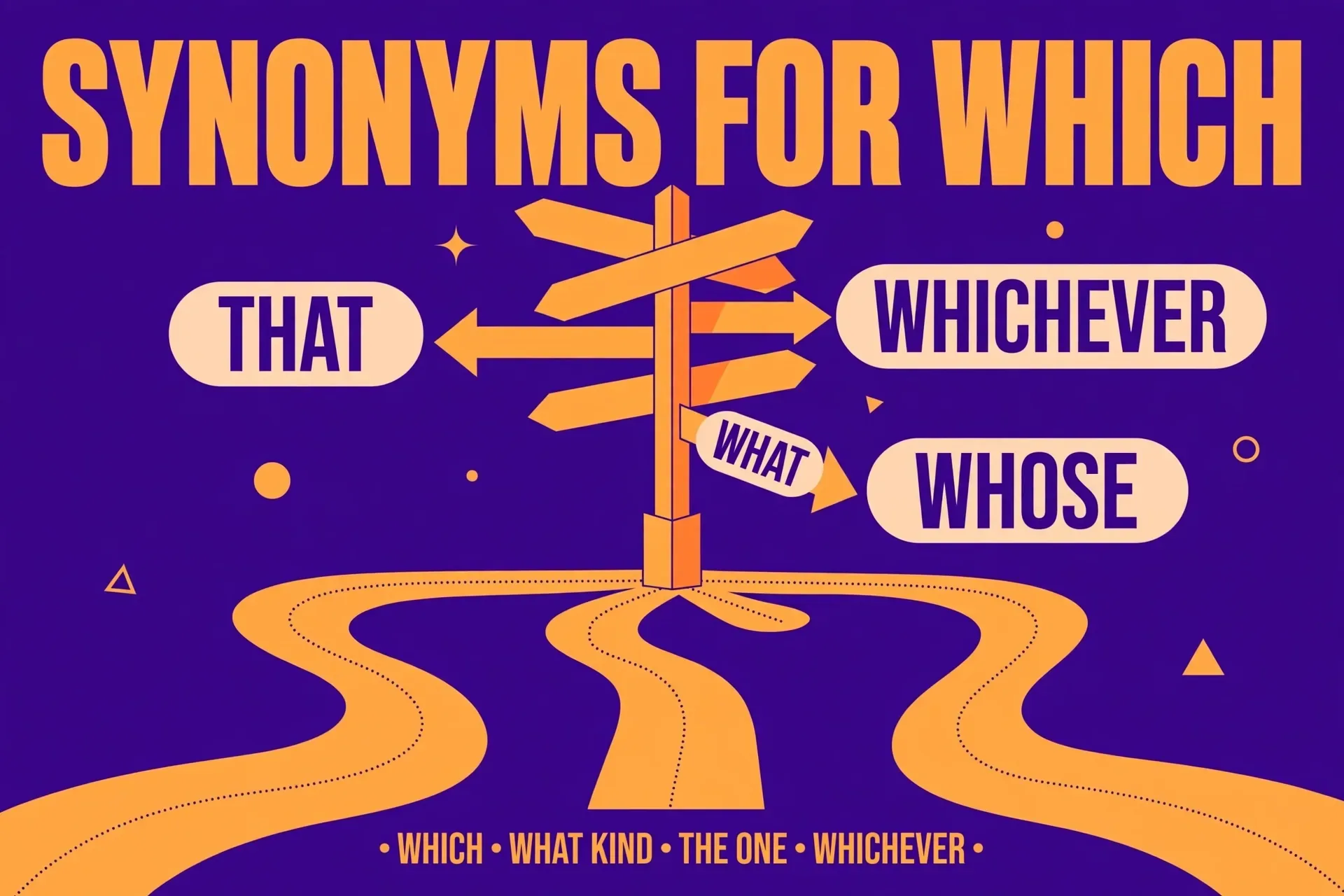
Table of Contents
Quick Answer: 12 Synonyms for “Which”
| Word / Rephrasing | Nuance / When to use it |
|---|---|
| that | The standard swap in defining (restrictive) clauses |
| the one that | Rephrases “which” when naming a specific thing |
| those that | Plural version of “the one that” |
| any that | “Any of which” in plain, modern form |
| whichever | Any one you choose from a defined set |
| whatever | Anything at all; no set of options implied |
| which one | Asking a choice among visible options |
| whichever one | Emphatic choice from the options |
| no matter which | The choice makes no difference |
| where | Replaces “in which” / “at which” for places |
| whose | Replaces “of which” for possession — things included |
| how | Replaces “the way in which” / “by which” |
Simple rule: in a defining clause, swap which for that; when offering a choice, use whichever or whatever; and for “in which” or “of which,” rephrase with where or whose. Merriam-Webster’s dictionary entry for “which” lays out the pronoun’s full range of uses if you want to check the grammar behind these swaps.
Direct Swap: That
In American English, a defining (restrictive) clause takes that, not which; “which” with commas is for extra, non-defining information.
-
that — The standard replacement for “which” in defining clauses, where the clause is essential to the meaning. Example: The report that landed on my desk this morning needs your signature. (Compare: The report, which landed this morning, needs your signature — here the commas make it extra information, and “which” stays.)
-
the one that — Rephrases a “which” that points at a specific item among many. Example: Pass me the one that has the blue cover. (Instead of: Pass me which has the blue cover — ungrammatical.)
-
those that — The plural of “the one that”; replaces “which” for groups. Example: Discounts apply to those that were purchased before March. (Instead of: …to which were purchased before March.)
-
any that — Plain modern form of “any of which.” Example: Take any that you like from the tray. (Instead of: Take any of which you like — stiff and outdated.)

Choice Words: Whichever / Whatever
When “which” offers a choice, these words bake the idea of choosing right into the word itself.
-
whichever — Any one you choose, from a known set of options. Example: You can sit in whichever seat is free.
-
whatever — Anything at all; no defined set of options is implied. Example: Take whatever you need from the supply closet.
-
which one — The natural question form when choosing among visible options. Example: Which one of these jackets is yours?
-
whichever one — Emphatic version; stresses that the choice is entirely yours. Example: Order whichever one looks best — dinner is on me.
-
no matter which — The choice makes no difference to the outcome. Example: No matter which route we take, we will hit traffic at this hour.
Rephrasing Tricks
Half the time, the best “synonym” for “which” is a cleaner sentence shape. These four rephrasings erase clunky “which”-phrases.
-
where — Replaces “in which” and “at which” for places and situations; instantly more natural. Example: This is the café where we first met. (Instead of: …the café in which we first met.)
-
whose — Replaces “of which” for possession — and yes, “whose” works for things, not just people. Example: The company whose profits doubled last year is hiring. (Instead of: The company of which the profits doubled…)
-
how — Replaces “the way in which” and “the manner by which” in one short word. Example: Show me how the lock works. (Instead of: Show me the way in which the lock works.)
-
then / at that point — Replaces the formal “at which point” in storytelling. Example: The lights went out; then the screaming started. (Instead of: …at which point the screaming started.)
Common Mistakes With “Which” Synonyms
Small words cause big stumbles — the same care that separates gray vs. grey or jewelry vs. jewellery keeps these four traps from tripping you:
Mistake 1: Using “which” without commas in a defining clause
❌ “The car which is parked outside is mine.”
✅ “The car that is parked outside is mine.”
Why: In American style, defining clauses (no commas) take “that”; “which” without commas reads as a mistake. Keep “which” for non-defining clauses with commas: “The car, which is parked outside, is mine.”
Mistake 2: Mixing up “whichever” and “whatever”
❌ “Take whatever seat is free.” (when seats are a defined set)
✅ “Take whichever seat is free.”
Why: “whichever” chooses from a known set of options; “whatever” means anything at all. Free seats are a set — so “whichever” is the precise word.
Mistake 3: Writing “of which” for possession
❌ “The novel, the ending of which surprised me, is a classic.”
✅ “The novel, whose ending surprised me, is a classic.”
Why: “whose” handles possession for things as well as people, and it is far less clunky than “of which.” Save “of which” for the rare cases where “whose” truly cannot fit.
Mistake 4: Overusing “in which” in casual writing
❌ “This is the neighborhood in which I grew up.”
✅ “This is the neighborhood where I grew up.”
Why: “in which” is correct but stiff outside formal prose. “Where” says the same thing in half the syllables and sounds like a human being wrote it.
How to Choose the Right Synonym
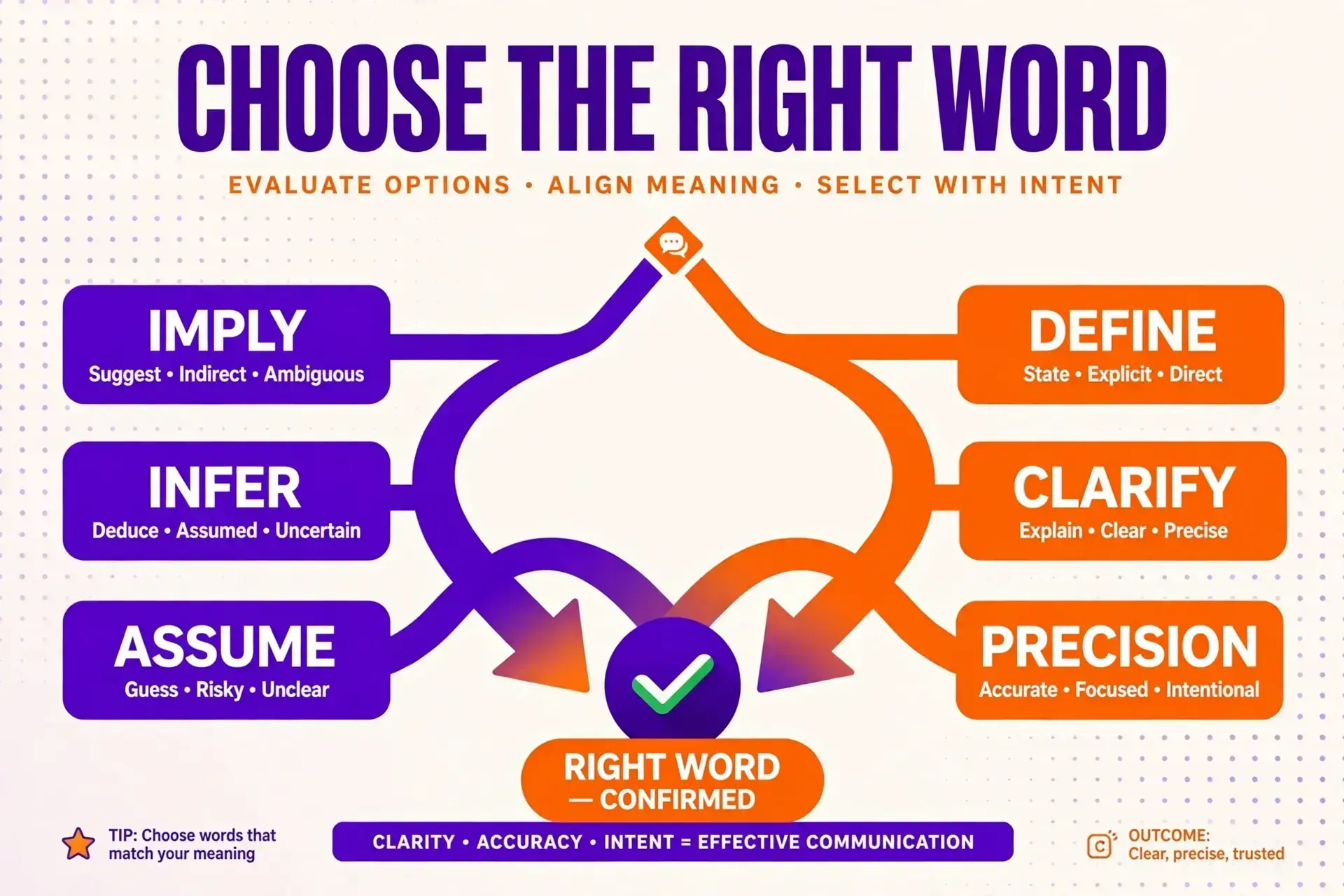
- Check the commas first. Commas around the clause → keep which (non-defining). No commas and the clause identifies the thing → swap to that (defining). This one rule fixes most which/that errors.
- Ask whether a choice is offered. If the sentence is about picking — “which do you prefer?” — reach for whichever, whatever, or which one, not that.
- Prefer the rephrasing. “Where” beats “in which,” “whose” beats “of which,” and “how” beats “the way in which” in nearly every register. Shorter is usually sharper.
- Respect the register. “That” for defining clauses is standard in American English; British English tolerates “which” there more freely. Know your audience before you “correct” it.
- Read the clause aloud. If “of which the roof” makes you stumble, your reader will stumble too. Rewrite with “whose roof” and move on.
Frequently Asked Questions
What is a synonym for “which”?
There is no single perfect synonym because “which” is a pronoun, but the real options are that (defining clauses), whichever and whatever (choices), and rephrasings like where for “in which” and whose for “of which.”
Is “that” always a synonym for “which”?
No — only in defining (restrictive) clauses: “the book that I bought.” In non-defining clauses with commas (“the book, which I bought yesterday”), “which” must stay; “that” cannot take commas there.
What is the difference between “which” and “that”?
“That” introduces essential information with no commas; “which” adds extra information with commas. “The car that is red is mine” picks one car out; “the car, which is red, is mine” merely adds a detail.
Can “whichever” replace “which”?
Only when “which” expresses a choice: “Take which you like” → “Take whichever you like.” In relative clauses (“the house which…”), “whichever” does not work — use “that” or rephrase.
Is “whose” a synonym for “of which”?
For possession, yes — and “whose” is not limited to people. “The table whose leg is broken” beats “the table of which the leg is broken.”
Conclusion
“Which” has no shelf of true synonyms — it has a toolkit: that for defining clauses, whichever and whatever for choices, and clean rephrasings like where and whose for the clunky phrases. Use the right tool for the clause in front of you, and your sentences will read sharper without losing a shade of meaning.