Synonyms for Understanding: 15+ Words With Examples
The synonyms for understanding you need depend entirely on which understanding you mean: grasping an idea, feeling sympathy for someone, or reaching an agreement. Swap the wrong sense and the sentence quietly breaks. This guide groups 15 real synonyms under their three distinct meanings, each with a clear definition and a natural example sentence.
Quick Answer
The 12 most useful synonyms for understanding, grouped by the sense they belong to. For the full dictionary entry, see Merriam-Webster’s thesaurus page for understanding.
| Word | Nuance / When to use it |
|---|---|
| comprehension | Full mental grasp of a subject — formal |
| grasp | Firm hold on an idea — everyday and direct |
| knowledge | Facts and information you have learned |
| awareness | Consciousness that something exists or matters |
| insight | Deep, almost intuitive seeing-into a matter |
| apprehension | Mental grasp — formal, literary; also means fear |
| sympathy | Caring about someone’s trouble from the outside |
| compassion | Sympathy strong enough to move you to help |
| empathy | Feeling with someone, sharing their emotion |
| agreement | A shared decision between parties — the binding term |
| accord | Harmony of opinion — formal |
| arrangement | A practical deal worked out between people |
Simple rule: match the sense — comprehension words for the mind, sympathy words for the heart, agreement words for a deal between people.
Understanding = Comprehension
When understanding means getting an idea — the mental sense.
- Comprehension — the ability to fully grasp the meaning of something. Example: “The test measures reading comprehension, not just speed.”
- Grasp — a firm mental hold on an idea. Example: “She has a solid grasp of basic algebra.”
- Knowledge — facts, information, and skills you have learned. Example: “His knowledge of history impressed the whole class.”
- Awareness — knowing that something exists or matters. Example: “The campaign raised awareness about clean water.”
- Insight — a deep, almost intuitive seeing into a matter. Example: “Her insight into customer behavior shaped the new design.”
- Apprehension — mental grasp; formal and literary. Example: “The philosopher wrote about the limits of human apprehension.” (Note: it also means fear, so use it carefully.)

Understanding = Sympathy
When understanding means caring about what someone else feels — the emotional sense.
- Sympathy — caring about someone’s trouble while staying outside it. Example: “She sent a card full of sympathy after his loss.”
- Compassion — sympathy strong enough to move you to help. Example: “The nurse treated every patient with compassion.”
- Empathy — feeling with someone, sharing their emotion from the inside. Example: “Good managers lead with empathy, not just orders.”
- Kindness — gentle, generous treatment of others. Example: “Her kindness toward new students made the school feel welcoming.”
- Tolerance — accepting views and habits you may not share. Example: “The club prides itself on tolerance for different opinions.”
Understanding = Agreement
When understanding means a deal or shared decision between people — the social sense.
- Agreement — a shared decision; the binding, standard term. Example: “Both companies signed the agreement on Friday.”
- Accord — harmony of opinion; formal. Example: “The two leaders reached an accord on trade.”
- Arrangement — a practical deal worked out between people. Example: “They made an arrangement to share the office on alternate days.”
- Pact — a solemn promise or treaty between parties. Example: “The friends made a pact to finish the marathon together.”
Common Mistakes
Mixing up these senses is as common as mixing up realize vs. realise — the words look interchangeable until the sentence falls apart — and the same care you take with believe or beliebe applies here: one wrong pick changes the meaning. Watch for these four traps.
Mistake 1: “Knowledge” for real understanding
❌ “She memorized the chapter, so her understanding is perfect.”
✅ “She memorized the chapter, so her knowledge is perfect — but can she explain it?”
Why: knowledge is stored facts; understanding means you grasp what they mean.
Mistake 2: “Empathy” when you mean “sympathy”
❌ “I feel such empathy for your loss” (said from a polite distance).
✅ “I feel such sympathy for your loss.”
Why: sympathy cares from the outside; empathy means feeling the emotion with the person.
Mistake 3: “Understanding” for a formal deal
❌ “We signed an understanding to split the profits.”
✅ “We signed an agreement to split the profits.”
Why: an “understanding” as a noun is informal; agreement is the binding term for a deal.
Mistake 4: “Apprehension” in everyday speech
❌ “I have a good apprehension of the new rules.”
✅ “I have a good grasp of the new rules.”
Why: apprehension is formal and literary — and it also means fear, which confuses listeners.
How to Choose the Right Synonym
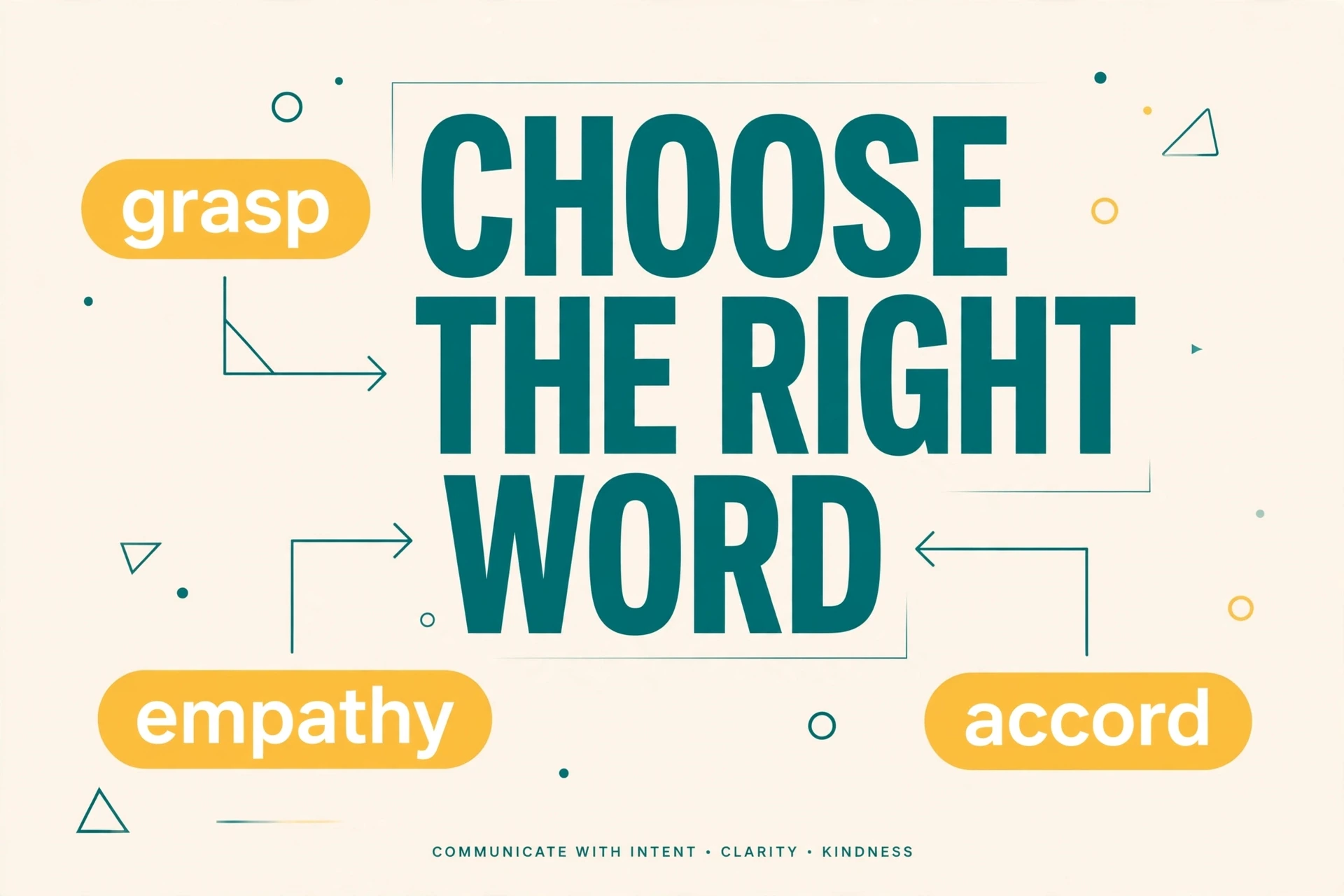
- Name the sense first: mind (comprehension), heart (sympathy), or deal (agreement). Most mistakes come from skipping this step.
- Calibrate the intensity: awareness is light, insight runs deep; sympathy cares, compassion acts. Match the strength to the situation.
- Formal vs. casual: comprehension, apprehension, and accord belong in formal writing; grasp, empathy, and deal work in everyday language.
- Watch the double meanings: apprehension also means fear, and pact implies solemnity — check the word’s other life before you commit.
- People vs. ideas: sympathy, empathy, and kindness describe feelings toward people; comprehension, grasp, and insight describe your hold on ideas.
Frequently Asked Questions
What is a synonym for Understanding?
Comprehension is the closest synonym for the mental sense, sympathy for the emotional sense, and agreement for the deal sense. Pick the one that matches your meaning.
What is the difference between understanding and comprehension?
Comprehension is the formal, measurable side of understanding — tests measure reading comprehension, not “reading understanding.” In everyday speech the two overlap, but comprehension sounds more technical.
What is the difference between sympathy and empathy?
Sympathy means caring about someone’s trouble from the outside; empathy means feeling it with them from the inside. Both are synonyms of understanding in its emotional sense, but they describe different distances.
Is “understanding” a formal word?
It is neutral — it works in casual and formal writing alike. For a more formal tone, use comprehension (mental), accord (agreement), or apprehension (literary, with care).
Can “understanding” mean an agreement?
Yes, informally — “we have an understanding” means a mutual, often unwritten deal. For anything binding or official, use agreement or arrangement instead.
Conclusion
Understanding wears three hats — comprehension of ideas, sympathy for people, and agreement between parties — and its synonyms split neatly along those lines. Name the sense you mean, pick the word that belongs to it, and your sentences will stay sharp and precise.