Synonyms for Nervous: 24+ Words With Examples
Nervous covers a whole spectrum of unease — from the mild flutter before a first date to the full-body jitters of stage fright. Writers hunting for synonyms for nervous usually want to pin down exactly where on that spectrum their character or sentence sits. This article groups 19 alternatives by nuance — worried, jittery, timid, and pre-performance nerves — each with a definition and a natural example.
Quick Answer
| Word | Nuance / When to use it |
|---|---|
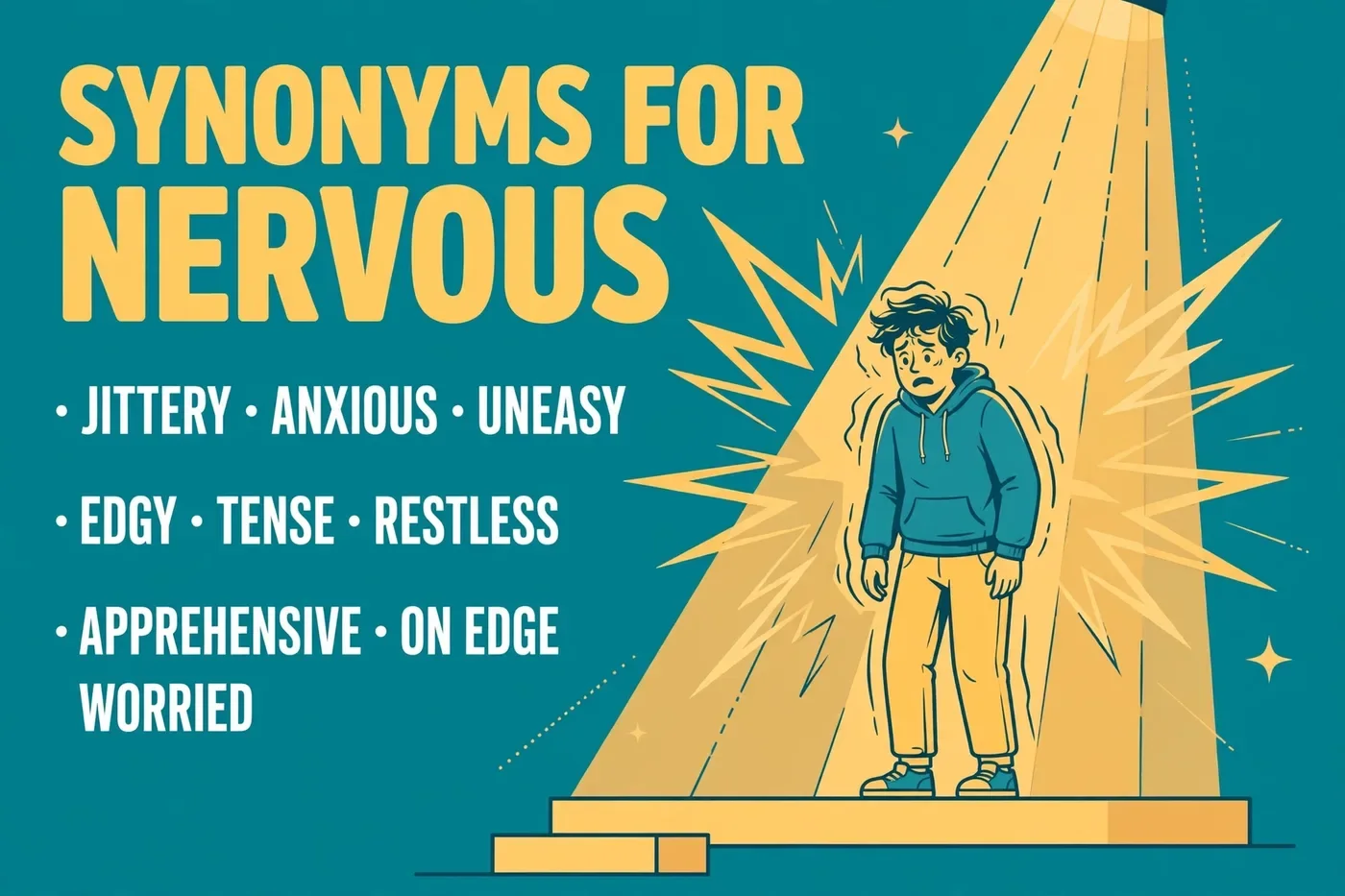
| Anxious | The closest synonym — worried, often stronger or more clinical than nervous |
| Worried | Everyday and mild; concern about something specific |
| Uneasy | A vague, unsettled feeling that something is wrong |
| Apprehensive | Dreading something in the future; formal |
| Jittery | Shaky and fidgety; the physical side of nerves |
| Edgy | Tense and irritable; on the verge of snapping |
| Jumpy | Startling easily; informal and vivid |
| Tense | Tight and strained — body, mood, or atmosphere |
| Timid | Shy and easily frightened; a personality trait |
| Skittish | Easily startled, like a nervous horse; lively image |
| Restless | Unable to settle; nerves that need motion |
| Fearful | Full of fear; stronger and more serious |
Simple rule: Use anxious or worried for general worry, jittery or edgy for physical restlessness, and timid or skittish when fear is the core feeling. For the complete list, browse Merriam-Webster’s synonyms for nervous.
Synonyms for Nervous Meaning Worried or Anxious
When “nervous” means a worried mind — turning a problem over and over — these are the words.
Anxious — worried or fearful about what may happen; the nearest synonym, sometimes with a clinical edge. “She felt anxious the night before the exam results came out.”
Worried — troubled about something specific; everyday and mild. “He was worried about his mother’s health after the fall.”
Uneasy — vaguely unsettled, with a sense that something is wrong. “An uneasy silence filled the room after the announcement.”
Apprehensive — dreading a future event; slightly formal. “The new recruits were apprehensive about their first night shift.”
Fearful — full of fear; stronger and more serious than nervous. “The fearful villagers kept their doors locked after dark.”

Synonyms for Nervous Meaning Jittery and On Edge
When “nervous” lives in the body — shaky hands, tapping feet, a short fuse — reach for these.
Jittery — shaky and fidgety from nerves or too much caffeine. “Three espressos left him jittery before the interview.”
Edgy — tense and irritable, as if about to snap. “After two sleepless nights, she was too edgy for small talk.”
Jumpy — startling easily at small sounds or movements; informal and vivid. “The jumpy cat bolted at every doorbell.”
Restless — unable to relax or stay still; nerves that demand motion. “He spent a restless night pacing between the bedroom and the kitchen.”
Tense — tight and strained, describing muscles, moods, or whole atmospheres. “The tense meeting ended without a single decision.”
Synonyms for Nervous Meaning Timid
When “nervous” describes someone easily frightened — a lasting trait rather than a passing mood — these fit.
Timid — shy and lacking confidence; easily frightened. “The timid puppy hid behind the sofa whenever guests arrived.”
Skittish — easily startled and quick to shy away; a lively, image-rich word. “The skittish horse sidestepped every shadow on the trail.”
Timorous — fearful and hesitant; the formal, literary cousin of “timid.” “He gave a timorous knock on the director’s door.”
Faint-hearted — lacking courage or nerve; slightly old-fashioned. “The climb was not for the faint-hearted.”
Synonyms for Nervous Before Performing
Stage fright has its own vocabulary — the particular nerves of stepping into the spotlight.
Self-conscious — painfully aware of being watched; the root of most stage fright. “She felt self-conscious the moment the spotlight found her.”
Flustered — confused and agitated from sudden nerves. “The flustered presenter dropped her notes twice in the first minute.”
Rattled — shaken and thrown off balance; informal. “The missed cue left him rattled for the rest of the act.”
Unstrung — emotionally undone, nerves stretched to breaking; dramatic and literary. “After the harsh review, she was completely unstrung.”
Keyed up — intensely excited or nervous; wound tight before an event. “The whole cast was keyed up on opening night.”
Common Mistakes
“Nervous” gets misused in a few classic ways — and its opposites and lookalikes cause their own confusion (the calm opposite of nervous is unfazed, as in unphased vs unfazed, while stage fright strikes hardest under the lights of the theatre vs theater). Watch for these:
Mistake 1: Using “nervous” and “anxious” as perfect twins
❌ “He was diagnosed with nervous disorder.”
✅ “He was diagnosed with an anxiety disorder.” / “He felt nervous before the interview.”
Why: The words overlap, but anxious carries the clinical and long-term weight (“anxiety”), while nervous usually describes a temporary state.
Mistake 2: Assuming “nervy” means nervous
❌ “She felt nervy before the exam.”
✅ “She felt nervous before the exam.”
Why: In British English, nervy means bold or cheeky — nearly the opposite of nervous. In American English it can mean “jittery,” so the word is a transatlantic trap either way.
Mistake 3: Calling excitement “nerves”
❌ “I’m so nervous for the concert tonight!” (when you mean thrilled)
✅ “I’m so excited for the concert tonight!”
Why: Nervous implies worry or fear. If the feeling is positive anticipation, “excited” or “keyed up” is honest; “nervous” undersells your joy.
Mistake 4: Using “tense” for the feeling itself
❌ “She felt tense in her stomach about the news.”
✅ “She felt nervous about the news.” / “Her stomach was tense.”
Why: Tense best describes muscles, moods, or atmospheres (“a tense silence”); the inner feeling of worry is nervous or anxious.
How to Choose the Right Synonym
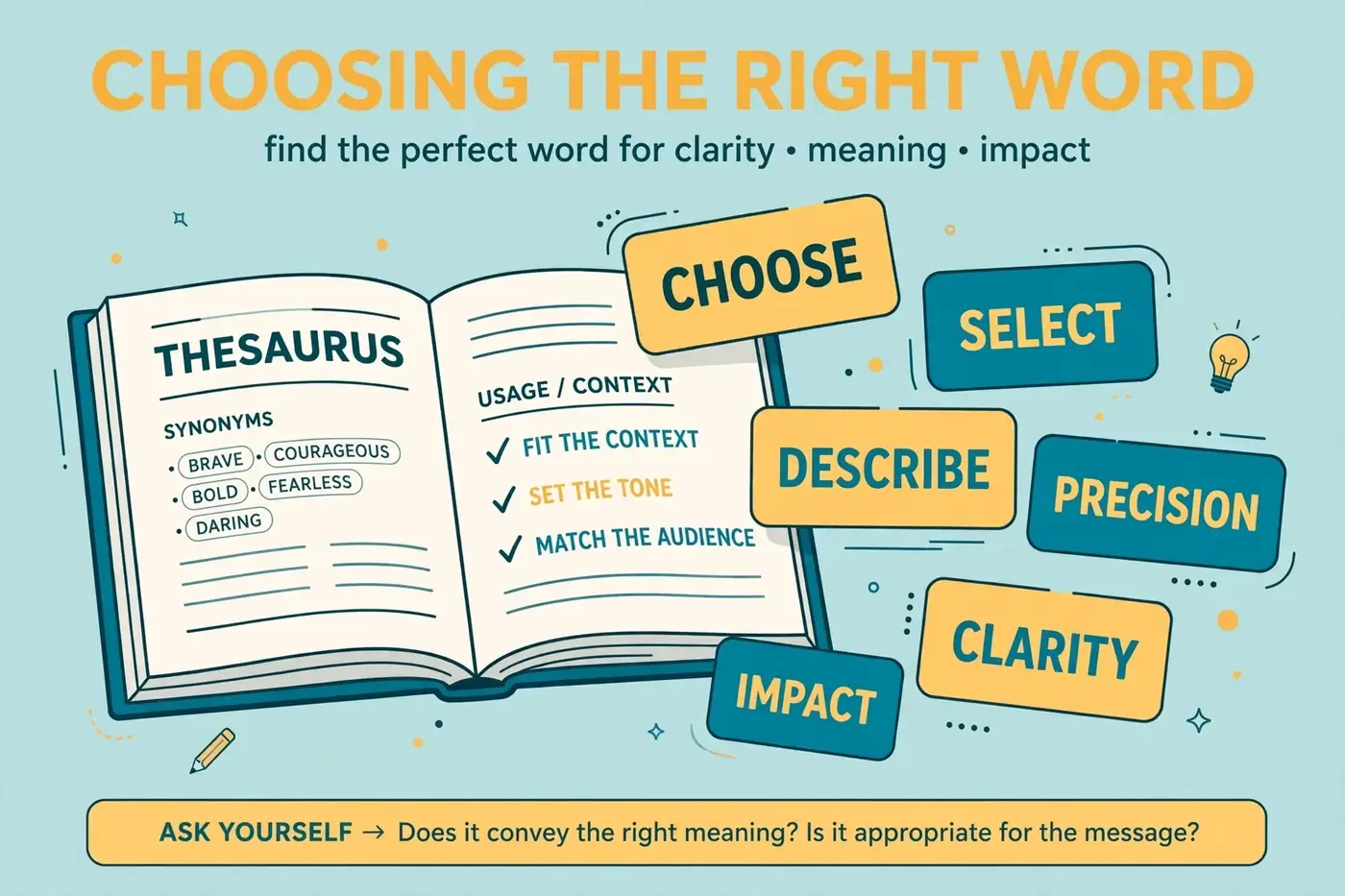
- Locate the feeling. In the mind (worried, apprehensive), in the body (jittery, tense), or in the personality (timid, skittish)? Each location has its own words.
- Set the intensity. “Uneasy” is a whisper of worry; “fearful” is a shout. Sliding the wrong way exaggerates or undersells the moment.
- Check the register. “Apprehensive,” “timorous,” and “unstrung” suit formal or literary writing; “jumpy,” “edgy,” and “rattled” suit dialogue and casual prose.
- Don’t borrow “nervy” across the Atlantic. It means “bold” in Britain and “jittery” in America — use “nervous” or “edgy” instead and skip the ambiguity.
- Consider the opposite. If “calm,” “relaxed,” or “unfazed” fits better, the character may not be nervous at all — sometimes the right synonym is an antonym.
Frequently Asked Questions
What is a synonym for nervous?
Anxious is the closest all-purpose synonym. For physical jitters use jittery or edgy; for a fearful nature use timid or skittish.
What is the difference between nervous and anxious?
They overlap heavily, but anxious often implies a stronger, longer-lasting, sometimes clinical state (“anxiety disorder”), while nervous usually describes temporary unease before a specific event.
What is the opposite of nervous?
Calm, relaxed, composed, and unfazed — the last meaning undisturbed by something that would rattle most people.
Is “nervy” the same as “nervous”?
No — and it is a trap. In British English, nervy means bold or cheeky (the opposite of nervous); in American English it can mean jittery. Avoid it in international writing.
How do you describe feeling nervous before a performance?
Stage fright is the classic term. For the feeling itself, try self-conscious, keyed up, flustered, or rattled — each captures a slightly different flavor of pre-show nerves.
Conclusion
Nervous is never just one feeling — it is worry in the mind, jitters in the body, and timidity in the character. Match the synonym to the location and intensity: anxious for worry, jittery for the shakes, timid for the trait — and your readers will feel exactly what you meant.