Synonyms for Sad: 24 Words With Examples
Sad is the hardest-working word in the low-mood vocabulary — and the most overused. This guide gives you 24 stronger synonyms for sad, grouped by intensity and tone, each with a clear meaning and a natural example sentence.
Table of Contents
Quick Answer: 12 Synonyms for Sad
| Word | Nuance / When to use it |
|---|---|
| gloomy | Dark, cheerless mood; also describes weather |
| downcast | Quietly discouraged, eyes lowered |
| blue | Informal melancholy, mild and passing |
| heartbroken | Crushed by loss or disappointment in love |
| devastated | Shattered by a terrible event |
| mournful | Sadness tied to loss or death |
| melancholy | Deep, thoughtful, literary sadness |
| forlorn | Lonely, abandoned-feeling sadness |
| woeful | Full of woe; formal or dramatic |
| bummed | Casual, everyday disappointment |
| down | Informal, brief low mood |
| glum | Quietly sulky or dejected |
Simple rule: match the word to the weight of the feeling — glum for a bad afternoon, melancholy for a grey season, devastated only for true disaster. A full list of shades and definitions sits on Merriam-Webster’s thesaurus page for “sad” if you want to compare more options.
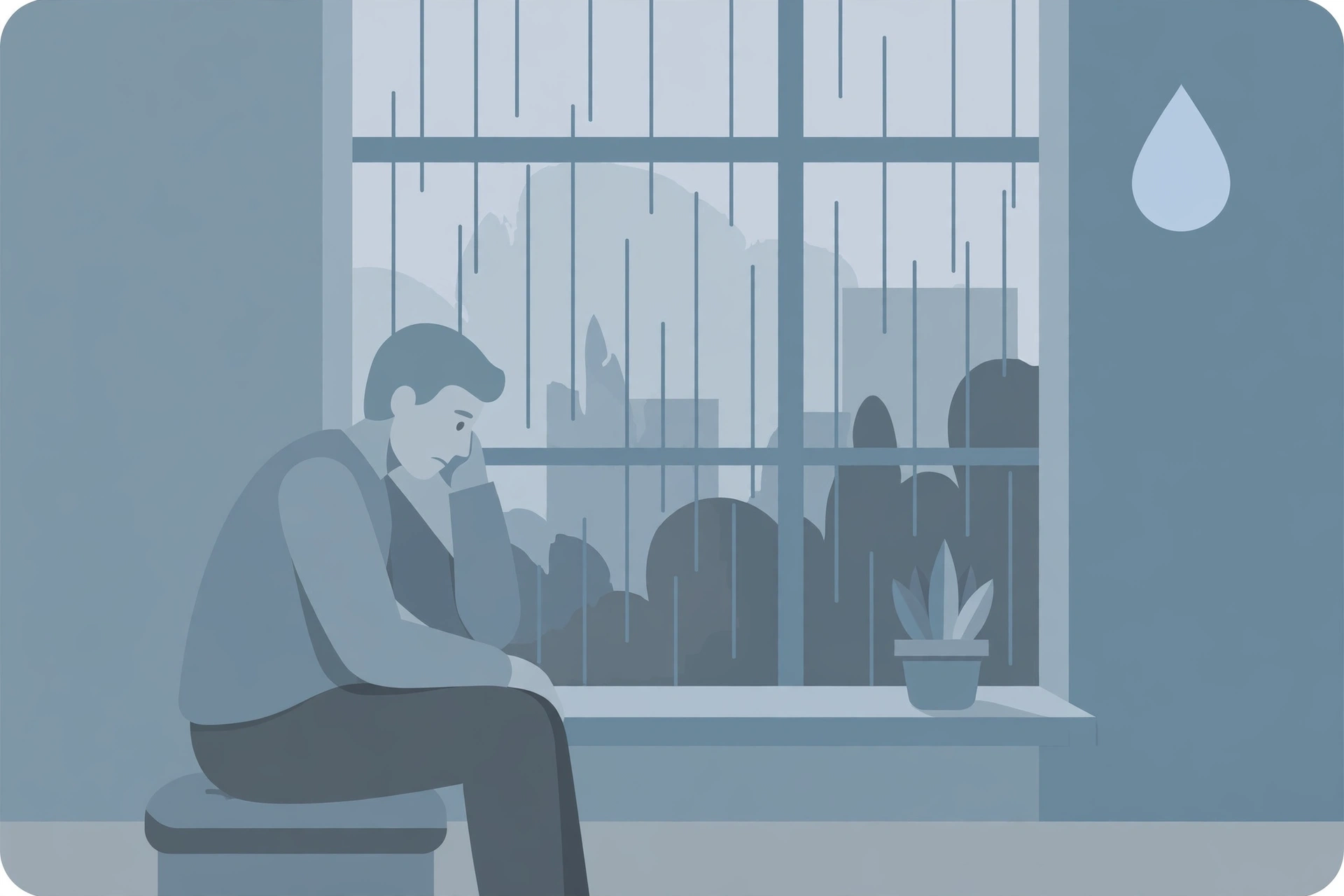
Gently Sad: Mild Low Feelings
These words describe a light, passing sadness — a dull mood, not a crisis. They fit overcast afternoons, small disappointments, and quiet moments.
-
gloomy — Dark and cheerless in mood or atmosphere. Example: The house felt gloomy with the curtains drawn.
-
downcast — Low in spirits; literally looking downward. Example: He walked in downcast after hearing the news about the tryouts.
-
blue — Informally sad or melancholy, usually mild and temporary. Example: I have been feeling a little blue since the trip ended.
-
dismal — Gloomy and bleak; also used for dreary conditions. Example: The rainy, dismal weekend kept everyone indoors.
-
somber — Serious and subdued, without brightness or cheer. Example: A somber silence filled the room when the announcement ended.
-
wistful — Sad with a touch of longing for something past. Example: She gave a wistful smile as the old song reminded her of college days.
Deeply Sad: Strong Sorrow
When the feeling cuts deep — grief, heartbreak, or shock — these heavyweight synonyms carry the right gravity. Reserve them for genuinely serious moments.
-
heartbroken — Crushed with grief, especially from lost love or deep disappointment. Example: She was heartbroken when her grandmother’s letters were destroyed in the fire.
-
devastated — Completely overwhelmed by shock or sorrow. Example: The town was devastated after the flood.
-
desolate — Barren of joy or hope; bleak and empty-feeling. Example: He felt desolate sitting alone in the apartment they had shared.
-
mournful — Expressing grief, especially over death or loss. Example: A mournful song played softly as the mourners filed past the casket.
-
woeful — Full of sorrow; formal and dramatic in tone. Example: The woeful state of the abandoned shelter moved her to volunteer.
-
miserable — Wretched and deeply unhappy. Example: Cold, wet, and exhausted, we were thoroughly miserable by mile ten.
Formal & Literary
Essays, novels, eulogies, and formal writing call for elevated vocabulary. These six bring weight and precision to serious prose.
-
melancholy — A deep, reflective sadness with a literary feel. Example: A strange melancholy settled over the poet in the autumn of his life.
-
dolorous — Marked by grief or sorrow; formal and somewhat old-fashioned. Example: The dolorous news arrived by evening messenger.
-
lugubrious — Exaggeratedly mournful or gloomy; carries a theatrical edge. Example: His lugubrious tone made the birthday toast sound like a eulogy.
-
funereal — Having the solemnity of a funeral; dark and grave. Example: The funereal pace of the procession matched the heavy mood of the crowd.
-
forlorn — Pitifully sad and abandoned; lonely in feeling. Example: The forlorn puppy waited by the gate long after its owner left.
-
bereft — Deprived of something or someone; grieving a loss. Example: Bereft of her closest friend, she threw herself into her work.
Casual & Everyday
Texts, social posts, and friendly conversation need relaxed words. These six sound natural without trying too hard.
-
bummed — Informally disappointed or let down. Example: I am bummed the concert sold out.
-
down — Feeling low; brief and informal. Example: She was a bit down after the interview did not go well.
-
low — In low spirits; quieter than “down.” Example: He has been feeling low since the project ended.
-
upset — Disturbed or unhappy, often with a hint of agitation. Example: She was too upset to finish dinner after the argument.
-
glum — Quietly dejected; mildly sulky. Example: The kids sat glum in the back seat when the beach trip was rained out.
-
in a funk — In a temporary bad mood or slump. Example: I have been in a funk all week and cannot quite shake it.
Common Mistakes With Sad Synonyms
Swapping “sad” for a near-synonym can change your meaning more than you expect — the same close-but-wrong confusion that trips people up with desert vs dessert or loose vs lose. Watch for these four traps:
Mistake 1: Calling ordinary sadness “depressed”
❌ “I felt so depressed when my team lost.”
✅ “I felt so bummed when my team lost.”
Why: “depressed” refers to a clinical condition. Using it for everyday disappointment sounds dramatic and can minimize real depression.
Mistake 2: Using “pathetic” as a synonym for sad
❌ “The abandoned house looked pathetic.”
✅ “The abandoned house looked forlorn.”
Why: “pathetic” usually carries contempt or ridicule, not pure sadness. “Forlorn” or “pitiful” convey sorrow without the sneer.
Mistake 3: Saving “devastated” for small letdowns
❌ “I was devastated the store was closed.”
✅ “I was bummed the store was closed.”
Why: “devastated” means shattered by catastrophe; spending it on minor setbacks drains its power.
Mistake 4: Confusing “morbid” with sad
❌ “A morbid silence filled the room.”
✅ “A somber silence filled the room.”
Why: “morbid” means an unhealthy interest in death or decay — not sadness itself. Use “somber” for a serious, gloomy mood.
How to Choose the Right Synonym
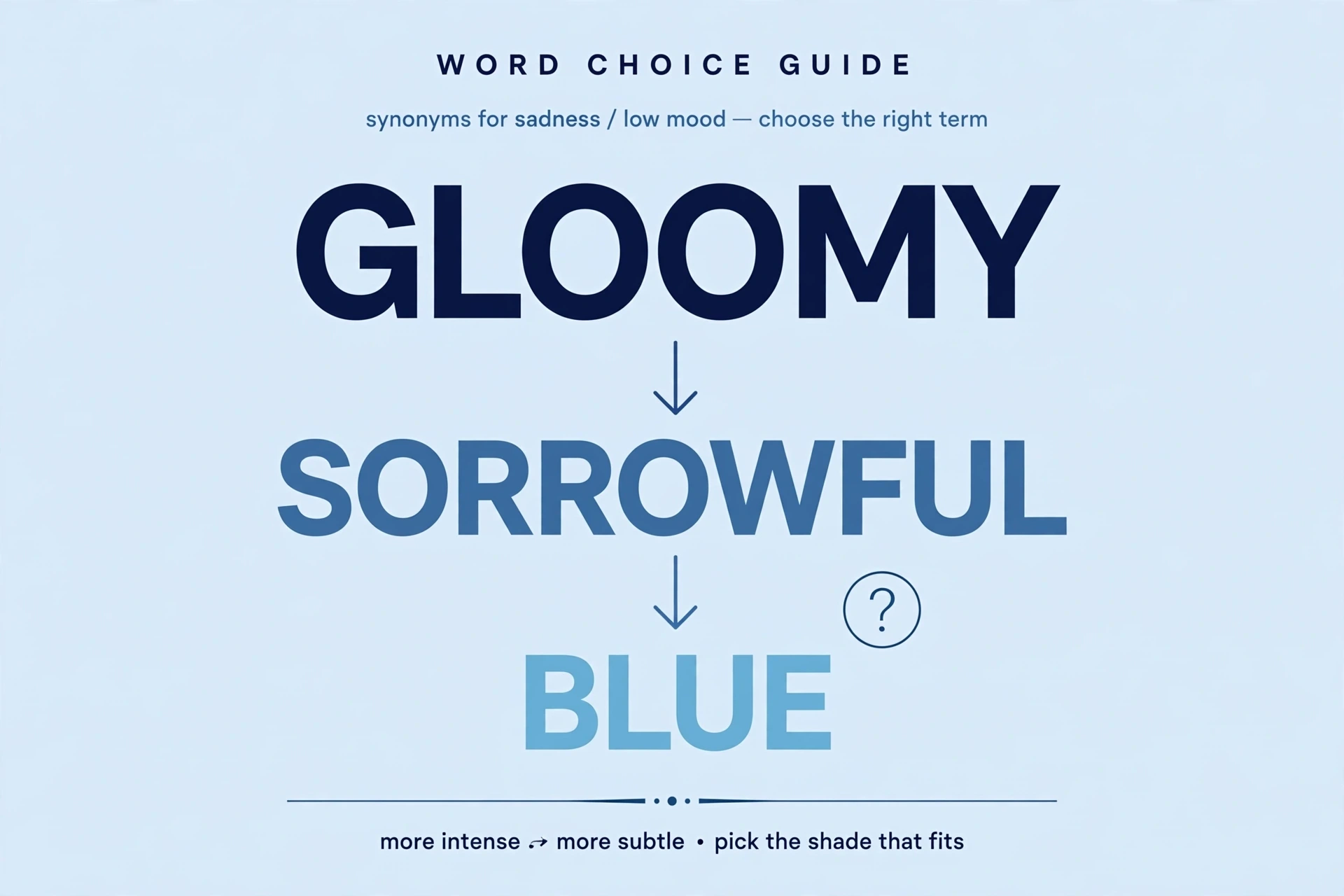
- Measure the intensity first. A lost wallet deserves “bummed”; a lost parent deserves “heartbroken.” Overshooting makes you sound insincere, undershooting sounds cold.
- Match the register. “Lugubrious” fits a novel, not a text message. In casual writing, “down” or “glum” feel human; in formal writing, “melancholy” or “sorrowful” carry authority.
- Check the time frame. “Blue” and “in a funk” describe passing moods. “Grief-stricken” or “bereft” describe states that linger. Pick a word that lasts as long as the feeling.
- Watch the connotation. “Wistful” includes longing; “mournful” includes loss; “glum” includes mild sulkiness. The extra shade of meaning is what makes a synonym precise — or wrong.
- Consider the subject. People feel “heartbroken”; weather is “dismal”; rooms are “gloomy.” Some synonyms pair naturally with certain subjects.
- Read it aloud. If “dolorous” feels stiff in your sentence, it probably is. The right synonym should sound like something a real person would say or write.
Frequently Asked Questions
What is a synonym for sad?
The most common synonyms for “sad” are unhappy, sorrowful, gloomy, downcast, and heartbroken. The best choice depends on intensity: “gloomy” for a mild mood, “heartbroken” for deep grief.
What is a formal synonym for sad?
“Melancholy,” “sorrowful,” “dolorous,” and “woeful” all work in formal writing. “Melancholy” is the most versatile — literary but widely understood.
What is a casual synonym for sad?
“Bummed,” “down,” “glum,” and “in a funk” are the go-to casual options. They suit texts, social media, and everyday conversation.
Is “depressed” a synonym for sad?
Technically yes, but use it carefully. “Depressed” often refers to clinical depression, so for everyday sadness, “sad,” “low,” or “down” are safer and more accurate.
What is the strongest synonym for sad?
“Devastated,” “heartbroken,” and “desolate” sit at the top of the intensity scale. Reserve them for genuine catastrophe or profound loss — overuse cheapens them.
What is a poetic synonym for sad?
“Melancholy,” “wistful,” and “forlorn” all carry poetic weight. “Wistful” adds a longing quality; “forlorn” adds loneliness.
Conclusion
“Sad” is a serviceable word, but it is rarely the most precise one. From gloomy afternoons to heartbroken farewells, the right synonym tells your reader exactly how much weight the feeling carries. Pick by intensity, match the tone, and your writing will sound instantly more human.