Synonyms for Naive: 24+ Words With Examples
Naive is a word with a split personality: it can be a gentle compliment (“her naive optimism was refreshing”) or a sharp criticism (“it was naive to trust the email”). Writers reach for synonyms for naive to control exactly which shade comes through. This article groups 20 alternatives by nuance — innocent, inexperienced, easily fooled, and the positive side — each with a definition and a natural example.
Quick Answer
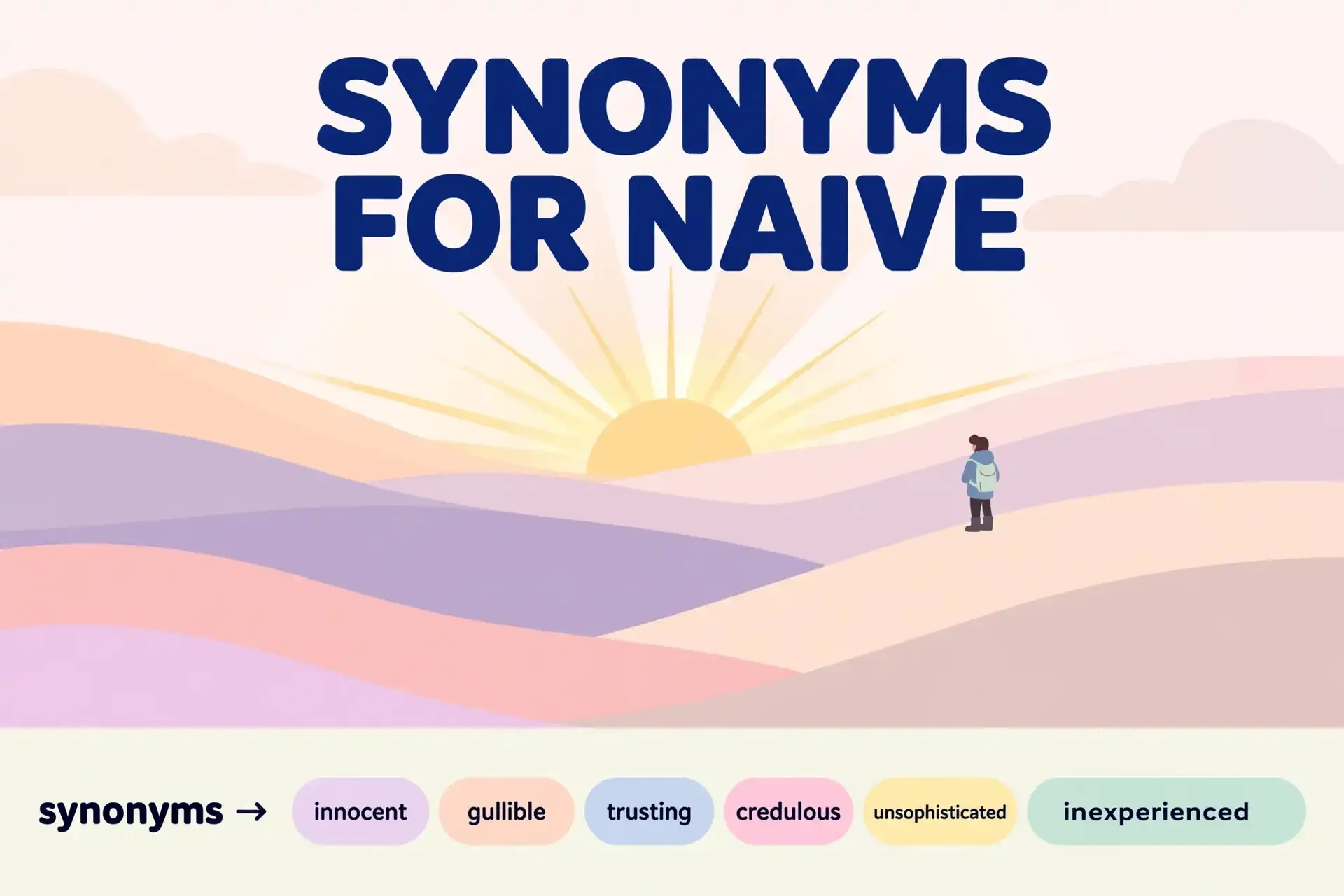
| Word | Nuance / When to use it |
|---|---|
| Innocent | Free from guilt or harm; the gentlest synonym |
| Trusting | Quick to believe others; warm and neutral |
| Artless | Natural and unpretentious; literary tone |
| Ingenuous | Frank and open; unable to hide feelings (formal) |
| Inexperienced | Simply lacking experience; factual, not judgmental |
| Unworldly | Unfamiliar with how the world really works |
| Unsophisticated | Lacking polish or social experience; formal |
| Gullible | Easily tricked; the critical, sharper synonym |
| Credulous | Too ready to believe; formal version of gullible |
| Unaffected | Genuine and natural; the positive side |
| Childlike | Like a child — innocent wonder, not childishness |
| Green | Informal for new and inexperienced |
Simple rule: Use innocent or artless for the gentle side, inexperienced or unworldly for lack of knowledge, and gullible or credulous when someone is easily fooled. For the complete list, browse Merriam-Webster’s synonyms for naive.
Synonyms for Naive Meaning Innocent and Trusting
When “naive” describes someone free from cynicism — trusting, open, unguarded — these words carry the kindest shade.
Innocent — free from guilt, harm, or corruption; the softest synonym. “His innocent questions made the whole room smile.”
Trusting — inclined to believe others are honest; warm and neutral. “She had a trusting nature and always assumed the best of people.”
Artless — natural and unpretentious, unaware of the effect one produces; a literary favorite. “His artless charm won over even the skeptics.”
Ingenuous — frank and open, unable to disguise feelings; formal and slightly old-fashioned. “The ingenuous enthusiasm of the children lit up the classroom.”
Guileless — without deceit or cunning; sincere to the core. “He gave a guileless account of what had happened, hiding nothing.”
Unsuspecting — not aware of danger or trickery; often used when trouble is near. “The unsuspecting tourists paid triple the normal price.”

Synonyms for Naive Meaning Inexperienced
When “naive” simply means new to the world — not foolish, just not yet seasoned — these are the honest words.
Inexperienced — lacking practical knowledge; factual rather than judgmental. “As an inexperienced driver, she avoided the highway for months.”
Unworldly — unfamiliar with how the world really works, especially its harsher side. “The unworldly professor was shocked by the politics of the faculty meeting.”
Unsophisticated — lacking the experience and polish that social ease requires; formal. “The unsophisticated travelers were charmed by everything in the city.”
Callow — young and immature in experience; mildly critical. “The callow intern learned quickly that deadlines were not suggestions.”
Green — informal for brand-new and untested. “The green recruit needed a mentor for his first month on the job.”
Synonyms for Naive Meaning Easily Fooled
When “naive” tips into criticism — someone who believes too easily — these synonyms sharpen the point.
Gullible — easily tricked or cheated; the bluntest synonym. “Only the most gullible readers believed the sensational headline.”
Credulous — too ready to believe things; the formal, literary version of “gullible.” “The credulous audience accepted every claim without a single question.”
Impressionable — easily influenced, especially by others’ opinions. “Young, impressionable fans copied everything their idol did.”
Susceptible — easily influenced or harmed; often used with “to.” “First-time buyers are susceptible to high-pressure sales tactics.”
Synonyms for Naive as Unaffected and Natural
Sometimes “naive” is praise — the absence of pretense. These synonyms keep the compliment intact.
Unaffected — genuine, without artificiality or self-consciousness. “Her unaffected laughter was the best part of the evening.”
Unpretentious — modest and sincere, free from showiness. “Despite his fame, he remained unpretentious and easy to talk to.”
Childlike — having the innocent wonder of a child (not “childish,” which is insulting). “She kept a childlike delight in snowstorms well into adulthood.”
Wide-eyed — full of innocent amazement; vivid and slightly informal. “The wide-eyed newcomers stared up at the skyscrapers.”
Simple — plain and uncomplicated in the best sense; use carefully, as it can also mean “plain” or “foolish.” “He lived a simple life, free of envy and scheming.”
Common Mistakes
“Naive” attracts two kinds of errors: spelling it wrong (the classic “nieve” — see naive vs nieve, the same ie/ei trap as recieve vs receive) and reaching for synonyms that insult when you meant to describe. Watch for these:
Mistake 1: Spelling it “nieve”
❌ “It was nieve to trust the email.”
✅ “It was naive to trust the email.”
Why: “Nieve” is not an English word (it means “snow” in Spanish). The ie/ei trap strikes here just as it does in “recieve” — remember: a before i in naive.
Mistake 2: Using “ignorant” as a synonym
❌ “The ignorant freshman believed every rumor.”
✅ “The naive freshman believed every rumor.”
Why: Ignorant means lacking knowledge and often sounds insulting; naive means lacking experience. A brilliant student can be naive; calling them ignorant says something harsher.
Mistake 3: Using “stupid” as a synonym
❌ “Don’t be stupid — check the facts first.”
✅ “Don’t be naive — check the facts first.”
Why: Stupid attacks intelligence; naive describes inexperience. Naive people can be highly intelligent — they just haven’t learned to be skeptical yet.
Mistake 4: Treating “gullible” and “naive” as identical
❌ “Her naive delight in the festival annoyed him.”
✅ “Her childlike delight in the festival annoyed him.” / “His gullible trust in the salesman cost him dearly.”
Why: Gullible is narrower — it means easily tricked. Naive is broader and can be warm. For the joyful sense, “childlike” or “wide-eyed” fits better.
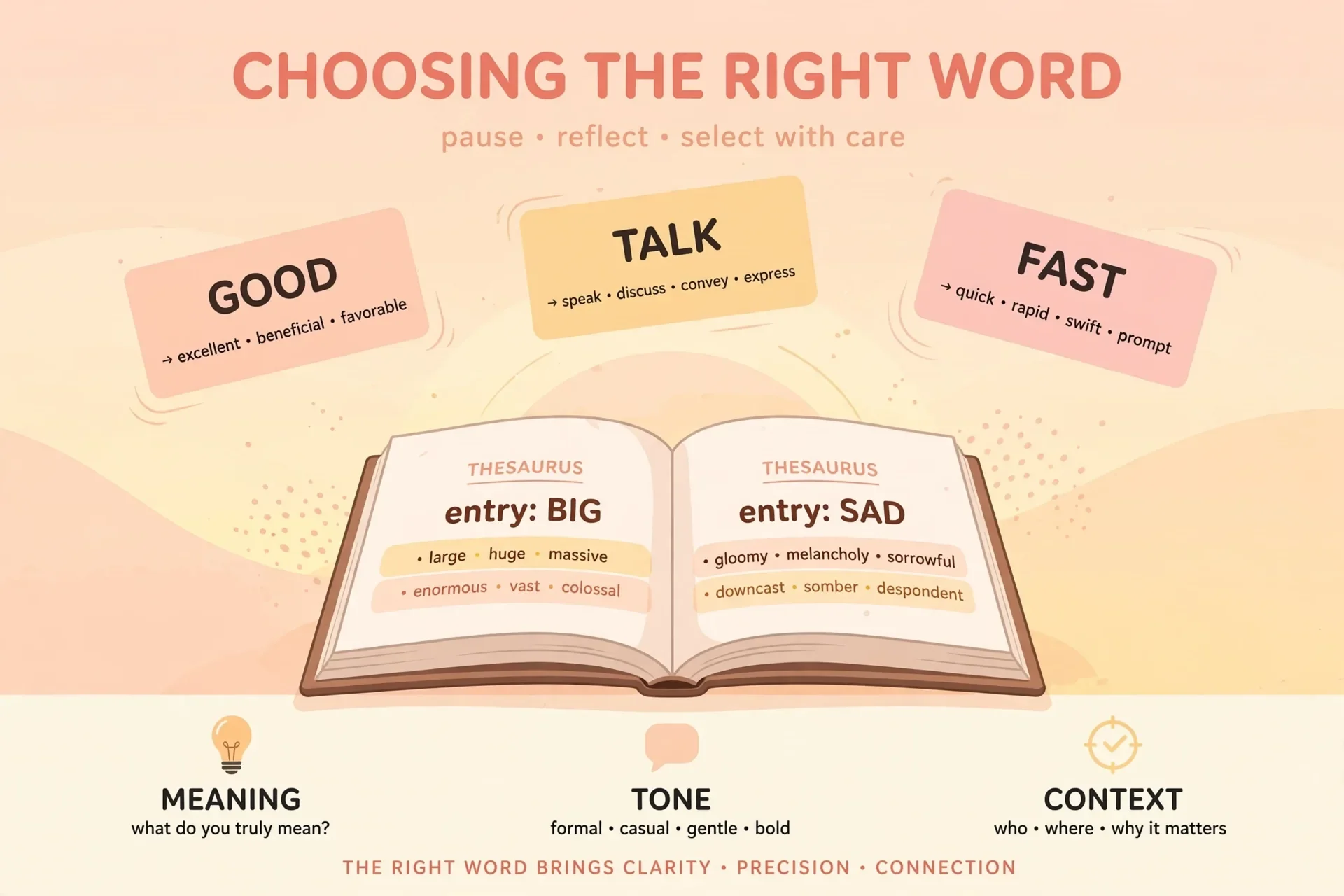
How to Choose the Right Synonym
- Decide: compliment or criticism? “Innocent,” “artless,” and “childlike” praise; “gullible,” “credulous,” and “callow” criticize. Picking the wrong side changes your whole sentence.
- Separate inexperience from foolishness. If the person simply hasn’t learned yet, use inexperienced or unworldly — they describe without judging.
- Mind the formality. “Ingenuous,” “credulous,” and “unsophisticated” belong in essays and literature; “green” and “wide-eyed” suit casual writing and speech.
- Never use “ignorant” or “stupid” as casual swaps. They attack knowledge and intelligence; “naive” is about experience. The distinction matters to your reader.
- Check the spelling. It is naive, not “nieve” — and the diaeresis in naïve is optional, never on the wrong vowel.
Frequently Asked Questions
What is a synonym for naive?
Innocent is the gentlest synonym, inexperienced the most neutral, and gullible the sharpest. For a literary touch, try artless or ingenuous.
Is “naive” a negative word?
It depends entirely on context. “Naive optimism” can be charming; “a naive investment decision” is critical. If you want to guarantee the tone, choose a one-sided synonym like “innocent” (positive) or “gullible” (negative).
Is it “naive” or “nieve”?
Naive — always, in English. “Nieve” is a misspelling (though it means “snow” in Spanish). The vowels stay in a-i order: naive.
What is the difference between naive and gullible?
Gullible specifically means easily tricked or cheated — it is always critical. Naive is broader: it can mean innocent, inexperienced, or trusting, and it is not always an insult.
Can “naive” be a compliment?
Yes. Phrases like “refreshingly naive” or “a naive delight” praise someone’s freedom from cynicism. Synonyms that keep the compliment include artless, guileless, and childlike.
Conclusion
Naive stretches from tender innocence to sharp criticism, so its replacement must match the exact shade you mean. Reach for innocent or artless to praise, inexperienced to stay neutral, and gullible to warn — and spell it naive every time.