Synonyms for Magic: 24+ Words With Examples
Magic is a word with at least three lives: the supernatural power of witches and wizards, the sleight-of-hand tricks on a stage, and the everyday wonder of a perfect evening. Each sense needs its own synonyms — “sorcery” works for the first but sounds absurd for the third. This article groups 20 alternatives by nuance, each with a definition and a natural example, so you always land on the right word.
Quick Answer
| Word | Nuance / When to use it |
|---|---|
| Sorcery | Supernatural power, often with a dark or sinister edge |
| Witchcraft | Magic as practiced by witches; historical and folkloric contexts |
| Wizardry | A wizard’s magic — or figuratively, dazzling skill |
| Enchantment | A magic spell cast on someone; also a feeling of delight |
| Illusion | A deceptive appearance — the core of stage magic |
| Trickery | Clever deception, playful rather than evil |
| Conjuring | The performance of magic tricks |
| Sleight of hand | Skillful hand movements that hide the method |
| Charm | Irresistible personal appeal — “magic” as attraction |
| Wonder | The feeling of amazement itself |
| Magical | The adjective form — having magic qualities |
| Enchanted | Under a spell; a place or object touched by magic |
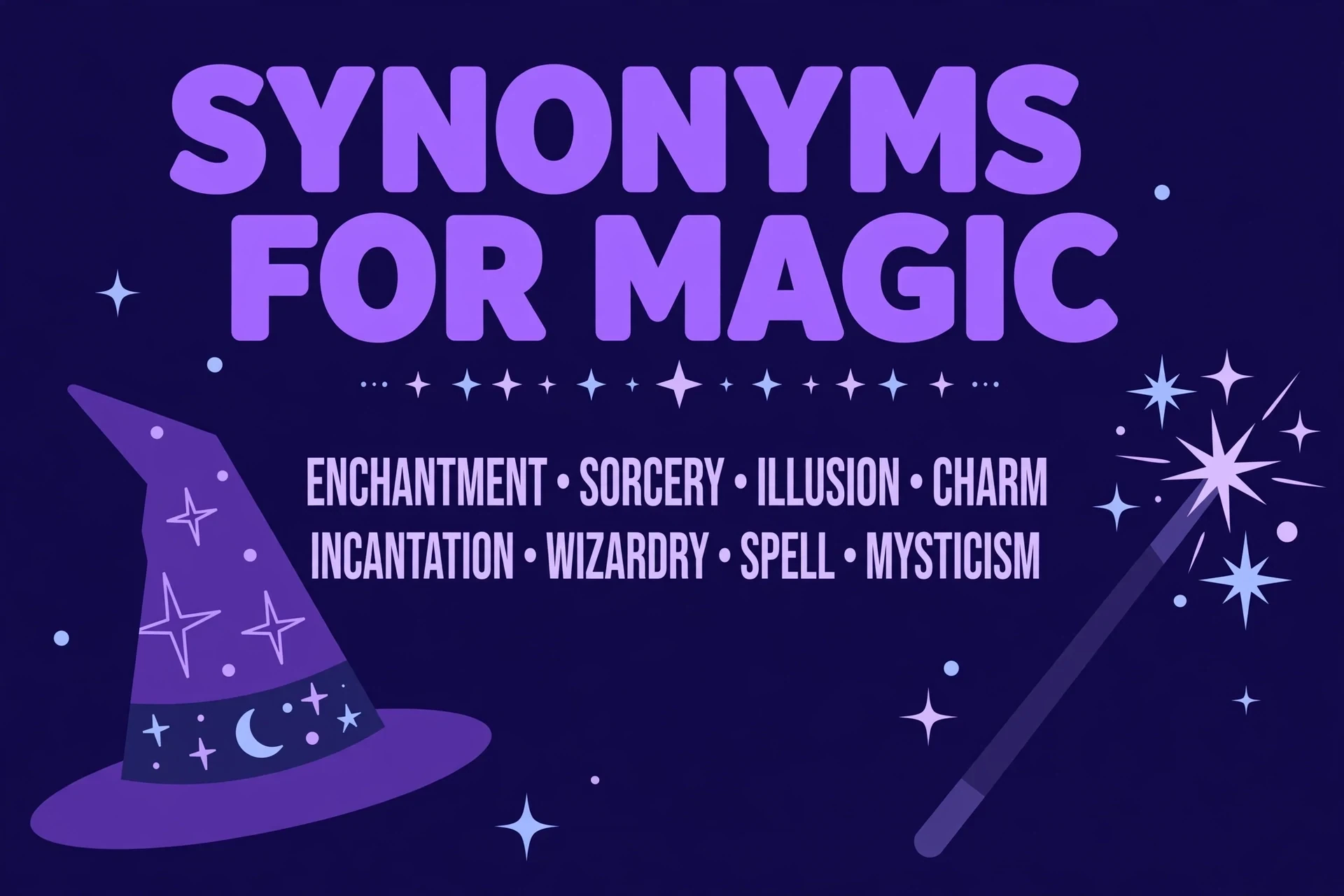
Simple rule: Use sorcery or witchcraft for supernatural power, illusion or conjuring for stage tricks, and charm or wonder when “magic” means delightful appeal. For the complete list, browse Merriam-Webster’s synonyms for magic.
Synonyms for Magic as Supernatural Power
When “magic” means the power to control natural forces through supernatural means — spells, potions, and ancient arts — use these.
Sorcery — the use of supernatural power, often with a dark or sinister tone. “The villagers feared the old tower, convinced it was a place of sorcery.”
Witchcraft — magic as practiced by witches; the go-to word for historical and folkloric contexts. “The museum’s exhibit traced the history of witchcraft in early New England.”
Wizardry — the magic of a wizard; also used figuratively for dazzling technical skill. “The young apprentice studied wizardry under the mountain sage.”
Enchantment — a magic spell placed on a person or thing; doubles as a feeling of great delight. “The forest lay under a powerful enchantment that made travelers lose their way.”
The occult — hidden supernatural arts and practices, studied or believed in secret. “He filled his library with books on the occult and alchemy.”
Synonyms for Magic as Stage Tricks
When “magic” means the entertainer’s art — card tricks, disappearing acts, and misdirection — these words fit.
Illusion — a deceptive appearance or performance that fools the senses. “The grand finale was an illusion in which the elephant seemed to vanish.”
Trickery — clever deception, usually playful rather than harmful. “The children loved the clown’s cheerful trickery with the endless scarf.”
Conjuring — the art of performing magic tricks, especially making things appear. “She learned conjuring from her grandfather, a retired vaudeville performer.”
Sleight of hand — dexterous hand movements that conceal how a trick is done. “His sleight of hand was so smooth that nobody saw the coin switch.”
Deception — the act of misleading; the technical term for what every trick relies on. “Every great trick is built on careful deception and perfect timing.”
Synonyms for Magic as Wonder and Allure
“It was a magic evening.” Here “magic” means something delightful and hard to explain — and these synonyms capture it without a single wand.
Charm — the power of irresistible attraction, in a person, place, or thing. “The old seaside town had a quiet charm that kept visitors returning.”
Wonder — the feeling of amazement and admiration itself. “The children’s faces were full of wonder at the fireworks.”
Marvel — something that causes wonder; also the feeling. “The northern lights are a marvel that photographs can never quite capture.”
Allure — a powerful, mysterious attraction. “The allure of the open road convinced them to sell everything and travel.”
Fascination — spellbinding interest that holds attention completely. “She listened to the storyteller with complete fascination.”
Synonyms for Magical (the Adjective)
Sometimes you need the describing word rather than the noun — “a magic moment” calls for the adjective family.
Magical — having seemingly supernatural qualities; the standard adjective form. “They shared a magical sunset on the last night of the trip.”
Enchanted — placed under a magic spell; describes places and objects touched by magic. “The story was set in an enchanted castle deep in the pines.”
Mystical — mysterious, spiritual, beyond ordinary understanding. “A mystical quiet settled over the temple at dawn.”
Miraculous — like a miracle; wonderful beyond expectation. “The team’s miraculous comeback is still talked about years later.”
Spellbinding — holding the attention as if by a spell. “The novelist gave a spellbinding reading to a packed hall.”
Common Mistakes
“Magic” gathers a surprising number of traps: its spelling twin “spell” sends writers to the wrong dictionary entry (see spelled vs spelt), and its “wonder” sense overlaps with the innocent amazement behind words like naive vs nieve. Watch for these:
Mistake 1: Using “magical” as a noun
❌ “The magician performed a magical on stage.”
✅ “The magician performed a magic trick on stage.” / “The evening was magical.”
Why: Magic is the noun; magical is the adjective. (“Magic” can also work attributively, as in “magic trick,” but never as a standalone noun meaning a single trick.)
Mistake 2: Calling all magic “sorcery”
❌ “The birthday clown’s sorcery delighted the kids.”
✅ “The birthday clown’s trickery delighted the kids.”
Why: Sorcery carries a dark, sinister edge — fine for fantasy villains, wrong for party entertainers, where “trickery” or “conjuring” fits.
Mistake 3: Confusing “spell” the noun with spelling
❌ “The witch cast a spelling on the prince.”
✅ “The witch cast a spell on the prince.”
Why: A magic spell is a noun; “spelling” is forming words with letters. Keep the sorcery and the orthography in separate boxes.
Mistake 4: Using “illusion” for real supernatural power
❌ “In the novel, the wizard’s illusion raised the dead.”
✅ “In the novel, the wizard’s sorcery raised the dead.”
Why: An illusion is a trick that only seems real. If the magic genuinely works in your story’s world, it is sorcery, not illusion.
How to Choose the Right Synonym
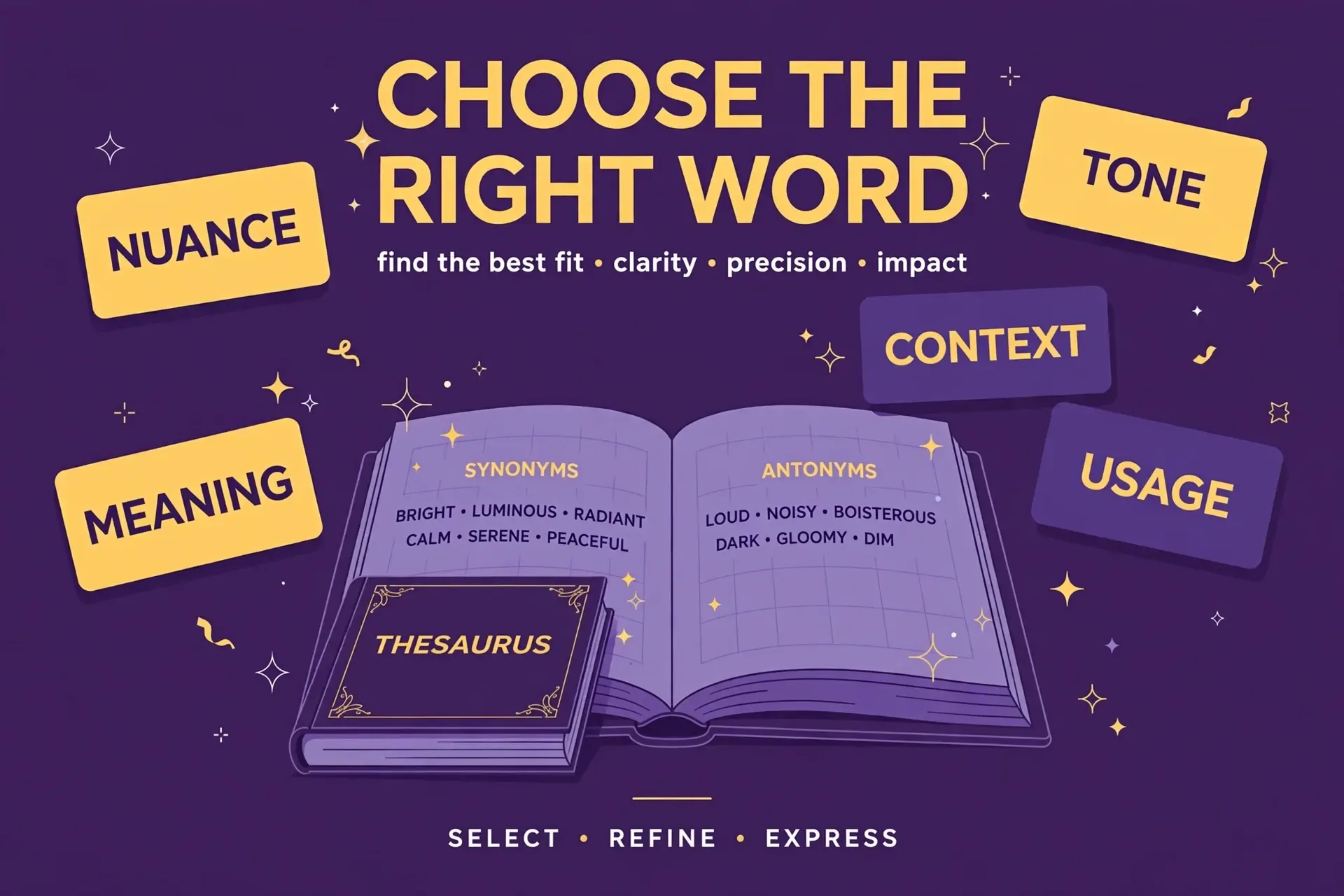
- Ask which “magic” you mean. Supernatural power, stage trick, or delightful feeling? The answer eliminates two-thirds of the list instantly.
- Check the darkness level. “Sorcery,” “witchcraft,” and “the occult” sound ominous; “enchantment” and “charm” sound lovely. Match the mood of your scene.
- Noun or adjective? If you are describing (“a ___ evening”), you need magical or enchanted, not “magic” synonyms like “sorcery.”
- Respect the stage. Real performers do “conjuring,” “illusion,” and “sleight of hand” — calling their craft “sorcery” makes you sound like you believe in it.
- For the “wonderful” sense, skip the supernatural entirely. “Charm,” “wonder,” and “allure” describe the feeling without implying anything paranormal.
Frequently Asked Questions
What is a synonym for magic?
Sorcery is the closest synonym for magic as supernatural power; illusion fits stage magic, and charm fits the “wonderful” sense. The right choice always depends on which meaning you intend.
Is “sorcery” the same as “magic”?
Nearly, but “sorcery” leans dark and sinister, while “magic” is neutral — it can describe a child’s birthday party or an evil ritual. Use “sorcery” only when you want that ominous tone.
What do you call a person who does magic tricks?
A magician, conjurer, or illusionist performs tricks; a sorcerer, wizard, or witch wields supernatural power in fiction and folklore.
What is the adjective form of magic?
Magical — as in “a magical evening.” Related adjectives include enchanted (under a spell), mystical (spiritual and mysterious), and spellbinding (holding attention completely).
Is “magic” countable?
As supernatural power or the art of tricks, “magic” is uncountable (“he studies magic”). As individual tricks, use “tricks” or “illusions” — “a magic” alone is not standard.
Conclusion
Magic spans the supernatural, the theatrical, and the simply wonderful — and its synonyms split along exactly those lines. Choose sorcery for dark power, illusion for the stage, and charm for delight, and the word will always land precisely where you aimed it.