Synonyms for Food: 12+ Words With Examples
Food shows up in every kind of writing — menus, essays, health articles, and casual chat — and “food” itself can start to feel repetitive. These 12 synonyms for food are grouped by register, each with a definition and an example sentence, so you can pick the right word for the right setting. You can cross-check the full list in the Merriam-Webster thesaurus entry for “food”.
Quick Answer
Here are the 12 best synonyms for food at a glance:
| Word | Nuance / When to use it |
|---|---|
| nourishment | Formal; food as what sustains the body |
| sustenance | Formal/literary; what keeps you alive |
| fare | The type of food served somewhere |
| provisions | Food supplies, often for travel or storage |
| cuisine | A style of cooking from a culture or region |
| diet | What someone regularly eats |
| refreshments | Light food and drinks at an event |
| victuals | Formal/literary (pronounced “vittles”) |
| edibles | Anything fit to be eaten |
| grub | Casual slang for a meal |
| chow | Casual slang, military/camp roots |
| eats | Casual slang for snacks or a meal |
Simple rule: use food as the safe default; choose cuisine or fare for style and setting, nourishment for formal health writing, and grub or chow only in casual conversation.
Neutral & Formal
These work in essays, health writing, and any serious context.
- nourishment — food considered for its value to the body. Example: “Fresh vegetables provide essential nourishment.”
- sustenance — what keeps a person alive and going, often in literary use. Example: “The travelers carried enough sustenance for a week.”
- fare — the range of food offered at a place or event. Example: “The restaurant is famous for its traditional fare.”
- provisions — supplies of food stored for future use or a journey. Example: “They stocked the cabin with provisions for the winter.”

Culinary
These belong to kitchens, menus, and food writing.
- cuisine — a distinctive style of cooking, usually tied to a culture or region. Example: “Italian cuisine is famous for its fresh ingredients.”
- diet — the food a person or animal habitually eats. Example: “Her diet consists mostly of fish and vegetables.”
- refreshments — light food and drinks served at gatherings. Example: “Refreshments will be served after the ceremony.”
- victuals — a formal, slightly old-fashioned word for food, pronounced “vittles.” Example: “They shared their humble victuals around the fire.”
- edibles — things that are fit to be eaten, common in survival and legal contexts. Example: “The forest offered plenty of wild edibles.”
Casual & Slang
Friendly and informal — save these for conversation, not essays. Register notes included.
- grub — casual slang for a meal; friendly, never formal. Example: “Let’s grab some grub before the movie.”
- chow — casual slang with military roots; cheerful and informal. Example: “Chow’s ready — come and get it!”
- eats — casual slang for snacks or a light meal. Example: “Bring some eats for the road trip.”
Common Mistakes
Small word mix-ups change meaning — the same care you’d take with yogurt vs. yoghurt or complement vs. compliment applies when picking food synonyms:
Mistake 1: Using “cuisine” for all food
❌ “The cuisine in my fridge is running low.”
✅ “The food in my fridge is running low.”
Why: Cuisine means a style of cooking (Italian cuisine), not the items themselves.
Mistake 2: Using “diet” to mean a meal
❌ “We had a delicious diet at the wedding.”
✅ “We had a delicious meal at the wedding.”
Why: Diet is a habitual pattern of eating, not a single dish or meal.
Mistake 3: Using “refreshments” for a full meal
❌ “The refreshments included steak and lobster.”
✅ “The dinner included steak and lobster.”
Why: Refreshments are light snacks and drinks — a steak dinner is far beyond that.
Mistake 4: Using slang like “grub” in formal writing
❌ “The study examined children’s access to nutritious grub.”
✅ “The study examined children’s access to nutritious food.”
Why: Grub is friendly slang; academic writing needs food or nourishment.
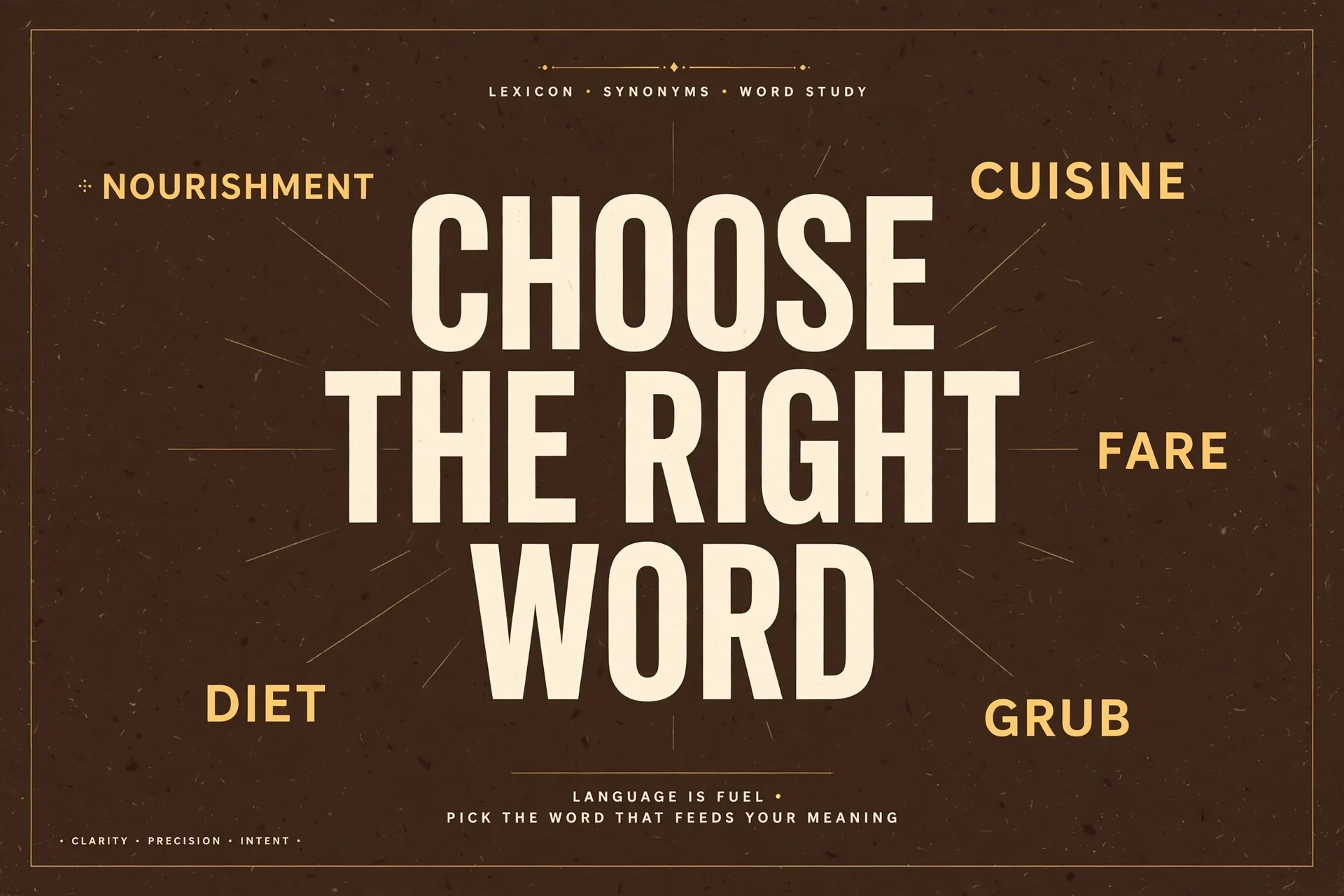
How to Choose the Right Synonym
- Match the formality: nourishment, sustenance, and victuals belong in formal or literary writing; grub, chow, and eats belong in casual chat only.
- Match the scope: cuisine describes a whole cooking tradition, fare describes what a place serves, and diet describes a person’s habits — none of them means “a plate of food.”
- Watch the connotation trap: provisions suggests stockpiling for a journey or emergency; refreshments suggests a social event. Using them elsewhere sounds odd.
- Pronounce “victuals” right: it’s said “vittles,” not “vik-choo-als” — and its old-fashioned flavor only works in deliberate, stylistic writing.
- Think about the eater, not just the food: diet and nourishment describe what a person takes in; cuisine and fare describe what a culture or kitchen offers. Mixing those directions up produces odd sentences.
- When in doubt, say “food”: it’s neutral, universal, and never the wrong register.
Frequently Asked Questions
What is a synonym for food?
Common synonyms include nourishment, cuisine, fare, sustenance, and provisions. Casual options include grub, chow, and eats.
Is “grub” rude to say?
No — grub is friendly casual slang, not rude. It just doesn’t belong in formal writing, professional emails, or academic work.
What is the difference between cuisine and food?
Food is the general word for what we eat. Cuisine specifically means a style or tradition of cooking, like French cuisine or Japanese cuisine.
Can I say “victuals” in everyday speech?
Better not — victuals sounds deliberately old-fashioned and most people won’t recognize it in conversation. It works in historical novels, period pieces, or when you’re being playful, but food or provisions is clearer anywhere else.
What is a formal word for food?
Nourishment is the safest formal choice, especially in health and academic writing. Sustenance works in literary contexts.
What do you call food at a fancy restaurant?
Cuisine and fare are the standard picks — “French cuisine,” “the evening’s fare.” Menus also use offerings and selections. If you’re writing a review, dishes (“three standout dishes”) sounds more natural than repeating food in every sentence.
Conclusion
The right synonym for food depends on the setting: cuisine and fare for style, nourishment for formal writing, and grub or chow among friends. Match the register, and the word will always land well.