Synonyms for Is: 18 Replacements With Examples
Few words resist replacement like “is.” It is the third-person singular of “be,” and no single word carries exactly the same meaning — Merriam-Webster’s entry for “be” lists its senses from existence to identity to mere grammatical linking. This guide collects the closest stand-ins — equals, represents, constitutes, signifies, denotes — grouped by the situations where each one genuinely works, with honest warnings for the sentences where nothing beats “is.”
Quick Answer: 12 Words That Can Stand In for “Is”
| Word | Nuance / When to use it |
|---|---|
| equals | Exact sameness, especially numbers and identities |
| represents | Standing for something larger; the most versatile swap |
| constitutes | Formal: forming or making up the thing described |
| amounts to | Totals, quantities, or sums with a punchline |
| signifies | Carrying meaning; slightly formal |
| denotes | Being the literal name or sign of something |
| means | Everyday definitions and explanations |
| stands for | Abbreviations, symbols, and emblems |
| refers to | Pointing at a concept without defining it |
| embodies | Personifying a quality in physical form |
| equates to | Treating two things as the same in effect |
| symbolizes | Representing an idea through imagery |
Simple rule: match the replacement to the sentence’s logic — equality, definition, or symbolism — and keep “is” whenever the sentence is about existence, location, or a plain state.
Synonyms of Equality and Equivalence
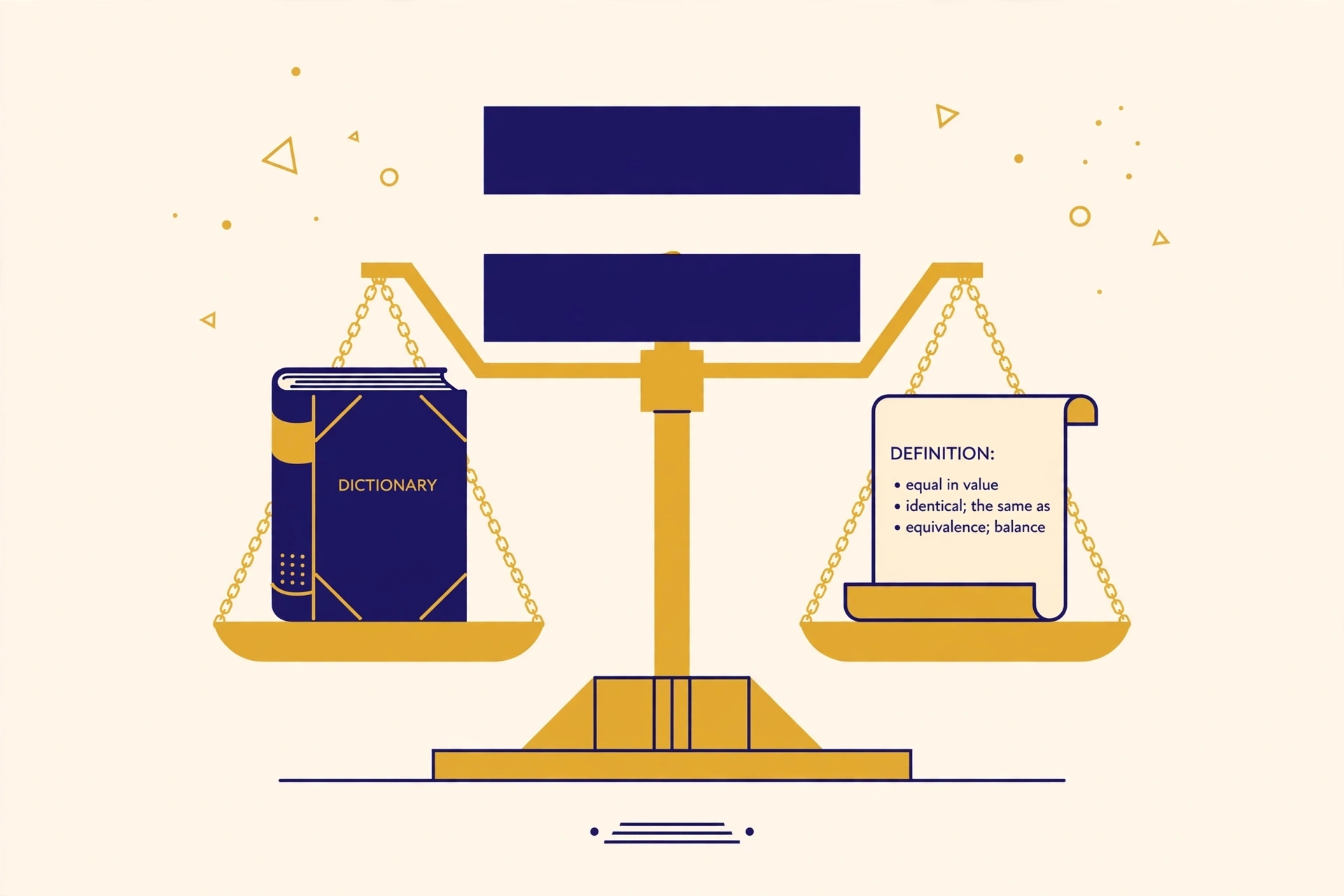
Use these when “is” asserts that two things are the same.
- Equals — is exactly the same as. Two plus two equals four.
- Amounts to — adds up to, literally or figuratively. His excuse amounts to an admission of guilt.
- Equates to — is treated as the same in effect or value. In this market, brand loyalty equates to free advertising.
- Corresponds to — matches something point for point. The red button corresponds to the emergency stop.
- Matches — is identical or equivalent to. Her description matches the witness report exactly.
- Totals — adds up to a final figure. The repair bill totals nearly a thousand dollars.
Synonyms of Definition and Meaning
Use these when “is” introduces what something means.
- Means — has as its definition. “Serendipity” means finding something good by accident.
- Denotes — is the literal name or sign of. The skull on the label denotes poison.
- Signifies — carries a particular meaning. A handshake signifies agreement in many cultures.
- Stands for — is an abbreviation or emblem of. UNESCO stands for the United Nations Educational, Scientific and Cultural Organization.
- Refers to — points to or concerns. The term “boot” refers to a car’s trunk in British English.
- Translates to — carries over into another language or system as. “Liberté” translates to “freedom” in English.
Synonyms of Representation and Symbolism
Use these when “is” says one thing stands for another.
- Represents — stands in for or speaks for. She represents everything the company hopes to become.
- Symbolizes — serves as a visible sign of an idea. The dove symbolizes peace.
- Embodies — gives physical or living form to a quality. The old coach embodies discipline and fairness.
- Typifies — is a typical example of. That cluttered desk typifies his working style.
- Epitomizes — is the perfect example of. Her speech epitomizes calm leadership under pressure.
- Constitutes — forms or makes up, in formal usage. This ruling constitutes a turning point for the industry.
Common Mistakes
Swapping “is” for a lookalike can backfire the same way confusables like wich vs which or lite vs light do — close on the page, wrong in the sentence. These are the failed swaps to watch for:
Mistake 1: Replacing “is” in existence and location sentences
❌ Wrong: “The key equals on the table.”
✅ Better: “The key is on the table.”
Why: every replacement above covers the definitional, equative, or symbolic senses of “is.” Existence (“there is”), location (“on the table”), and plain states (“she is tired”) have no substitute — the verb “be” is doing load-bearing work.
Mistake 2: Using “comprises” as a direct swap
❌ Wrong: “She comprises the team captain.”
✅ Better: “She is the team captain.” / “She represents the team as captain.”
Why: “comprises” means “is made up of,” so it points the wrong direction. The team comprises players; a player does not comprise the captain.
Mistake 3: Confusing “denotes” with “connotes”
❌ Wrong: “His long silence denotes guilt.”
✅ Better: “His long silence suggests guilt.” / “His silence connotes guilt.”
Why: “denotes” claims literal naming — a word denotes its dictionary referent. Associations and implications belong to “connotes.” Using “denotes” for a hunch overstates the claim.
Mistake 4: Stretching “amounts to” beyond quantities
❌ Wrong: “Water amounts to H₂O.”
✅ Better: “Water is H₂O.” / “H₂O equals water.”
Why: “amounts to” suits totals, sums, and figurative reckonings (“the damage amounts to $500”). For plain identities it sounds labored, and “equals” says it cleanly.
How to Choose the Right Synonym
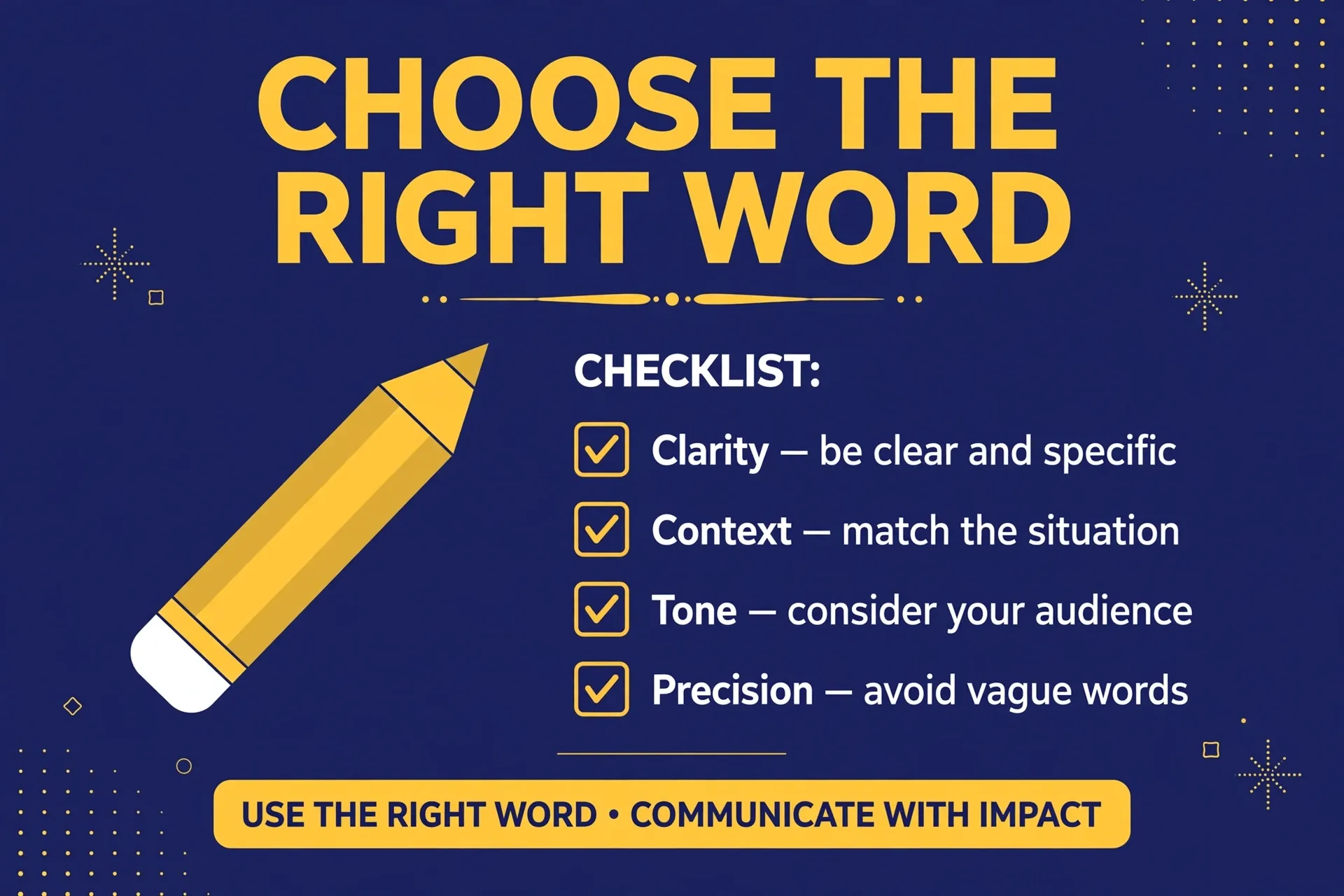
- Match the logic of the sentence. Equality calls for “equals” or “amounts to”; definitions call for “means” or “denotes”; symbolism calls for “represents” or “embodies.”
- Respect formality. “Constitutes,” “denotes,” and “signifies” suit academic and legal writing; “means” and “equals” suit everyday prose.
- Keep “is” for states and locations. If the sentence says something exists, sits somewhere, or feels a certain way, no replacement improves it.
- Watch agreement. Phrasal swaps carry their own grammar: “amounts to” stays singular, while “equal” fits plural subjects (“their efforts equal years of work”).
- Read the swap aloud. If the replacement changes what the sentence claims — “represents” is weaker than “equals” — the original “is” was doing more work than you thought.
Frequently Asked Questions
What is a synonym for is?
There is no exact synonym for “is.” The closest stand-ins depend on context: “equals” for identities, “means” or “denotes” for definitions, and “represents” for symbolism.
Can I replace “is” with “equals” in every sentence?
No. “Equals” works for identities and quantities (“two plus two equals four”) but fails for states (“she equals tired” is nonsense) and locations. Keep “is” outside equative sentences.
What is the most formal replacement for “is”?
“Constitutes” and “denotes” carry the most formal weight — “this constitutes a breach of contract” — while “signifies” sits one step below them in tone.
Does “be” work as a synonym for “is”?
Only in infinitive or imperative constructions (“to be or not to be,” “be quiet”). “Be” is the base form of the same verb, not a synonym you can swap into a present-tense sentence.
Why does “is” have no thesaurus entry of its own?
Thesauruses list content words with stable meanings. “Is” is a function word whose meaning shifts with every sentence — identity, existence, location — so lexicographers treat it under “be” instead.
Conclusion
“Is” earns its place in English because no single word does everything it does — but in definitional, equative, and symbolic sentences, replacements like “equals,” “means,” “denotes,” and “represents” add precision and variety. Choose the swap that matches your sentence’s logic, and when the sentence is about existence or state, let “is” stand.