Synonyms for That: Alternatives by Grammatical Role
That is one of the hardest-working words in English — it points, it connects clauses, it adds emphasis. Because it wears so many hats, there is no single synonym for it. The right replacement depends entirely on the job that is doing in your sentence, and this guide groups 16 alternatives by grammatical role, each with a definition and a real example.
Table of Contents
Quick Answer
| Word | Nuance / When to use it |
|---|---|
| which | non-restrictive relative clauses — adds extra info about things |
| who | relative clauses about people — the natural pick over “that” |
| whom | formal relative clauses where the person is the object |
| whose | relative clauses showing possession |
| this | points to something near you, singular |
| those | points to things farther away, plural |
| the aforementioned | formal writing — refers back to something already named |
| so | intensifier — “to such a degree” (“not so far”) |
| very | neutral intensifier in place of emphatic “that” |
| really | casual intensifier, conversational tone |
| extremely | strong intensifier for formal or dramatic effect |
| omit it | drop “that” entirely — often the cleanest fix of all |
Simple rule: first ask what “that” is doing — joining a clause, pointing at something, or adding emphasis — then pick the alternative from the matching group below.
Relative Clause Alternatives
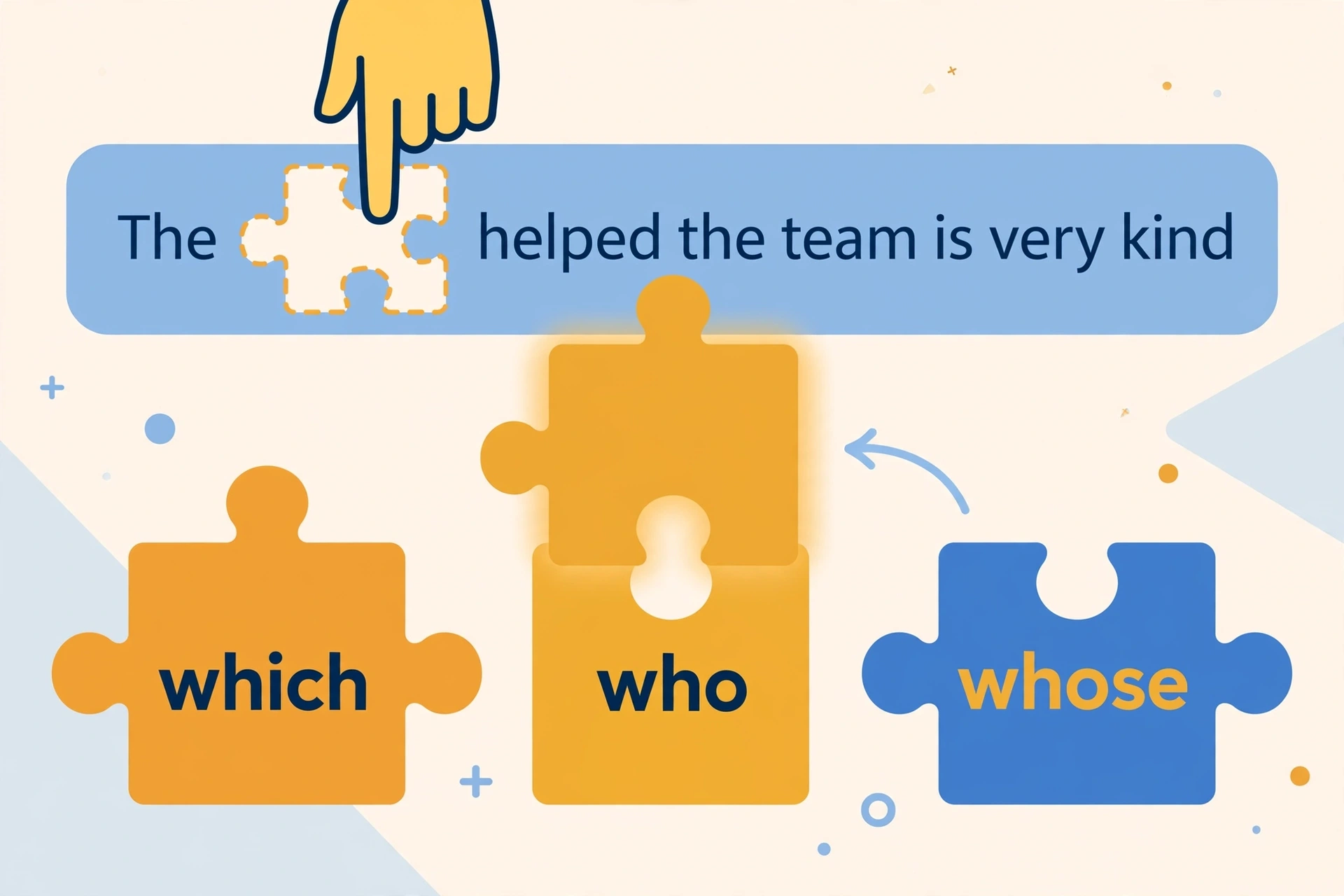
When that introduces a relative clause (“the book that I bought”), these words take over, each with its own rules.
- which — a relative pronoun for things in non-restrictive clauses, set off by commas. The committee approved the plan, which pleased everyone.
- who — a relative pronoun for people; the standard choice where “that” refers to a person. She is the teacher who helped me pass.
- whom — the formal object form of “who,” used after prepositions or in very formal writing. He is the mentor to whom I owe my career.
- whose — shows possession inside a relative clause, for people and things alike. We met the artist whose mural covers the station wall.
Demonstrative Alternatives
When that points at something (“that car,” “that idea”), swap in a demonstrative that matches distance and number.
- this — points to something near you, singular. This report needs your signature today.
- these — the plural of “this,” for nearby things. These shoes are far more comfortable than those.
- those — points to things farther away, plural. Those mountains look close but are hours away.
- the aforementioned — a formal phrase meaning “the one already mentioned,” common in legal and academic writing. The aforementioned policy takes effect on Monday.
Emphasis and Degree
As an intensifier (“it wasn’t that good,” “that far”), that means “to such a degree.” Merriam-Webster’s thesaurus entry for “that” lists several of these degree words as direct synonyms.
- so — means “to such a degree”; the closest match for emphatic “that.” The beach isn’t so far from the hotel.
- very — the neutral, all-purpose intensifier. The instructions weren’t very clear.
- really — a conversational intensifier that softens the tone. I’m not really hungry yet.
- extremely — a stronger, more formal intensifier for dramatic emphasis. The delay was extremely frustrating.
Complement Clause Alternatives
When that introduces a noun clause after verbs like “said,” “believed,” or “knew,” you have several escape routes.
- omit it — simply drop “that”; English allows it after most common verbs. She said she would call back tonight.
- whether — introduces indirect questions and alternatives where “that” would be wrong. She asked whether the store was still open.
- if — the casual twin of “whether” for indirect yes/no questions. I wonder if they received my email.
- rephrase as a noun phrase — turn the clause into a noun phrase to remove “that” entirely. The news of his promotion surprised everyone.
Common Mistakes
Swapping words for “that” is easy to get wrong. For more on two of the trickiest look-alikes, see our guides to which vs witch and whether vs weather.
Mistake 1: Using “which” for restrictive clauses
❌ The car which I bought last year is already giving me trouble.
✅ The car that I bought last year is already giving me trouble.
Why: in American English, “which” with no comma is for non-restrictive clauses only; restrictive clauses (“which car? the one I bought”) take “that” or nothing at all.
Mistake 2: “Whom” as a subject
❌ The manager whom approved the budget resigned yesterday.
✅ The manager who approved the budget resigned yesterday.
Why: “whom” is the object form — “the manager approved” needs the subject form “who.” Only use “whom” when the person receives the action.
Mistake 3: Dropping “that” where it prevents ambiguity
❌ She said on Tuesday she would resign.
✅ She said that on Tuesday she would resign. (or: She said she would resign on Tuesday.)
Why: without “that,” “on Tuesday” seems to attach to “said” instead of the resignation. Keep “that” when dropping it blurs the sentence.
Mistake 4: “This” and “that” mixed up by distance
❌ Pass me that book right in front of you. (said to someone holding it)
✅ Pass me this book right in front of you.
Why: “this” is for what is near the speaker, “that” for what is farther away. Matching distance keeps the pointing clear.
How to Choose the Right Synonym
- Identify the role first. Cover “that” with your thumb and ask: is it joining a clause, pointing, or emphasizing? The answer picks the group.
- Match formality. “Whom” and “the aforementioned” belong in formal writing; “really” and dropped “that” suit conversation.
- People get “who,” things get “which” or “that.” Using “which” for a person (“the man which called”) always sounds wrong.
- Prefer omission when it is safe. “She said she knew” beats “She said that she knew” — shorter and just as clear.
- Watch commas with “which.” If there is no comma, “which” is probably wrong in American English — use “that” or nothing.
Frequently Asked Questions
What is a synonym for that?
There is no single synonym because “that” has several jobs. For relative clauses use “which,” “who,” or “whose”; for pointing use “this,” “those,” or “the aforementioned”; for emphasis use “so,” “very,” or “really”; and for complement clauses you can often just drop it.
Can I replace “that” with “which”?
Sometimes. “Which” works in non-restrictive clauses with commas (“the plan, which pleased everyone”). In restrictive clauses without commas, American English prefers “that” or omission: “the plan that pleased everyone.”
When can I leave out “that”?
After common verbs like “said,” “knew,” “believed,” and “thought,” dropping “that” is standard and natural. Keep it when the sentence gets long or ambiguous, or after nouns like “the fact” — “the fact he left” sounds clipped, so “the fact that he left” is better.
What is a synonym for “that” in formal writing?
For clauses, “who,” “whom,” or “whose” fit formal style; for pointing back, “the aforementioned” or “the former/latter” work well. In formal writing, avoid casually dropping “that” when it aids clarity.
Is “this” a synonym for “that”?
Only as a demonstrative, and only if you adjust for distance. “That” points farther away, “this” points near — so they swap only when the distance changes too.
Conclusion
That has no one-size-fits-all synonym, but it has excellent specialists: who and which for clauses, this and those for pointing, so and very for emphasis. Name the job “that” is doing, and the right replacement picks itself.